Sep 2026· White Rose Research Online (University of Leeds, The University of Sheffield, University of York)
Data Visualization and Analytics
Abstract
Evaluating synthetic data produced by generative models remains a critical challenge in sensitive domains such as healthcare and finance. Ensuring that such data is ‘faithful’ to real data is essential for downstream applications and decision-making, including regulatory compliance. This paper introduces an AI-powered interactive visual system—AISyst—designed to assess the fidelity of synthetic tabular datasets. The system supports multilevel comparisons with real datasets, spanning multivariate resemblance analyses based on dimensionality reduction through suitable two-dimensional projections, bivariate correlation and univariate similarity. AISyst also integrates an AI assistant by leveraging state-of-the-art large language models to summarize key findings and generate suggestions for improving synthetic data generation models. We validated the capabilities of AISyst through three case studies, supported by feedback from industrial AI experts who endorsed its broader deployment.
The results are packaged in the Greenfield Startup Model (GSM), which explains the priority of startups to release the product as quickly as possible, and the need to shorten time-to-market, by speeding up the development through low-precision engineering activities.
Carmine Giardino, Nicolò Paternoster, M. Unterkalmsteiner et al.· IEEE Transactions on Softwar...· 178 citations· ⚡14
Software startup companies develop innovative, software-intensive products within limited timeframes and with few resources, searching for sustainable and scalable business models.
M. Unterkalmsteiner, P. Abrahamsson, Xiaofeng Wang et al.· e-Informatica Software Engin...· 157 citations· ⚡17
This study conducts a case survey study based on the secondary data of the major pivots happened in 49 software startups, and demonstrates that customer need pivot is the most common among all pivot types.
Sohaib Shahid Bajwa, Xiaofeng Wang, Anh Nguyen-Duc et al.· Empirical Software Engineeri...· 127 citations· ⚡15
The comparison of adopter and non-adopter sample reveals three potential adoption inhibitor, security, data privacy, and portability, which underlines the importance of the technical and security perspectives for research investigating the adoption of technology.
Nattakarn Phaphoom, Xiaofeng Wang, S. Samuel et al.· Journal of Systems and Softw...· 111 citations· ⚡8
The ongoing work building a Raspberry Pi cluster consisting of 300 nodes is presented, with potential use cases being an inexpensive and green test bed for cloud computing research and a robust and mobile data center for operating in adverse environments.
P. Abrahamsson, S. Helmer, Nattakarn Phaphoom et al.· IEEE International Conferenc...· 110 citations· ⚡7
The findings show that speed related agile practices are used to a greater extent in comparison to quality practices, and that software startups who adopt the Lean Startup approach do not sacrifice quality for speed more than other startups do.
Jevgenija Pantiuchina, Marco Mondini, Dron Khanna et al.· International Conference on...· 84 citations· ⚡4
Related blog posts
MIT News · Artificial Intelligence· news.mit.eduOct 1, 2026
Able to defeat top-ranked human players and more efficient than other models, the new system could help decision-makers in military maneuvers or business negotiations.
Microsoft Research Blog· microsoft.comSep 29, 2026
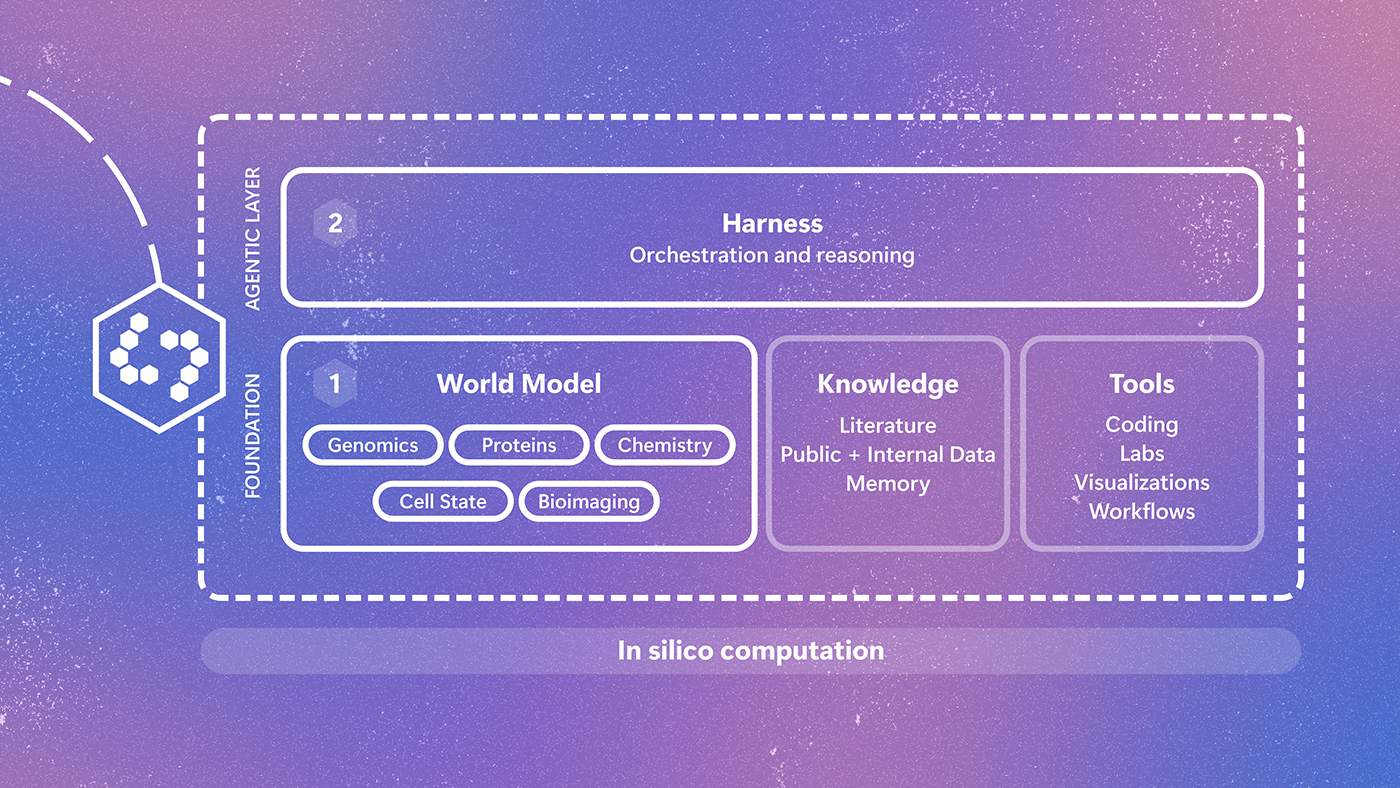
Biology doesn't operate in silos, and neither should the AI representation of it. Quine is an early-stage research effort to create a multimodal world model of biology. By connecting insights across biological scales and modalities, Quine helps scientists computationally search a space far larger than intuition allows and prioritize hypotheses before they reach the lab. Experimental results provide important feedback, helping researchers sharpen future research directions. The post Introducing Q…