Scaling generalist robotic policies is limited by the high cost of collecting embodied interaction data. Large-scale egocentric human videos offer a rich alternative, but they lack robot action labels, and existing action annotation methods are often noisy under real-world visual complexity and diverse manipulation dynamics. We introduce LAPT-Scale, a scalable latent action pre-training paradigm with two components: LAPT-Scale-LAM learns continuous latent actions by explaining frame-to-frame visual transitions in human videos and uses them as human-derived supervision, while LAPT-Scale-Policy trains a VLA policy through human-video latent-action pre-training, target-robot embodiment alignment, and task-specific post-training. Unlike prior vector-quantized LAMs, LAPT-Scale-LAM uses a continuous latent space to preserve fine-grained motion and interaction dynamics. We further combine perceptual, semantic, and optical-flow alignment signals to improve transition-level supervision beyond pixel reconstruction. Trained on 23.3K hours of egocentric video, LAPT-Scale-LAM provides implicit action supervision for policy pre-training, yielding consistent scaling gains and improving real-robot success from 63.3% to 85.0% as annotated human video scales from 1K to 5K hours. The learned policy also generalizes to unseen visual conditions.

This publication proposes a definition and a classification of agile software development approaches and analyses ten software development methods that can be characterized as being "agile" against the defined criterion.
P. Abrahamsson, O. Salo, Jussi Ronkainen et al.· arXiv.org· 727 citations· ⚡54
The study shows that agile practices improve both informal and formal communication, but indicates that, in larger development situations involving multiple external stakeholders, a mismatch of adequate communication mechanisms can sometimes even hinder the communication.
M. Pikkarainen, Jukka Haikara, O. Salo et al.· Empirical Software Engineeri...· 401 citations· ⚡48
The results indicate that software engineering work practices are chosen opportunistically, adapted and configured to provide value under the constrains imposed by the startup context.
Nicolò Paternoster, Carmine Giardino, M. Unterkalmsteiner et al.· Information and Software Tec...· 394 citations· ⚡54
The possibility of inferring high-dimensional data inference in a model that consists of a prior and an auxiliary differentiable constraint given some additional information is considered, thereby allowing a range of potential applications in adapting models to new domains and tasks.
Alexandros Graikos, Esmeralda S. Whitammer, N. Jojic et al.· Neural Information Processin...· 316 citations· ⚡15
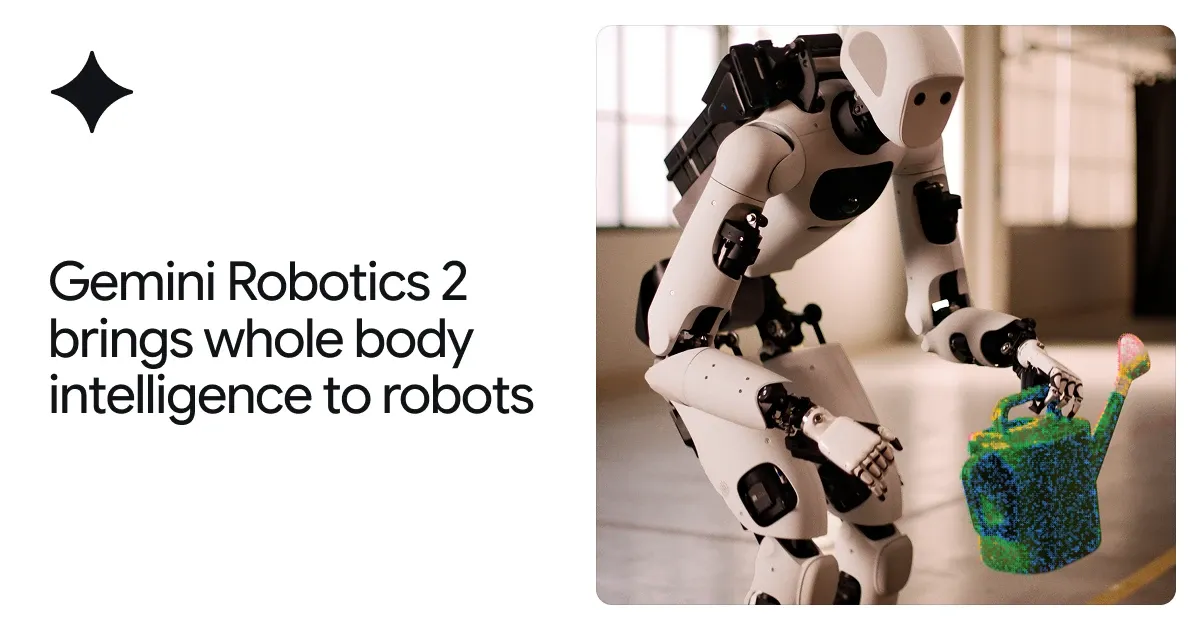
From feet to fingertips — we are teaching robots intelligent whole-body control, fine dexterity, and teamwork to complete a broad range of complex tasks.
Known for his clear and elegant writing style, Bertsekas shaped fields from control and optimization to large-scale computation and artificial intelligence.
We use cookies to run the site and, with your consent, for analytics and to show ads.
See our Cookie Policy.