An explainable machine learning framework for profiling broadband adoption disparities at census-tract granularity at census-tract granularity across 83,359 tracts nationwide is presented.
Abstract
The United States has allocated approximately $65 billion through the Infrastructure Investment and Jobs Act for broadband expansion, yet evidence-based methods for targeting these investments remain underdeveloped. This paper presents an explainable machine learning framework for profiling broadband adoption disparities at census-tract granularity across 83,359 tracts nationwide. Using 65 socioeconomic, demographic, and infrastructure features derived from the American Community Survey 2022, we train a LightGBM model under spatial five-fold cross-validation, achieving R^2 = 0.533 and Spearman rho = 0.763; state-held-out cross-validation (51 folds) confirms generalization (R^2 = 0.525). TreeSHAP analysis identifies income and education as the dominant factor group (with the engineered interaction term absorbing attribution from its constituent features), and SHAP-based clustering reveals three exploratory factor profiles: Well-Connected Moderate (~49K tracts), Affordability-Limited Severe (~21K tracts), and Rural-Elderly (~13K tracts). As a screening tool, ML-based tract selection captures 38.0% of the total adoption gap within the top 10% of tracts versus 35.2% for income-only heuristics (+2.8 pp, p<0.002, county-block bootstrap); in regret-reduction terms, the model closes 19% of the remaining gap between income-only and oracle selection. The primary contribution is the per-tract factor decomposition: SHAP identifies which feature groups (income/education, rurality, age) are most strongly associated with each tract's predicted gap, and informs differentiated investigation. A temporal stability check, training on ACS 2017 and predicting ACS 2022 with zero survey-year overlap, confirms ranking stability (rho = 0.784, noting hyperparameters tuned on 2022 data).

The existing employment-prediction models overlook key challenges including panel-data endogeneity, cross-tier prediction unfairness, and year-on-year temporal distribution drift. To address these issues, this study proposes a novel deconfounded and fair employment-prediction framework, built upon panel stratification...
Yan-Lai Wang, Ting-Tin Tin, Jin-Long Jia et al.· International Journal of Adv...· 0 citations
Review activity is the standard public proxy of guest engagement on peer-to-peer accommodation platforms, yet is modeled almost exclusively as count regression. This study presents a three-level engagement classification of peer-to-peer home-sharing in Latin America: 76,624 listings from Buenos Aires, Santiago, and Mex...
Pedro Shiguihara, Nils Murrugarra· International Journal of Adv...· 0 citations
Firm-level deviations in reported electricity consumption can help prioritize corporate energy disclosures for verification. This study presents an explainable machine-learning workflow that predicts log-transformed annual electricity consumption from harmonized resource-use variables, firm-size controls, a previously...
Xiao Hu, Tao Yin, Peng Tian et al.· Applied Sciences· 0 citations
Customer churn remains a critical concern in the mobile telecommunications industry, where retaining subscribers is essential for long-term profitability. This study presents an explainable machine learning framework to detect and interpret network-driven churn by integrating demographic data with key network performan...
Sumeyye Bas, B. Bulut, Gizem Türkoğlu Ay et al.· Electrica· 0 citations
Findings confirm that SHAP significantly enhances model transparency and generates economically meaningful insights beyond classical regression, supporting its application in auditable, regulatory compliant financial modeling.
A SHAP-based governance framework for evaluating explainable machine learning in motor insurance pricing, with particular attention to ASOP 41 and ASOP 56, which demonstrates that SHAP can provide useful evidence for model understanding and actuarial communication, but cannot by itself establish compliance with ASOP 41...
Shadrick Chanda· Journal of economics, financ...· 0 citations
Related blog posts
MIT News · Artificial Intelligence· news.mit.eduNov 17, 2026
By studying the computational foundations of language learning, Associate Professor Jacob Andreas builds intelligent systems that can communicate effectively with humans.
Microsoft Research Blog· microsoft.comNov 16, 2026
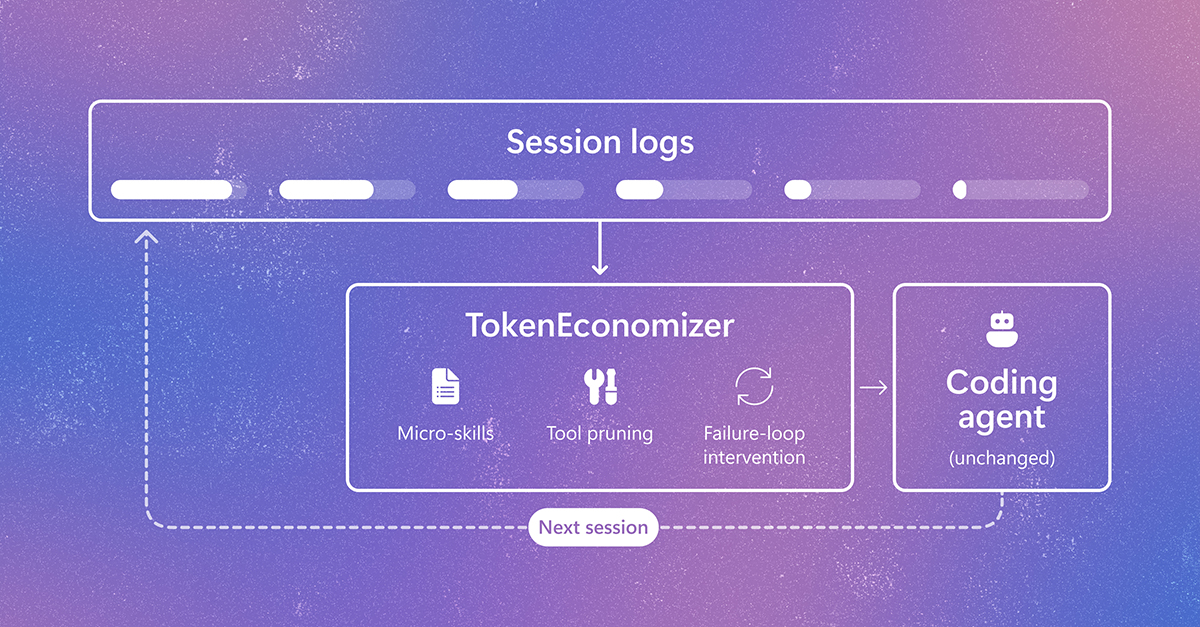
AI coding agents are increasingly help developers fix bugs and build features largely on their own, but every interaction with their models consumes tokens. In each session, an agent sends instructions, tool descriptions, and session history to its model. Most efforts to reduce this cost focus on individual tasks. Yet developers return to the same […] The post TokenEconomizer: Learning from Experience to Make AI Coding Agents More Efficient appeared first on Microsoft Research.
MIT News · Artificial Intelligence· news.mit.eduNov 13, 2026