For languages with limited resources, Sentiment Analysis remains a challenging problem due to limited annotated data and strong domain variability across textual sources. Marathi, despite being widely spoken, lacks extensive multi-domain sentiment analysis studies. Recent efforts by L3Cube have introduced multi-domain datasets in Marathi, enabling a better study of domain-aware sentiment classification. This study uses the pretrained MahaBERT model to improve sentiment classification for Marathi across different domains. Models are trained on individual domain datasets and domain-adaptive pretraining is applied using masked language modeling to help the model better understand domain-specific language. In addition, back-translation is used as a method of data augmentation to increase the diversity of training data. Results show that these methods lead to consistent improvements in accuracy across all domains. The improvements range from a minimum of about 0.12% to a maximum of about 1.74%, depending on the dataset. These results demonstrate that domain-adaptive pretraining and data augmentation are effective strategies for improving sentiment analysis models. This helps achieve more robust performance across different domains and makes the approach more suitable for low-resource languages like Marathi.
This paper investigates developing real-world perception for active agents, proposes Gibson Environment for this purpose, and showcases a set of perceptual tasks learned therein.
F. Xia, Amir Zamir, Zhi-Yang He et al.· 2018 IEEE/CVF Conference on...· 1,069 citations· ⚡112
This publication proposes a definition and a classification of agile software development approaches and analyses ten software development methods that can be characterized as being "agile" against the defined criterion.
P. Abrahamsson, O. Salo, Jussi Ronkainen et al.· arXiv.org· 727 citations· ⚡54
The results indicate that software engineering work practices are chosen opportunistically, adapted and configured to provide value under the constrains imposed by the startup context.
Nicolò Paternoster, Carmine Giardino, M. Unterkalmsteiner et al.· Information and Software Tec...· 394 citations· ⚡54
The possibility of inferring high-dimensional data inference in a model that consists of a prior and an auxiliary differentiable constraint given some additional information is considered, thereby allowing a range of potential applications in adapting models to new domains and tasks.
Alexandros Graikos, Esmeralda S. Whitammer, N. Jojic et al.· Neural Information Processin...· 316 citations· ⚡15
It is proved that any global minimizer of the trajectory balance objective can define a policy that samples exactly from the target distribution, and empirically demonstrate the benefits of the trajectories balance objective for GFlowNet convergence, diversity of generated samples, and robustness to long action sequenc...
Esmeralda S. Whitammer, Moksh Jain, Emmanuel Bengio et al.· Neural Information Processin...· 302 citations· ⚡60
Consequences of happiness and unhappiness that are beneficial and detrimental for developers' mental well-being, the software development process, and the produced artifacts are found.
D. Graziotin, Fabian Fagerholm, Xiaofeng Wang et al.· Journal of Systems and Softw...· 236 citations· ⚡13
Related blog posts
MIT News · Artificial Intelligence· news.mit.eduAug 27, 2026
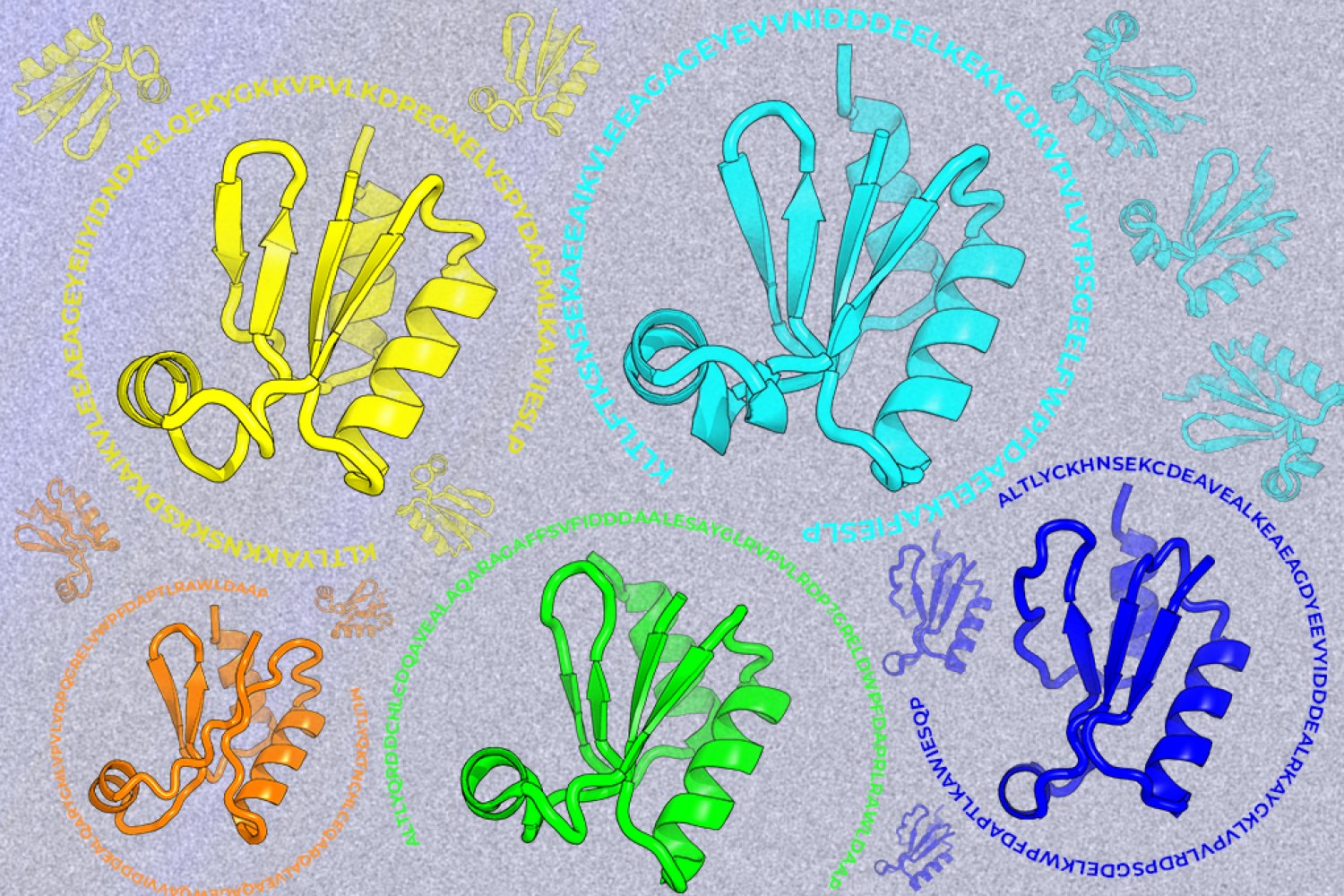
A new machine-learning framework aims to improve the success rate of computational protein design while moving away from results that reproduce sequences found in nature.