Skip to content

AI-driven whole-life costing for decision-ready UK public building retrofits

Oct 2026 · Complex & Intelligent Systems
Life Cycle Costing Analysis

Abstract

Abstract Public-sector building retrofits in the United Kingdom require decisions that balance whole-life cost, carbon reduction, service continuity and auditability under limited data and constrained capital budgets. This paper develops a decision-ready whole-life costing (WLC) workflow that integrates environmental, social and governance (ESG) priorities with uncertainty-aware artificial intelligence (AI) for public-building retrofit appraisal. The workflow combines national non-domestic Energy Performance Certificate (EPC) and Display Energy Certificate (DEC) data, Public Sector Decarbonisation Scheme (PSDS) delivery evidence and stakeholder inputs to construct a scenario library of public-building archetypes, retrofit actions and appraisal constraints. Stakeholder priorities from interviews, a questionnaire and a co-design workshop are translated into transparent weights using fuzzy analytic hierarchy process (F-AHP). These weights parameterise a reinforcement learning (RL) planner, while a Bayesian convolutional neural network–long short-term memory (BCNN–LSTM) surrogate provides uncertainty-bounded energy, carbon and cost trajectories for repeated policy evaluation. Results show that the workflow supports auditable retrofit sequencing across archetype and budget conditions and improves composite ESG performance relative to conventional WLC-only, £/tCO 2 e and static multi-criteria decision analysis (MCDA) baselines. For 1000 matched archetype–budget cases, the trained deep Q-network (DQN) decision-search stage achieves a 30.03-fold speedup over traditional scalar feasible-sequence enumeration. The contribution is an integrated and explainable WLC–ESG–AI workflow for early-stage public retrofit decision support. The current validation remains based on public datasets and scenario-level evidence so future work should extend the framework using project-specific metered data, digital twins and live portfolio deployment.


View source

Similar papers

#machine learning Review Open access Oct 2014

Software development in startup companies: A systematic mapping study

The results indicate that software engineering work practices are chosen opportunistically, adapted and configured to provide value under the constrains imposed by the startup context.

Nicolò Paternoster, Carmine Giardino, M. Unterkalmsteiner et al. · 394 citations · ⚡54
#artificial intelligence Open access May 2023

Evaluating the Performance of Large Language Models on GAOKAO Benchmark

GAOKAO-Bench is introduced, an intuitive benchmark that employs questions from the Chinese GAOKAO examination as test samples, including both subjective and objective questions that contribute a robust evaluation benchmark for future large language models and offers valuable insights into the advantages and limitations...

Xiaotian Zhang, Chun-yan Li, Yi Zong et al. · 216 citations · ⚡17

KTO: Model Alignment as Prospect Theoretic Optimization

This work proposes a HALO that directly maximizes the utility of generations instead of maximizing the log-likelihood of preferences, and suggests that the best loss depends on the inductive biases most appropriate for a given setting, an oft-overlooked consideration.

Kawin Ethayarajh, Winnie Xu, Niklas Muennighoff et al. · 195 citations · ⚡28
#machine learning Review Open access Jun 2014

Why Early-Stage Software Startups Fail: A Behavioral Framework

This state-of-practice investigation was performed using a literature review followed by a multiple-case study approach and presents how inconsistency between managerial strategies and execution can lead to failure by means of a behavioral framework.

Carmine Giardino, Xiaofeng Wang, P. Abrahamsson · 175 citations · ⚡19
#artificial intelligence Open access Jul 2024

Gender, Race, and Intersectional Bias in Resume Screening via Language Model Retrieval

This work investigates the possibilities of using LLMs in a resume screening setting via a document retrieval framework that simulates job candidate selection and finds that the MTEs are biased, significantly favoring White-associated names in 85% of cases and female-associated names in only 11.1% of cases.

Kyra Wilson, Aylin Caliskan · 131 citations · ⚡8

Related blog posts

Microsoft Research Blog Oct 12, 2026

Simulating student learning for better AI tutoring

StudentSim is a research system for evaluating and improving AI tutoring tools before they are tested with learners. It models how individuals may engage with tutors, giving feedback to improve tutor performance across subjects like chess, writing, and mathematics. The post Simulating student learning for better AI tutoring appeared first on Microsoft Research.

Microsoft Research Blog Oct 7, 2026

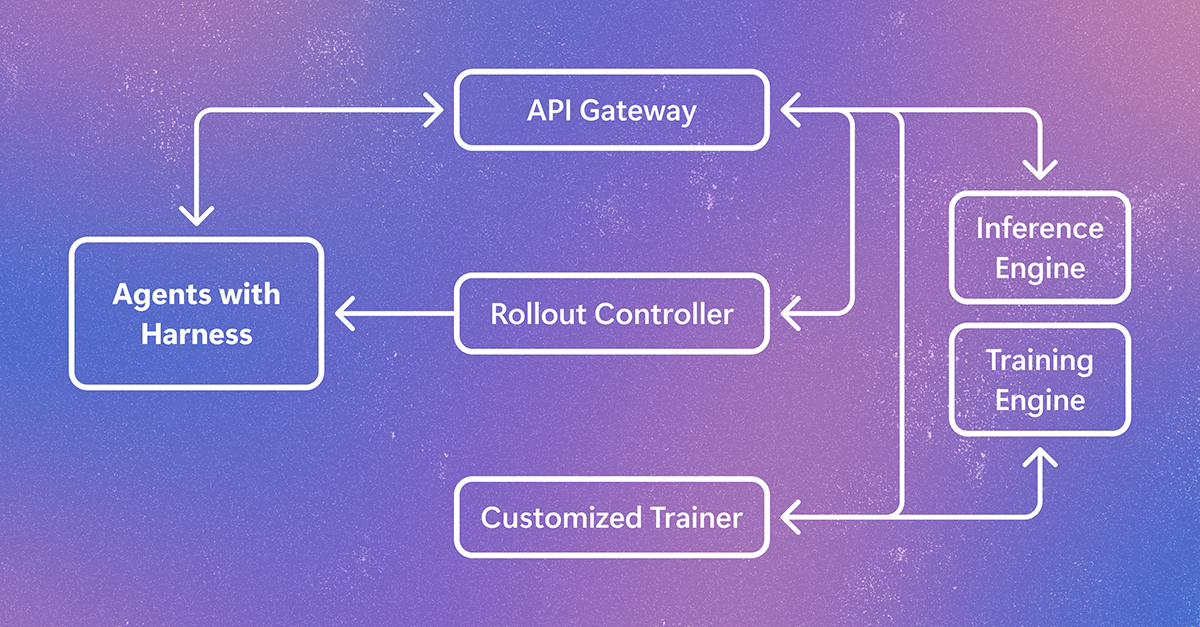
Agent Lightning v1.0: A 3,500-Line Lightweight Agentic RL Framework for Training Agents with Real Harnesses

Training AI agents with reinforcement learning can be challenging because their tools, context, and decision-making are managed by complex frameworks. Agent Lightning connects existing agents to RL training, making it easier to improve them without rebuilding them. The post Agent Lightning v1.0: A 3,500-Line Lightweight Agentic RL Framework for Training Agents with Real Harnesses appeared first on Microsoft Research.

We use cookies to run the site and, with your consent, for analytics and to show ads. See our Cookie Policy.