Oct 2026· ACS Nano· Vol 20, pp. 29015 - 29032· 0 citations· 88 references
Medicine
Abstract
Following the successes of the messenger RNA (mRNA) lipid nanoparticle (LNP) vaccines against COVID-19, mRNA-LNPs are being explored for varied multidose applications including cancer immunotherapies and protein replacement therapies. LNPs rely on poly(ethylene glycol)-lipid (PEG-lipid) coatings for stability, but increasing anti-PEG antibody prevalence threatens repeat-dose efficacy and increases pseudoallergic risk, creating an urgent need for alternatives. Here, we introduce poly(acrylamido) lipids (PAM-lipids), a family of polymer lipids that effectively replace PEG-lipids in mRNA-LNP formulations. Systematic variation of monomer chemistry, molar mass, and end group reveals critical structure–activity relationships determining LNP size, polydispersity, and transfection efficiency. Varying PAM monomer chemistry allows minimization of antipolymer antibody cross-reactivity, with multiple PAM-lipids demonstrating no anti-PEG antibody binding. Several PAM-LNPs exhibit superior mRNA transfection efficacy to PEGylated clinical benchmarks in vitro and in vivo across multiple cell types, organs, routes of administration, and mRNA cargos. In particular, lead PAM-LNPs enhance mRNA delivery to dendritic cells (up to 120-fold in vitro and 3-fold in vivo) and macrophages (4-fold in vivo), with 2.5-fold superior lymph node expression, driven in part by increased cellular association and lymphoid targeting. Crucially, PAM-LNPs evade circulating anti-PEG antibodies to rescue lost mRNA efficacy after repeated dosing, resulting in 300% mRNA expression relative to that of PEG-LNPs. These findings demonstrate PAM-lipids as a chemically varied, immunologically compatible family of PEG alternatives for mRNA-LNP therapeutics.
The comparison of adopter and non-adopter sample reveals three potential adoption inhibitor, security, data privacy, and portability, which underlines the importance of the technical and security perspectives for research investigating the adoption of technology.
Nattakarn Phaphoom, Xiaofeng Wang, S. Samuel et al.· Journal of Systems and Softw...· 111 citations· ⚡8
This study investigates how Lean internal startup facilitates software product innovation in large companies and identifies its enablers and inhibitors, and shows the potential of the method-in-action framework to investigate the Lean startup approach in non-startup context.
Henry Edison, Nina M. Smørsgård, Xiaofeng Wang et al.· Journal of Systems and Softw...· 78 citations· ⚡6
This paper highlights the challenges to conduct proper affect-related studies with psychology, provides a comprehensive literature review in affect theory, and proposes guidelines for conducting psychoempirical software engineering.
D. Graziotin, Xiaofeng Wang, P. Abrahamsson· SSE@SIGSOFT FSE· 56 citations· ⚡4
This study conducts a multiple case study on twenty European software startups and proposes a prototype-centric learning model in early stage software startups, and identifies factors that occur as barriers but also facilitators for prototyping in earlystage software startups.
Anh Nguyen-Duc, Xiaofeng Wang, P. Abrahamsson· International Conference on...· 44 citations· ⚡5
It is demonstrated that linker-free PROTACs can outperform traditional designs, marking a paradigm shift in PROTAC development for targeted protein degradation.
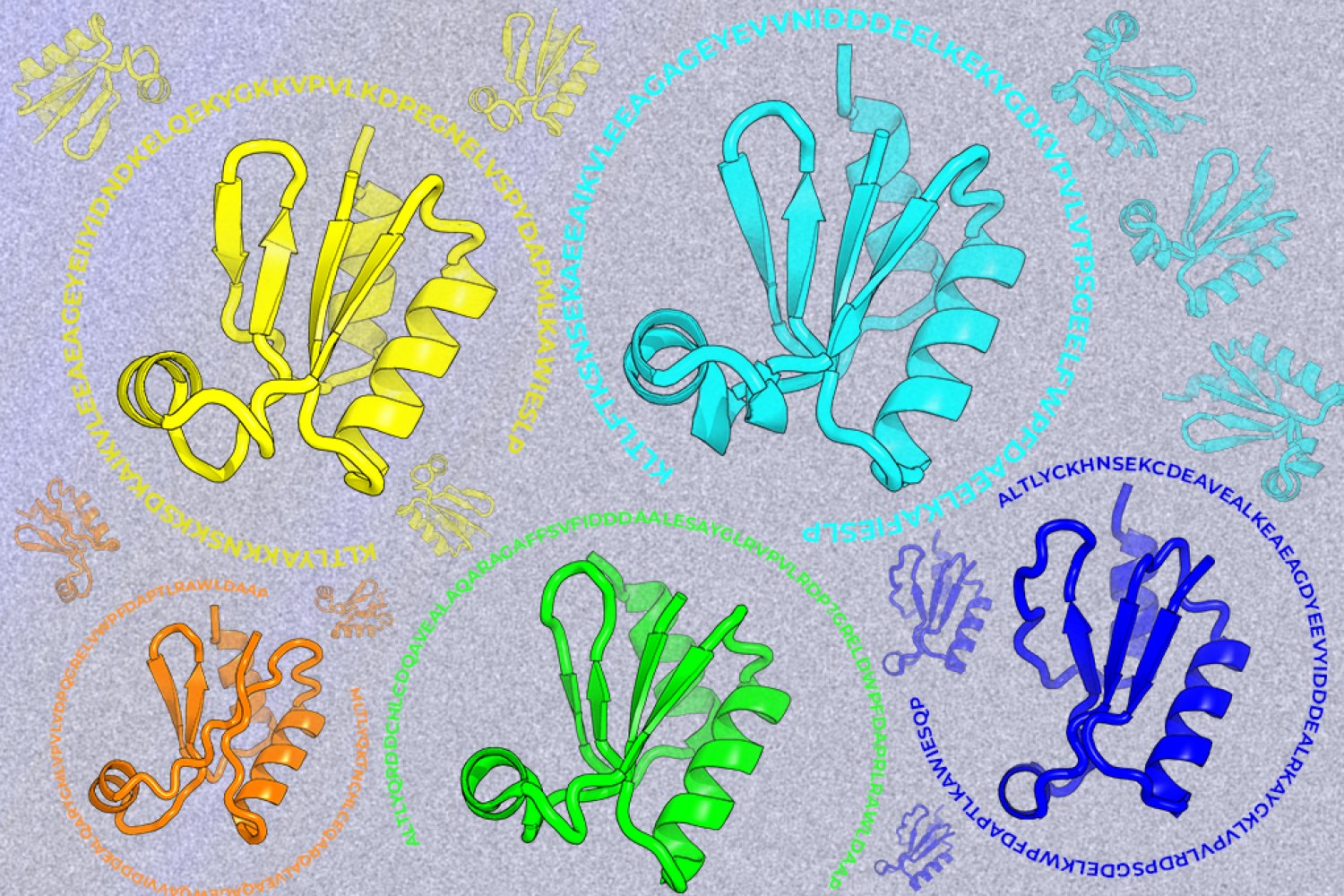
Pinal, a 16-billion-parameter foundation model that produces protein candidates from natural-language functional descriptions, supports natural language as a high-level interface for candidate generation in protein design, enabling programmable exploration with reduced reliance on manually specified structural or seque...
A new machine-learning framework aims to improve the success rate of computational protein design while moving away from results that reproduce sequences found in nature.