Oct 2026· International Journal of Research and Review in Applied Science, Humanities, and Technology· 0 citations· 8 references
Ethics and Social Impacts of AI
Abstract
This review covers human–artificial intelligence collaboration in making decisions, observing how scholarship has moved from thinking of AI as a passive tool to considering it as an active actor in healthcare, management, and ethics. While AI systems provide for efficient data processing and pattern recognition, humans provide contextual understanding, ethical judgment, creativity, and accountability. Previous literature suggests that well-designed collaboration between humans and AI may outperform completely automated decision-making. However, several key challenges persist, like bias, lack of transparency, miscalibrated trust, poorly defined distribution of roles, and accountability gaps. To handle these concerns, human-centered design, explainability in AI, well-articulated guidelines on ethical consideration, and mechanisms that effectively introduce oversight remain at the core of literature. These approaches jointly try to ensure that human–AI decision-making systems are fair, accountable, and trustworthy in high-stakes and critical settings
The method, ECCOLA, is presented, which aims at making the high-level AI ethics principles more practical, making it possible for developers to more easily implement them in practice.
Ville Vakkuri, Kai-Kristian Kemell, P. Abrahamsson· EUROMICRO Conference on Soft...· 64 citations· ⚡6
The goal is to not only refine the accuracy of the LLM-based tool but also to underscore its potential in streamlining the software development lifecycle through proactive code improvement and education.
Z. Rasheed, Malik Abdul Sami, Muhammad Waseem et al.· arXiv.org· 62 citations· ⚡3
The use of large language models to automatically improve the user story quality in Austrian Post Group IT agile teams is explored, with a reference model for an Autonomous LLM-based Agent System developed and implemented at the company.
Zheying Zhang, M. Rayhan, Tomas Herda et al.· International Conference on...· 48 citations· ⚡4
This paper introduces a novel multi-AI-agent system designed to fully automate SLRs, and demonstrates how it substantially reduces the time and effort traditionally required for SLRs while maintaining comprehensiveness and precision.
Abdul Malik Sami, Z. Rasheed, Kai-Kristian Kemell et al.· arXiv.org· 44 citations· ⚡2
The proposed LLM-based multi-agent system automates qualitative data analysis process, creating opportunities for researchers and practitioners, and future improvements focus on enhancing multilingual performance and integrating continuous expert feedback.
Z. Rasheed, Muhammad Waseem, Aakash Ahmad et al.· arXiv.org· 41 citations
Enforcing physics-based constraints prevents AI models from generating unreliable predictions for complex nonlinear systems in weather, climate, and turbulent flows.
MIT News · Artificial Intelligence· news.mit.eduNov 20, 2026
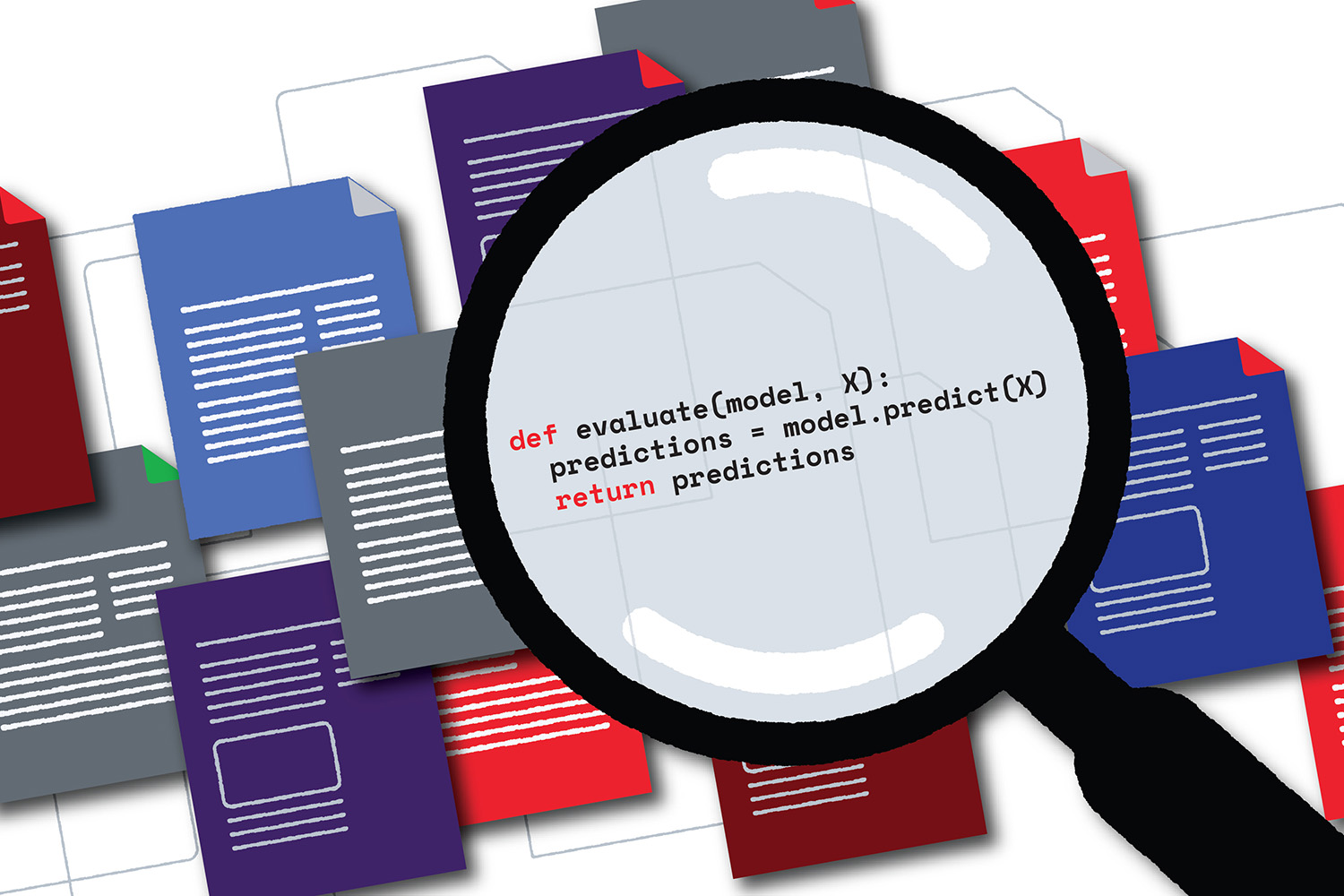
An MIT and Dana-Farber Institute-led team used large language models to examine nearly 4,000 studies and hundreds of code repositories, revealing gaps in the information needed to scrutinize and reuse published research.
We use cookies to run the site and, with your consent, for analytics and to show ads.
See our Cookie Policy.