Comparative effects of high-pressure homogenization, ultrasound-assisted fermentation, and transglutaminase on a protein-rich pumpkin seed-based yogurt analogue.
Dec 2026· Food Research International· Vol 245 Pt 4, pp.
120686
· 0 citations· 50 references
Medicine
Abstract
Plant-based yogurt analogues have emerged as one of the fastest-growing segments of the food industry. However, developing products with adequate gel structure and texture remains a major technological challenge. This study comparatively evaluated enzymatic (transglutaminase) and physical (high-pressure homogenization, and ultrasound-assisted fermentation) strategies for producing a pumpkin seed-based yogurt analogue enriched with pea protein. Among the evaluated strategies, homogenization was the most effective, increasing the consistency index by up to 176-fold and water-holding capacity by 41%, while reducing the fermentation time required to reach pH 4.60 (p < 0.05). Based on these results, the non-homogenized control and the yogurt analogues homogenized at 30 and 150 MPa were selected for further characterization during 21 days of refrigerated storage. SEM micrographs revealed that homogenization promoted the formation of a more interconnected protein network, supporting the improvements observed in rheological properties and water-holding capacity. During storage, only slight changes were observed in acidity (+0.13% lactic acid) and pH (-0.11), whereas lactic acid bacteria remained stable at approximately 8.0 log CFU/mL. High-pressure homogenization also increased antioxidant activity by up to 24%, 25%, and 20% according to the FRAP, ABTS•+, and DPPH• assays, respectively, while maintaining these improvements throughout storage. Moreover, all yogurt analogues maintained cell viability above 90% in RAW 264.7 macrophages across the evaluated sample concentrations (100-500 μg mL-1) and storage periods (1 and 21 days), indicating no detectable in vitro cytotoxic effects under the tested conditions. Overall, high-pressure homogenization proved to be a promising clean-label strategy for producing protein-rich plant-based yogurt analogues with improved technological, functional, and storage stability properties.
The comparison of adopter and non-adopter sample reveals three potential adoption inhibitor, security, data privacy, and portability, which underlines the importance of the technical and security perspectives for research investigating the adoption of technology.
Nattakarn Phaphoom, Xiaofeng Wang, S. Samuel et al.· Journal of Systems and Softw...· 111 citations· ⚡8
This study investigates how Lean internal startup facilitates software product innovation in large companies and identifies its enablers and inhibitors, and shows the potential of the method-in-action framework to investigate the Lean startup approach in non-startup context.
Henry Edison, Nina M. Smørsgård, Xiaofeng Wang et al.· Journal of Systems and Softw...· 78 citations· ⚡6
This paper highlights the challenges to conduct proper affect-related studies with psychology, provides a comprehensive literature review in affect theory, and proposes guidelines for conducting psychoempirical software engineering.
D. Graziotin, Xiaofeng Wang, P. Abrahamsson· SSE@SIGSOFT FSE· 56 citations· ⚡4
This study conducts a multiple case study on twenty European software startups and proposes a prototype-centric learning model in early stage software startups, and identifies factors that occur as barriers but also facilitators for prototyping in earlystage software startups.
Anh Nguyen-Duc, Xiaofeng Wang, P. Abrahamsson· International Conference on...· 44 citations· ⚡5
It is demonstrated that linker-free PROTACs can outperform traditional designs, marking a paradigm shift in PROTAC development for targeted protein degradation.
Pinal, a 16-billion-parameter foundation model that produces protein candidates from natural-language functional descriptions, supports natural language as a high-level interface for candidate generation in protein design, enabling programmable exploration with reduced reliance on manually specified structural or seque...
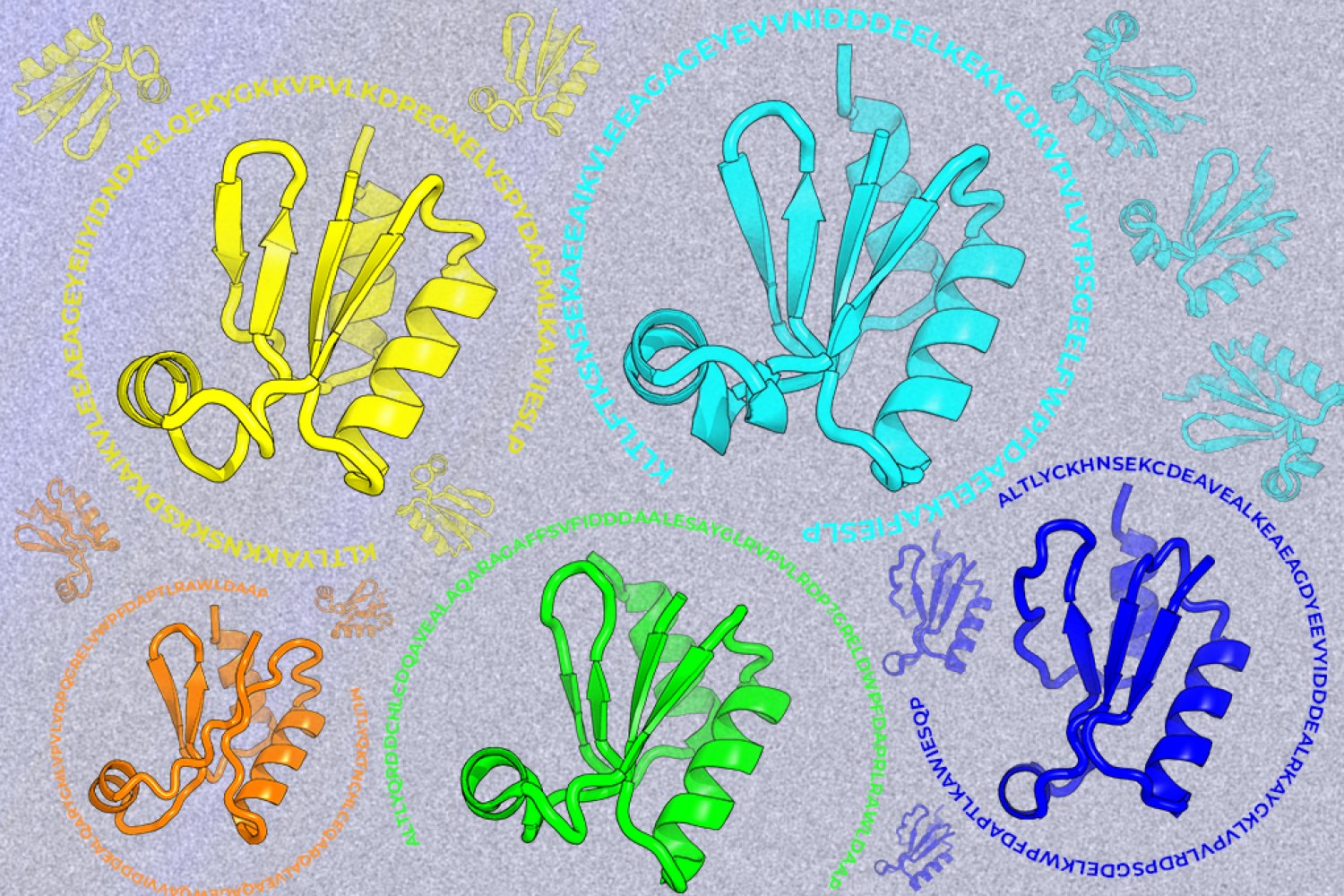
A new machine-learning framework aims to improve the success rate of computational protein design while moving away from results that reproduce sequences found in nature.