Skip to content
#protein folding Open access

The oxidation of drug molecules using the peroxygenase activity of a bacterial family of cytochrome P450 enzymes.

Nov 2026 · Organic and biomolecular chemistry · 0 citations
Medicine

TL;DR

Two CYP105 enzymes are effective natural peroxygenase biocatalysts and could efficiently oxidize drug molecules to generate human drug metabolites and demonstrate that their oxidation would facilitate their removal from or breakdown in the environment.

Abstract

Cytochrome P450 (CYP) enzymes with peroxygenase activity can use H2O2 as the sole oxidant which is beneficial for biocatalytic applications. We investigated the peroxygenase activity of CYP105D18 from Streptomyces laurentii. The modification of the acid-alcohol pair in the I-helix through protein engineering reduced the peroxygenase activity for papaverine oxidation by 6-fold compared to the wild-type (WT) enzyme. We identified the oxidation metabolites as papaverine N-oxide, and two newly identified metabolites that arise from O-demethylation. The major O-demethylation metabolite was characterized as 6-O-desmethyl papaverine. Given the higher peroxygenase activity of the unmodified CYP105D18 enzyme we explored if another enzyme from the same CYP subfamily had similar activity. We produced and purified CYP105D41 from Streptomyces thermoviolaceus and found that this enzyme also has significant peroxygenase activity. CYP105D41 could catalyze the oxidation of papaverine and diclofenac. For this enzyme the oxidation of diclofenac was the more efficient reaction and generated 4'-hydroxydiclofenac, 5-hydroxydiclofenac and a doubly hydroxylated metabolite. Overall, we demonstrate that two CYP105 enzymes are effective natural peroxygenase biocatalysts and could efficiently oxidize drug molecules to generate human drug metabolites. These drug molecules are also emerging contaminants, and their oxidation would facilitate their removal from or breakdown in the environment.
Read PDF

Similar papers

Oct 2026

Investigation of cytochrome P450-catalyzed lyase and hydroxylation reactions with labeled peroxide

The heme enzymes of the cytochrome P450 superfamily (CYPs) catalyze oxidation reactions with a high level of selectivity. The most common reactions they catalyze are C-H bond hydroxylations but one of the important and more enigmatic reactions they can catalyze is the oxidative cleavage of C-C bonds of α-hydroxyketon...

J. Lee, E. F. Hayball, Justin C. Miller et al. · 0 citations
Open access Oct 2026

Expanding the structural landscape of cytochrome P450 reductases and the effect of redox mediators on CYP-catalyzed reactions

Cytochrome P450 reductases (CPRs) are microsomal diflavin oxidoreductases that transfer electrons from nicotinamide cofactors to class II cytochrome P450 monooxygenases (CYPs). CPRs can also reduce other proteins, including cytochrome b 5 , heme oxygenase, and components of the fatty acid elongation system, as...

M. Gidaga, M. Smit, A. Ebrecht et al. · 0 citations
Open access Sep 2026

Functional identification of two cytochrome P450 enzymes involved in diterpenoid oxidation in Ginkgo biloba

The value of the engineered yeast chassis for accelerating the discovery of plant diterpenoid oxidases is highlighted and provides new enzymatic tools for the future biosynthetic production of structurally diverse oxidized diterpenoids.

Lu Chen, Yue Zhang, Zhen Fan et al. · 0 citations
Open access Oct 2026

Engineering of Redox-Active Residues Enhances P450 Peroxygenase Performance.

Cytochrome P450 peroxygenases depend on the high-valent iron-oxo intermediate Compound I (Cpd I) to activate C-H bonds. However, the nonproductive oxidative damage caused by Cpd I compromises enzyme stability and limits catalytic efficiency. Here, we report a rational protein engineering strategy to address this bottle...

Zi-Han Wang, Ming-Ming Qin, Yong-Chao Wang et al. · 0 citations
Review Sep 2026

Cytochrome P450 enzymes in the biosynthesis of bioactive diterpenoids from traditional chinese medicinal plants.

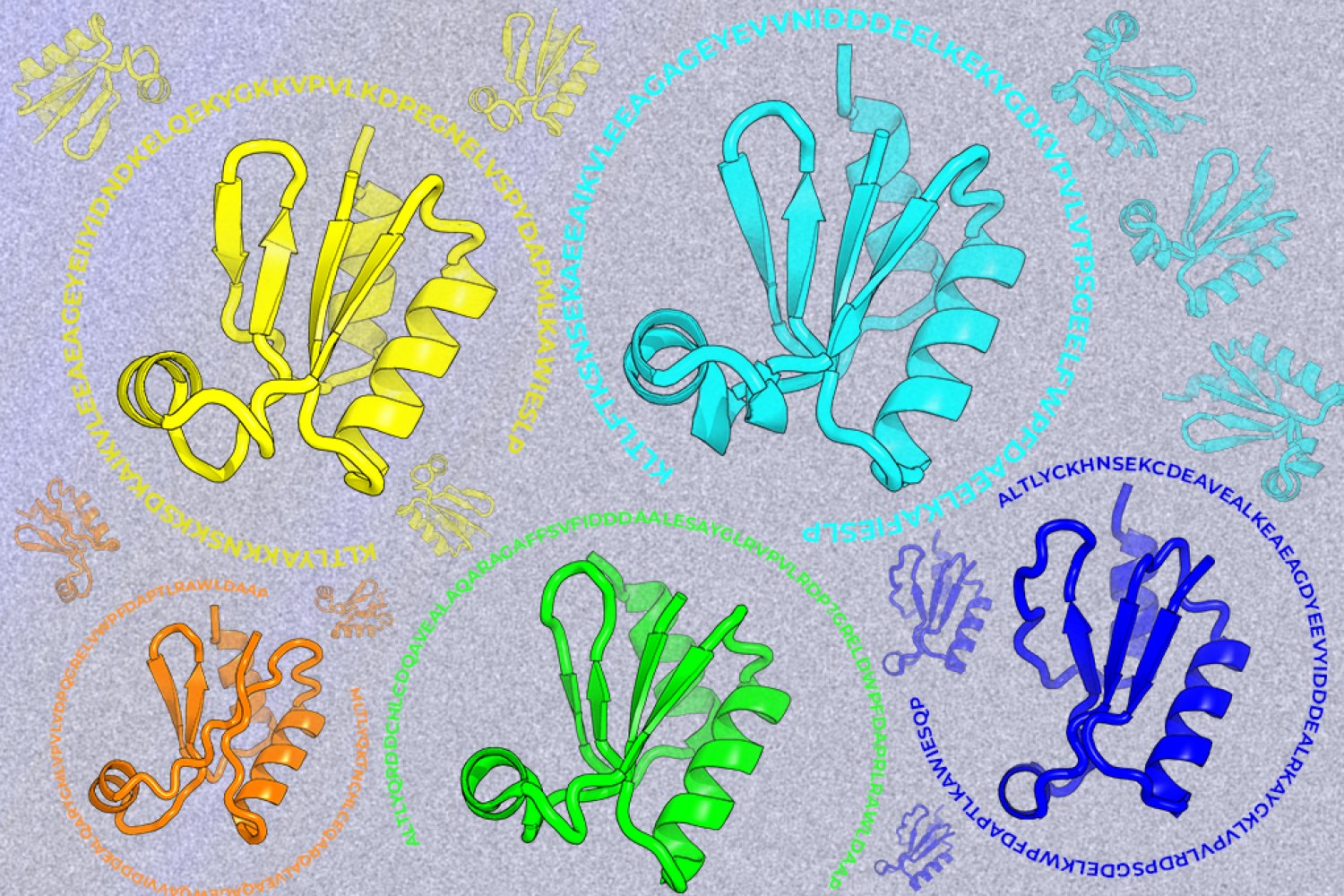
The prospects of artificial intelligence-assisted protein design for engineering P450 catalytic elements are discussed, encompassing structure prediction, protein language model-based mutational prescreening, and de novo catalytic-pocket design, along with their potential to facilitate heterologous biosynthesis and the...

Zheng Zhang, Wei Li, Hong Li · 0 citations

Related blog posts

Google DeepMind Blog Sep 30, 2026

Introducing SynthID Bio

Proof of concept for watermarking AI-generated proteins while preserving biological function.

MIT News · Artificial Intelligence Aug 27, 2026

Looking beyond natural sequences

A new machine-learning framework aims to improve the success rate of computational protein design while moving away from results that reproduce sequences found in nature.

We use cookies to run the site and, with your consent, for analytics and to show ads. See our Cookie Policy.