This work performs the first large-scale analysis of social GenAI music shared via SoundCloud, and demonstrates that by integrating social engagement features, tour model achieves performance comparable to heavyweight black-box deep learning models, while also providing explainability.
Advances in generative AI have made it possible to produce music that is nearly indistinguishable from human compositions, raising the question of whether such works can be reliably distinguished from human compositions. We present MUSEBENCH, a large-scale benchmark for AI-generated music detection and artifact analysi...
Yi-Chen Liu, Syed Irfan Ali Meerza, Jia-Wei Yu et al.· 0 citations
Recent advances in generative AI have sparked renewed
interest and expanded possibilities for music generation.
However, the performance and versatility of these systems
across musical genres are heavily influenced by the
availability of training data. We conducted an extensive
analysis of over one million hours of aud...
Atharva Mehta, Shivam Chauhan, Monojit Choudhury· Proceedings of the AAAI/ACM...· 11 citations· ⚡2
Generative artificial intelligence music tools such as Suno, Udio, and ACE-Step can now create full songs with vocals, instrumentation, and production quality convincing enough to sound like human-made music. However, musical "quality" is not a single measurable property, and treating "AI music" as one category by itse...
Flora Wu· Proceedings of the OJSS Virt...· 0 citations
The rapid expansion of text-to-music generative models challenges traditional paradigms of music creation and intellectual property. Plagiarism in this context is rarely an absolute mathematical binary, but an ambiguous threshold negotiated over harmonic structure, melodic contours, or overall perceived stylistic chara...
Fotis Koutsikos, Ioannis Prokopiou, Spyridon Kantarelis et al.· 0 citations
A practical, multidimensional framework for evaluating AI music composition systems, which proposes a staged evaluation protocol combining listening tests, task-based assessment, technical checks, and documentation review.
M. S. D. Prithaviraj Ashok Londhe, H. B. J. L. S. Bhadake· International Journal of Adv...· 0 citations
We present a large-scale analysis of the harmonic and formal structures of music generated by users of two AI music-generation platforms, Suno and Udio, compared with human-composed popular music. We address three questions: (1) What considerations arise when applying music information retrieval tools to AI-generated m...
D. Dalmazzo, Laura Cros Vila, Luca Casini et al.· Transactions of the Internat...· 0 citations
Enforcing physics-based constraints prevents AI models from generating unreliable predictions for complex nonlinear systems in weather, climate, and turbulent flows.
MIT News · Artificial Intelligence· news.mit.eduNov 20, 2026
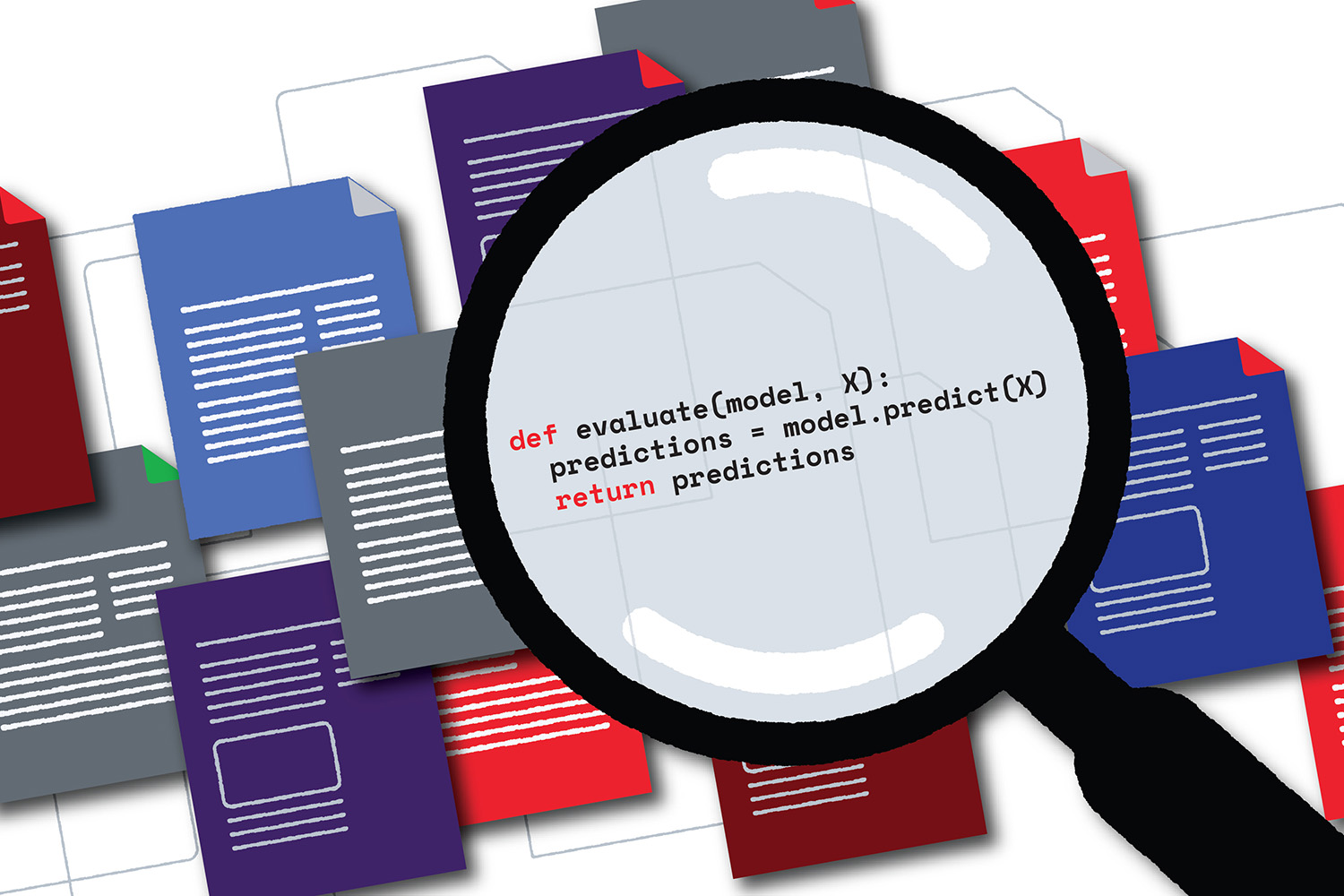
An MIT and Dana-Farber Institute-led team used large language models to examine nearly 4,000 studies and hundreds of code repositories, revealing gaps in the information needed to scrutinize and reuse published research.
We use cookies to run the site and, with your consent, for analytics and to show ads.
See our Cookie Policy.