Skip to content
#protein folding Open access

Neutralization and protective effectiveness of three XBB vaccines in older adults 12 months after booster

Nov 2026 · Signal Transduction and Targeted Therapy · Vol 11 · 0 citations · 5 references
Medicine

Abstract

COVID-19 vaccination is a key determinant for optimizing booster strategies in older adults, who remain at high risk for severe outcomes because of immunosenescence and waning immunity. We previously reported neutralizing responses in a prospective cohort of 90 older adults ( ≥ 65 years) at 6 months after boosting with trivalent (Tri-XBB.1.5), bivalent (Bi-Omi-XBB), or tetravalent (Tetra-XBB.1) protein vaccines. 1 In this extended follow-up to 12 months post-vaccination of the same cohort, we assessed neutralizing antibody persistence, decay kinetics, and protective effectiveness against SARS-CoV-2 infection. Detailed methods are provided in the Supplementary Materials.Allparticipants, regardless of infection status after booster vaccination, maintained detectable neutralizing antibodies across the three vaccine cohorts at 12 months post-booster (Fig. 1a, b), with comparable geometric mean titers (GMTs, all p > 0.05). In the Tri-XBB.1.5 cohort (Fig. 1a), the GMTs on day 357 ranged from 313.1 (XEC) to 3,583.0 (BA.5). Compared with day 185, signi fi cant declines were observed for all the variants except D614G, with GMT reductions of 1.7-fold for BA.5, 1.3-fold for XBB.1.5, 1.6-fold for JN.1, 1.2-fold for KP.3, and 1.9-fold for XEC. In the Bi-Omi-XBB cohort (Fig. 1a), the GMTs on day 357 ranged from 452.6 to 2047.0; signi fi cant declines were observed for BA.5 (3.2-fold), XBB.1.5 (2.
Read PDF

Similar papers

#computer vision Review Open access May 2015

A survey study on major technical barriers affecting the decision to adopt cloud services

The comparison of adopter and non-adopter sample reveals three potential adoption inhibitor, security, data privacy, and portability, which underlines the importance of the technical and security perspectives for research investigating the adoption of technology.

Nattakarn Phaphoom, Xiaofeng Wang, S. Samuel et al. · 111 citations · ⚡8
#computer vision Open access Feb 2018

Lean Internal Startups for Software Product Innovation in Large Companies: Enablers and Inhibitors

This study investigates how Lean internal startup facilitates software product innovation in large companies and identifies its enablers and inhibitors, and shows the potential of the method-in-action framework to investigate the Lean startup approach in non-startup context.

Henry Edison, Nina M. Smørsgård, Xiaofeng Wang et al. · 78 citations · ⚡6
#computer vision Book Open access Jul 2015

Understanding the affect of developers: theoretical background and guidelines for psychoempirical software engineering

This paper highlights the challenges to conduct proper affect-related studies with psychology, provides a comprehensive literature review in affect theory, and proposes guidelines for conducting psychoempirical software engineering.

D. Graziotin, Xiaofeng Wang, P. Abrahamsson · 56 citations · ⚡4
#machine learning Open access May 2017

What Influences the Speed of Prototyping? An Empirical Investigation of Twenty Software Startups

This study conducts a multiple case study on twenty European software startups and proposes a prototype-centric learning model in early stage software startups, and identifies factors that occur as barriers but also facilitators for prototyping in earlystage software startups.

Anh Nguyen-Duc, Xiaofeng Wang, P. Abrahamsson · 44 citations · ⚡5
#protein folding Open access Sep 2026

Programmable design of functional proteins from natural language

Pinal, a 16-billion-parameter foundation model that produces protein candidates from natural-language functional descriptions, supports natural language as a high-level interface for candidate generation in protein design, enabling programmable exploration with reduced reliance on manually specified structural or seque...

Fengyuan Dai, Shiyang You, Yudian Zhu et al. · 31 citations · ⚡3

Related blog posts

Google DeepMind Blog Sep 30, 2026

Introducing SynthID Bio

Proof of concept for watermarking AI-generated proteins while preserving biological function.

MIT News · Artificial Intelligence Aug 27, 2026

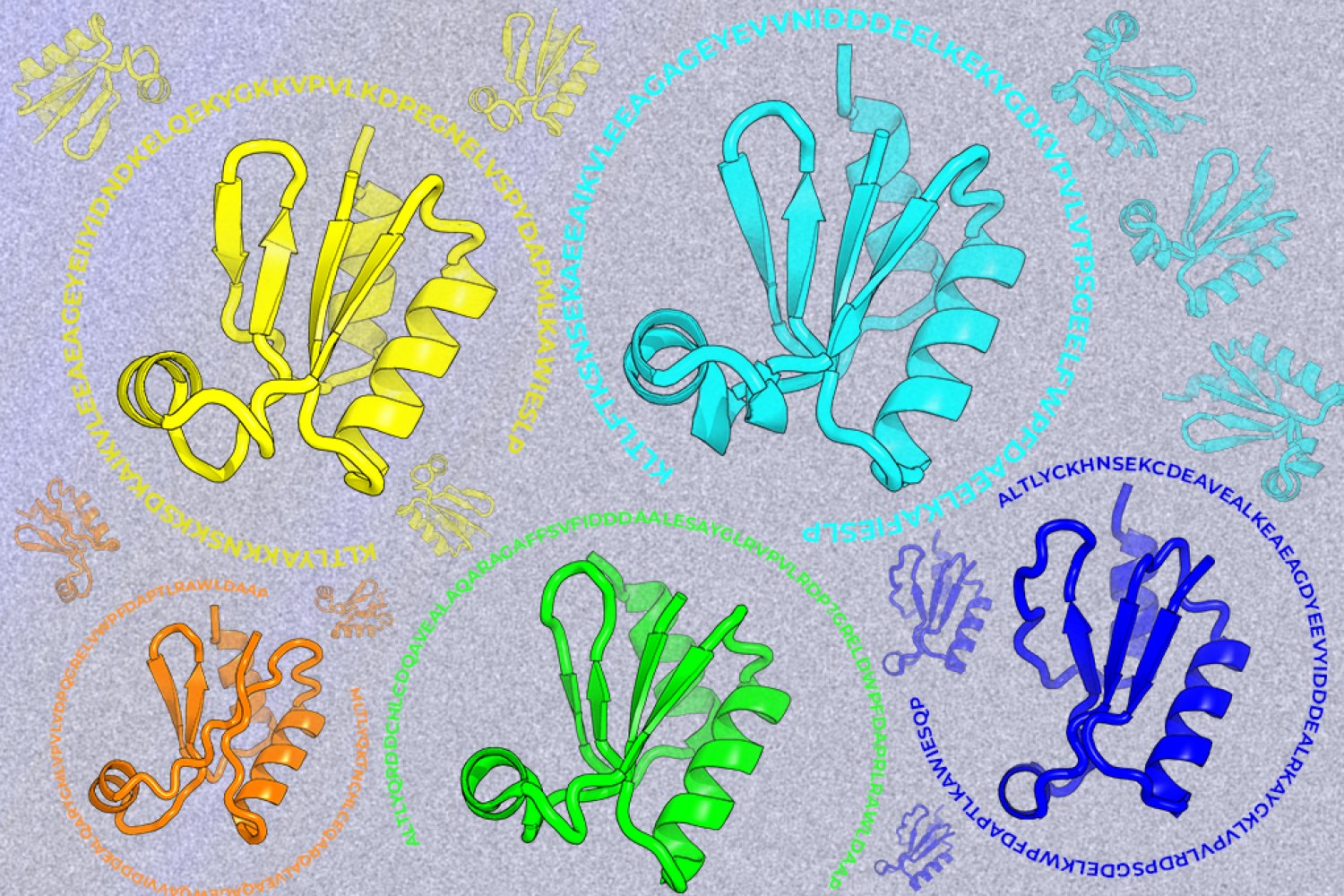
Looking beyond natural sequences

A new machine-learning framework aims to improve the success rate of computational protein design while moving away from results that reproduce sequences found in nature.

We use cookies to run the site and, with your consent, for analytics and to show ads. See our Cookie Policy.