Glioblastoma theranostics remain limited by the tumor's blood-brain-barrier (BBB), infiltrative growth, and heterogenous, treatment-resistant cell populations. Here, we engineered self-assembled high-density lipoprotein (HDL)-like nanoparticles functionalized with an apolipoprotein E-mimetic peptide (ApoEm), designed to recapitulate and strengthen the multireceptor-mediated transport properties of native apolipoprotein E3 (ApoE3). Competition and receptor inhibition studies demonstrate coordinated uptake of ApoEm-HDL nanoparticle via low-density lipoprotein receptor, low-density lipoprotein receptor-related protein 1, and scavenger receptor class-B type 1, which are expressed at BBB and upregulated in glioblastoma. Incorporation of porphyrin-lipid into the HDL-like scaffold yielded ApoEm porphyrin-lipoprotein nanoparticles (ApoEm-PLP) with a uniform, spherical morphology (∼30 nm). ApoEm-PLP increased porphyrin uptake relative to ApoE3-PLP across multiple glioblastoma cell lines (∼seven-fold in U87 cells, ∼four-fold in T98, and GL261-Luc cells) and induced ∼two-fold greater photodynamic therapy (PDT) efficacy in U87 cells. In an orthotopic U87 glioblastoma model, intravenous administration of ApoEm-PLP achieved ∼13-fold higher tumor porphyrin accumulation than normal brain, with homogeneous intratumoral distribution and pronounced peri-tumoral deposition. Transcranial PDT using ApoEm-PLP elicited widespread tumor damage. These findings establish ApoEm-HDL-like nanoparticles as a promising theranostic platform for uniform glioblastoma porphyrin delivery and effective phototherapy, with potential to address the infiltrative and heterogenous nature of glioblastoma.
The comparison of adopter and non-adopter sample reveals three potential adoption inhibitor, security, data privacy, and portability, which underlines the importance of the technical and security perspectives for research investigating the adoption of technology.
Nattakarn Phaphoom, Xiaofeng Wang, S. Samuel et al.· Journal of Systems and Softw...· 111 citations· ⚡8
This study investigates how Lean internal startup facilitates software product innovation in large companies and identifies its enablers and inhibitors, and shows the potential of the method-in-action framework to investigate the Lean startup approach in non-startup context.
Henry Edison, Nina M. Smørsgård, Xiaofeng Wang et al.· Journal of Systems and Softw...· 78 citations· ⚡6
This paper highlights the challenges to conduct proper affect-related studies with psychology, provides a comprehensive literature review in affect theory, and proposes guidelines for conducting psychoempirical software engineering.
D. Graziotin, Xiaofeng Wang, P. Abrahamsson· SSE@SIGSOFT FSE· 56 citations· ⚡4
This study conducts a multiple case study on twenty European software startups and proposes a prototype-centric learning model in early stage software startups, and identifies factors that occur as barriers but also facilitators for prototyping in earlystage software startups.
Anh Nguyen-Duc, Xiaofeng Wang, P. Abrahamsson· International Conference on...· 44 citations· ⚡5
It is demonstrated that linker-free PROTACs can outperform traditional designs, marking a paradigm shift in PROTAC development for targeted protein degradation.
Pinal, a 16-billion-parameter foundation model that produces protein candidates from natural-language functional descriptions, supports natural language as a high-level interface for candidate generation in protein design, enabling programmable exploration with reduced reliance on manually specified structural or seque...
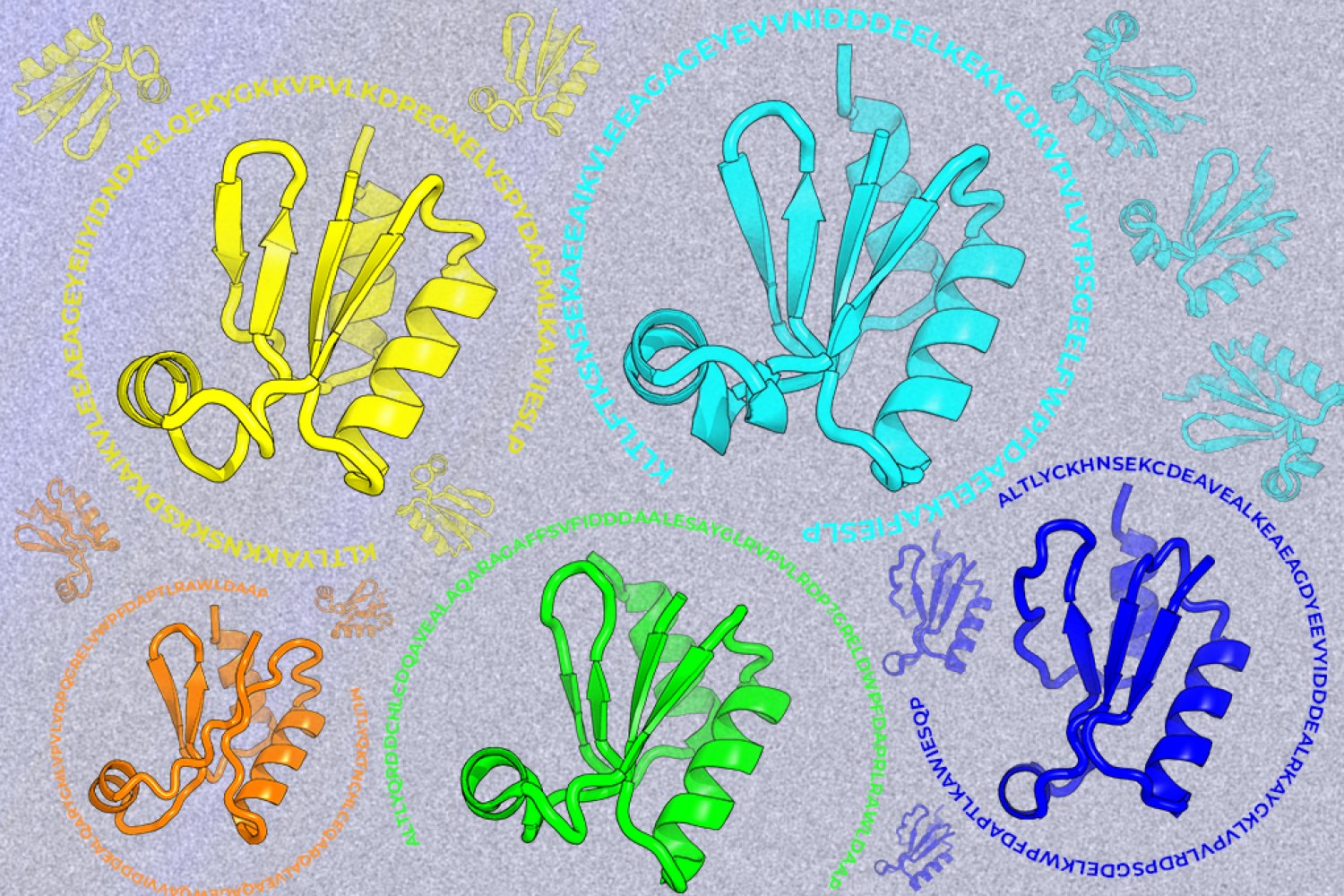
A new machine-learning framework aims to improve the success rate of computational protein design while moving away from results that reproduce sequences found in nature.