Skip to content

Secure Real-Time Heterogeneous IoT Data Management System

Dec 2019 · International Conference on Trust, Privacy and Security in Intelligent Systems and Applications · pp. 228-235 · 13 citations · 37 references
Computer Science

Abstract

The growing adoption of IoT devices in our daily life engendered a need for secure systems to safely store and analyze sensitive data as well as the real-time data processing system to be as fast as possible. The cloud services used to store and process sensitive data are often come out to be vulnerable to outside threats. Furthermore, to analyze streaming IoT data swiftly, they are in need of a fast and efficient system. The Paper will envision the aspects of complexity dealing with real time data from various devices in parallel, building solution to ingest data from different IOT devices, forming a secure platform to process data in a short time, and using various techniques of IOT edge computing to provide meaningful intuitive results to users. The paper envisions two modules of building a real time data analytics system. In the first module, we propose to maintain confidentiality and integrity of IoT data, which is of paramount importance, and manage large-scale data analytics with real-time data collection from various IoT devices in parallel. We envision a framework to preserve data privacy utilizing Trusted Execution Environment (TEE) such as Intel SGX, end-to-end data encryption mechanism, and strong access control policies. Moreover, we design a generic framework to simplify the process of collecting and storing heterogeneous data coming from diverse IoT devices. In the second module, we envision a drone-based data processing system in real-time using edge computing and on-device computing. As, we know the use of drones is growing rapidly across many application domains including real-time monitoring, remote sensing, search and rescue, delivery of goods, security and surveillance, civil infrastructure inspection etc. This paper demonstrates the potential drone applications and their challenges discussing current research trends and provide future insights for potential use cases using edge and on-device computing.

View source

Similar papers

#artificial intelligence Preprint Jul 2024

The Llama 3 Herd of Models

It is found that Llama 3 delivers comparable quality to leading language models such as GPT-4 on a plethora of tasks, and performs competitively with the state-of-the-art on image, video, and speech recognition tasks.

Aaron Grattafiori, Abhimanyu Dubey, Abhinav Jauhri et al. · 21,082 citations · ⚡3,832
#artificial intelligence Conference Open access Jun 2018

Gibson Env: Real-World Perception for Embodied Agents

This paper investigates developing real-world perception for active agents, proposes Gibson Environment for this purpose, and showcases a set of perceptual tasks learned therein.

F. Xia, Amir Zamir, Zhi-Yang He et al. · 1,069 citations · ⚡112
#computer vision Review Sep 2017

Agile Software Development Methods: Review and Analysis

This publication proposes a definition and a classification of agile software development approaches and analyses ten software development methods that can be characterized as being "agile" against the defined criterion.

P. Abrahamsson, O. Salo, Jussi Ronkainen et al. · 727 citations · ⚡54
#computer vision Jun 2008

The impact of agile practices on communication in software development

The study shows that agile practices improve both informal and formal communication, but indicates that, in larger development situations involving multiple external stakeholders, a mismatch of adequate communication mechanisms can sometimes even hinder the communication.

M. Pikkarainen, Jukka Haikara, O. Salo et al. · 401 citations · ⚡48
#machine learning Review Open access Oct 2014

Software development in startup companies: A systematic mapping study

The results indicate that software engineering work practices are chosen opportunistically, adapted and configured to provide value under the constrains imposed by the startup context.

Nicolò Paternoster, Carmine Giardino, M. Unterkalmsteiner et al. · 394 citations · ⚡54

Related blog posts

Microsoft Research Blog Oct 15, 2026

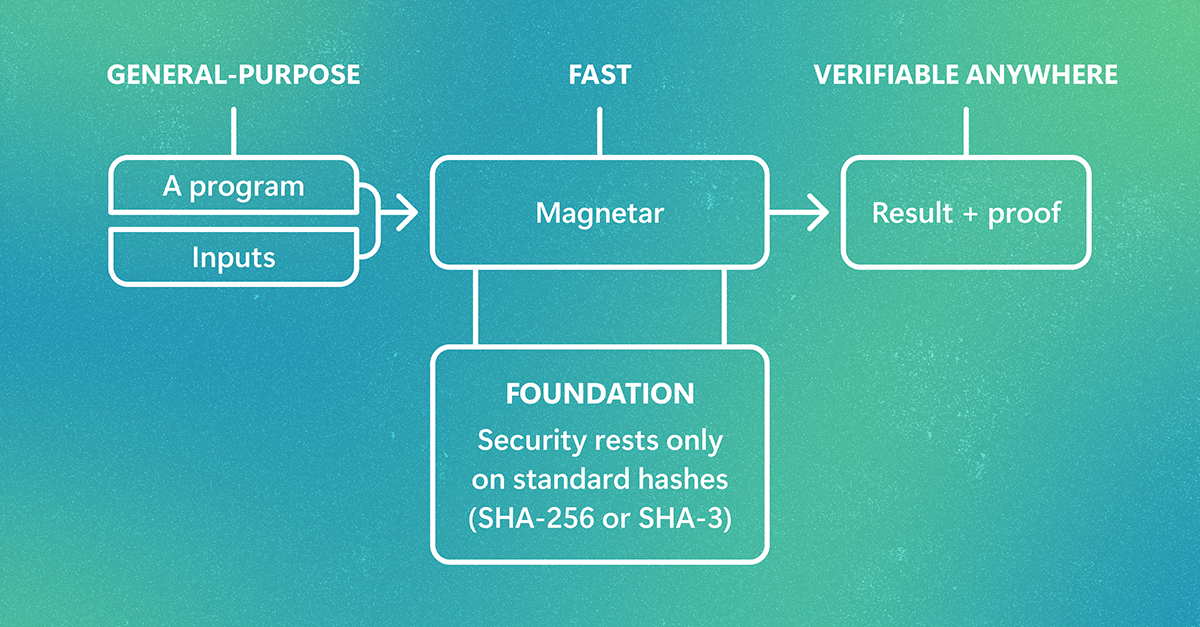
Proof-based general-purpose computing with Magnetar

Zero-knowledge proofs can verify computing results without rerunning workloads or exposing sensitive data. Magnetar helps bring them into the mainstream with support for standard programming languages, major speed gains, and quantum-resistant security. The post Proof-based general-purpose computing with Magnetar appeared first on Microsoft Research.

Microsoft Research Blog Oct 6, 2026

What AI gets wrong and what failure teaches us

Jennifer Neville did not want to go into computer science—but that’s exactly where she landed. Neville discusses the starts and stops that led to her professional sweet spot and her work identifying “surprising failures” making it hard for AI to handle complexity.  The post What AI gets wrong and what failure teaches us appeared first on Microsoft Research.

MIT News · Artificial Intelligence Nov 17, 2026

Learning the language of machine learning

By studying the computational foundations of language learning, Associate Professor Jacob Andreas builds intelligent systems that can communicate effectively with humans.

We use cookies to run the site and, with your consent, for analytics and to show ads. See our Cookie Policy.

