Skip to content
Preprint

CoToGrasp: Contact-Topology-Conditioned Dexterous Grasp Synthesis via Canonical Workspace Learning

Aug 2026 · 1 citation · 58 references
Computer Science

TL;DR

CoToGrasp is a novel generative framework that synthesizes diverse, stable grasps strictly conditioned on specific contact topologies, and introduces a feature-based canonical workspace that projects local object features into a unified gripper-centric domain, effectively decoupling the semantic functional intent from the arbitrary object geometry.

Abstract

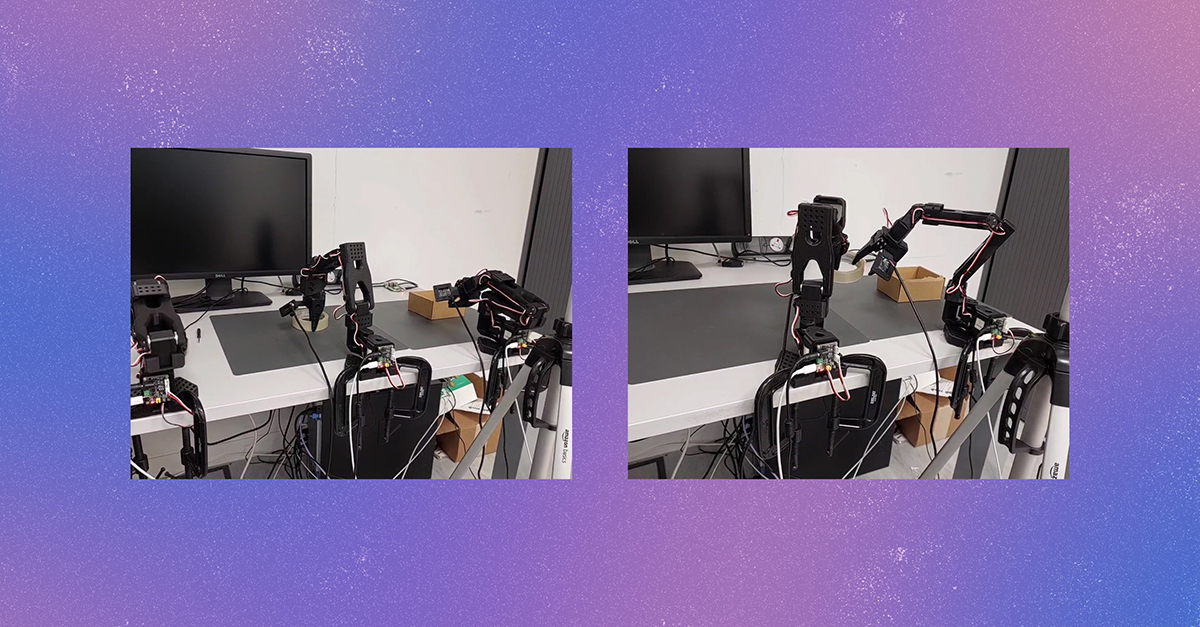
Current dexterous grasp planners primarily optimize for physical stability, focusing on whether an object can be grasped rather than how it should be grasped to support downstream functional tasks. However, conditioning grasp synthesis on specific human grasp taxonomies typically requires prohibitively expensive, object-annotated datasets. To address these limitations, we propose CoToGrasp, a novel generative framework that synthesizes diverse, stable grasps strictly conditioned on specific contact topologies. To bypass the data collection bottleneck, CoToGrasp is trained entirely in an object-agnostic manner. We introduce a feature-based canonical workspace that projects local object features into a unified gripper-centric domain, effectively decoupling the semantic functional intent from the arbitrary object geometry. By learning the intrinsic contact manifold of the gripper within this workspace, our model achieves zero-shot generalization to unseen objects at inference. Extensive evaluations on the large-scale DexGraspNet dataset demonstrate that CoToGrasp achieves state-of-the-art performance, outperforming existing taxonomy-guided planners. Finally, we demonstrate the physical viability and kinematic feasibility of our synthesized contact topologies on a physical robot platform. Code is available on our project website at https://cea-list.github.io/cotograspweb/ .
View source

Similar papers

Preprint Aug 2026

GOAG: Generative and Object-Agnostic Grasp Planner for Dexterous Robotic Manipulation

Multifingered grasping is a crucial robotic skill, but current deep-learning grasp planners often struggle to generalize to new objects because they are trained on limited, object-specific datasets. We introduce a fundamentally different approach, grounded in the observation that the gripper and the object share identical surface geometry at their mutual contact points. We propose GOAG: Generative and Object-Agnostic Grasp Planner for Dexterous Robotic Manipulation, a novel deep generative model that learns a compact latent representation of a specific gripper's contact surface distribution, enabling the efficient sampling of valid grasp configurations without relying on object-specific training data. We show that by introducing object features only at inference time, our model can effectively retrieve admissible contact areas that are compatible with the gripper's capabilities. We validate our approach through extensive experiments on established grasp protocols in both simulated and real-world scenarios, demonstrating its effectiveness with different grippers from the literature. Our method delivers state-of-the-art results on the objects from the MultiDex dataset, achieving an average success rate of 86.93%. It offers significantly faster processing when generating numerous grasps, while matching the performance of leading approaches specifically trained on this dataset. Unlike these methods, our approach does not rely on object-specific training data, highlighting the advantages of object-agnostic learning. It effectively addresses the generalization challenges faced by traditional data-driven grasp planners. Code and videos are available on our project website https://cea-list.github.io/goagweb/ .

Julien Mérand, Boris Meden, Mathieu Grossard et al. · 1 citation
Preprint Aug 2026

PartialBiGrasp: Inferring Hidden Local Geometry for Bimanual Grasping from Partial Views

This work proposes PartialBiGrasp, a dual-arm grasp generation framework that operates directly on partial point cloud observations that learns geometric features implicitly through convolutional occupancy networks, enabling local reasoning about graspability, collision-free contact regions, and object thickness.

Ayush Kaura, Vignesh Vembar, Md Faizal Karim et al. · 0 citations
Preprint Jul 2026

GraspGraphNet: Graph-Structured Multi-Embodiment Dexterous Grasp Generation

GraspGraphNet is introduced, a topology-aware grasp generation framework that represents each hand as a URDF-derived kinematic graph and directly generates executable palm poses and joint configurations and suggests that graph-structured hand representations can effectively support dexterous grasp generation across robot hands with different kinematic structures.

Y. Lee, Taeyeop Lee, Hyosup Shin et al. · 0 citations
Preprint Jul 2026

HUGS: Guiding Unified Dexterous Grasp Synthesis Across Modes and Scales via Learned Human Priors

Dexterous grasping across diverse object scales requires contact modes ranging from two-finger pinches to bimanual grasps. Existing dexterous grasp synthesis methods reduce the high-dimensional optimization space with manually designed expected contacts and initialization heuristics, which struggle to balance synthesis success rate and diversity. We present HUGS (Human-prior-guided Unified Dexterous Grasp Synthesis), a human-prior-guided framework for unified dexterous grasp synthesis across modes and scales. Instead of directly retargeting human demonstrations, HUGS learns an object-conditioned human prior that captures human grasp preferences and guides downstream force-closure-aware optimization. The prior is trained on a compact self-collected human grasp dataset with 1.8K grasps over 304 objects, providing broad coverage of object scales and contact modes. During synthesis, HUGS adaptively proposes contact modes and wrist initializations, substantially improving the balance between contact-mode coverage and synthesis success rate over heuristic-based methods. With HUGS, we synthesize 3.2M robotic grasps over 157K scenes, spanning object half-diagonal lengths from 2 cm to 30 cm and modes from two-finger to bimanual grasps. Models trained on the synthesized dataset autonomously select appropriate contact modes in the real world, enabling grasping from screws to large boxes.

Mingrui Yu, Yongpeng Jiang, Yongyi Jia et al. · 0 citations
Preprint Aug 2026

Real-World Cooperative Bimanual Dexterous Grasp of Large Objects from Single-View Observations

This work proposes a real-world bimanual grasping framework that includes a multimodal dataset capturing joint angles, visual observations and force signals; a Denoising Diffusion Probabilistic Model (DDPM)-based module that generates joint-level grasp configurations from segmented point clouds; and an execution strategy that integrates motion planning with online grasp refinement to ensure physical stability and feasibility.

Ziming Li, Mingxuan Wu, Jiaqi Zhang et al. · 0 citations
#artificial intelligence Preprint Aug 2026

Iterative Grasp Pose Refinement: A Deep Reinforcement Learning Approach for 2D Vision

A reinforcement learning-based framework for robotic grasp refinement, integrating keypoint-based object representations with a Deep Q-Network (DQN), is proposed, offering a scalable and adaptable solution for contact-rich manipulation tasks.

Amir Arsalan Nematollahi, Shayan Ahmadi, M. T. Masouleh et al. · 0 citations