Dynamic resource assignment, the real-time allocation of task streams to heterogeneous processing nodes, is the backbone of modern computing infrastructure. While learning-based schedulers excel in research, industrial deployments still rely on hand-written rules that operators can read, audit, and execute within tight...
J. Ayala-Romero, Andres Garcia-Saavedra, X. Costa-Pérez· 0 citations
Conventional CPU scheduling policies such as FirstCome First-Served (FCFS), Shortest Job First (SJF), Round Robin(RR), and Priority scheduling apply fixed, pre-defined rules thatare optimal only under specific workload conditions and cannotadapt to dynamic and heterogeneous execution environments. Thispaper presents an...
Abhaya Bhatta, A. Ghimire, Bhusan Thapa et al.· Proceedings of International...· 0 citations
RunSoC 2.0 improves the realism of early-stage MPSoC analysis while retaining practical solution times for large automotive workloads, and incorporates cluster-aware communication and memory modeling.
D. Krüger, Lucas Mauser, Stefan Wagner· 0 citations
INTRODUCTION: Edge-cloud schedulers must coordinate latency, energy, load balance, and deadline compliance under changing demand while keeping task-arrival and throughput units physically consistent.OBJECTIVE: This study evaluates MORL-ECSO under an auditable, paired-seed simulation protocol and compares it with tuned...
Task-based HPC runtimes are typically tuned under a performance-first requirement with the assumption that the fastest configuration requires all available cores. This paper asks whether that assumption holds, and whether high performance can be achieved with fewer resources. We study this question using SWITCHES, a ta...
Hui-Min Zhang, Andreas Diavastos· Workshop Proceedings of the...· 0 citations
Related blog posts
MIT News · Artificial Intelligence· news.mit.eduNov 17, 2026
By studying the computational foundations of language learning, Associate Professor Jacob Andreas builds intelligent systems that can communicate effectively with humans.
MIT News · Artificial Intelligence· news.mit.eduNov 17, 2026
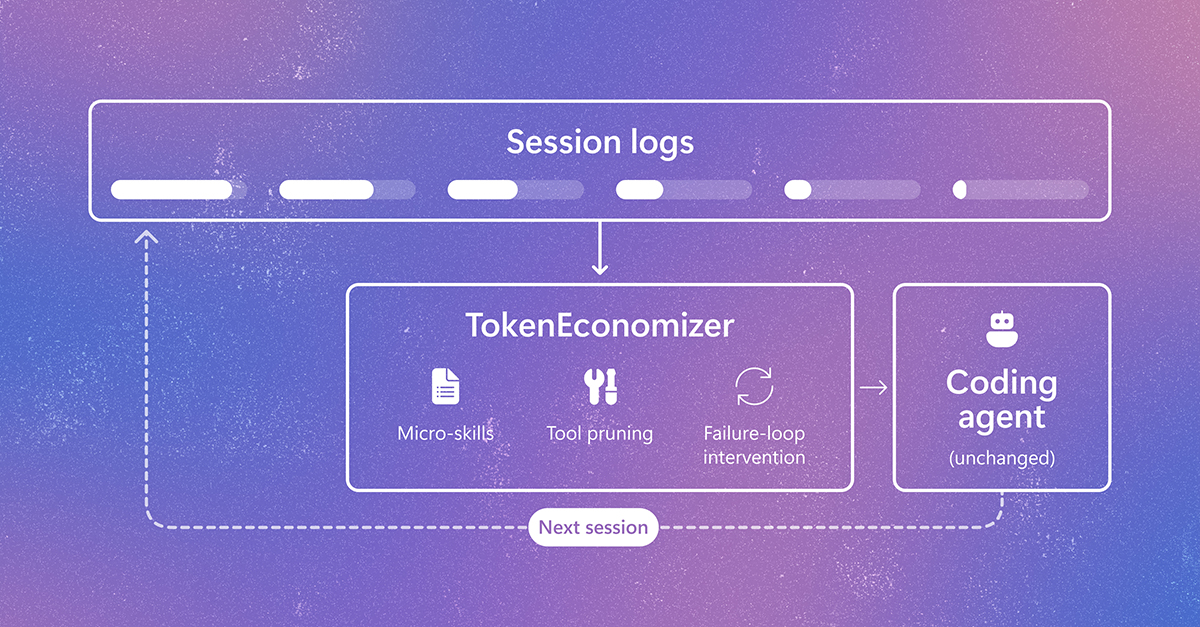
AI coding agents are increasingly help developers fix bugs and build features largely on their own, but every interaction with their models consumes tokens. In each session, an agent sends instructions, tool descriptions, and session history to its model. Most efforts to reduce this cost focus on individual tasks. Yet developers return to the same […] The post TokenEconomizer: Learning from Experience to Make AI Coding Agents More Efficient appeared first on Microsoft Research.
MIT News · Artificial Intelligence· news.mit.eduNov 9, 2026