Neonatal sepsis remains a major cause of morbidity and mortality worldwide, while timely diagnosis continues to be challenging because of nonspecific clinical manifestations and limitations of conventional diagnostic methods. Recent advances in artificial intelligence (AI) have created new opportunities for the early prediction and diagnosis of neonatal sepsis through the analysis of large and complex clinical datasets. This structured narrative review summarizes current evidence regarding AI-based approaches for neonatal sepsis prediction and diagnosis. A literature search of PubMed, Scopus, and Google Scholar identified studies evaluating machine learning, deep learning, and advanced predictive analytics using clinical, laboratory, physiological, electronic health record, and multi-omics data. Current evidence suggests that AI models, particularly ensemble learning, gradient boosting, and deep learning approaches, can achieve promising predictive performance and identify infants at increased risk of sepsis hours before conventional clinical recognition. Continuous physiological monitoring and multimodal data integration appear particularly promising for real-time prediction. However, important challenges remain, including limited external validation, small and heterogeneous datasets, concerns regarding interpretability, and unresolved ethical and regulatory issues. Future progress will depend on multicenter collaboration, explainable AI frameworks, federated learning, and multimodal predictive models. Although current evidence supports the predictive potential of AI-based models, prospective multicenter validation and clinical impact studies are required before improvements in neonatal clinical outcomes can be established. Artificial intelligence has the potential to become a valuable clinical decision support tool to support early sepsis recognition and precision neonatal care.

The results indicate that software engineering work practices are chosen opportunistically, adapted and configured to provide value under the constrains imposed by the startup context.
Nicolò Paternoster, Carmine Giardino, M. Unterkalmsteiner et al.· Information and Software Tec...· 394 citations· ⚡54
GAOKAO-Bench is introduced, an intuitive benchmark that employs questions from the Chinese GAOKAO examination as test samples, including both subjective and objective questions that contribute a robust evaluation benchmark for future large language models and offers valuable insights into the advantages and limitations...
Xiaotian Zhang, Chun-yan Li, Yi Zong et al.· arXiv.org· 216 citations· ⚡17
This state-of-practice investigation was performed using a literature review followed by a multiple-case study approach and presents how inconsistency between managerial strategies and execution can lead to failure by means of a behavioral framework.
Carmine Giardino, Xiaofeng Wang, P. Abrahamsson· International Conference on...· 175 citations· ⚡19
This work investigates the possibilities of using LLMs in a resume screening setting via a document retrieval framework that simulates job candidate selection and finds that the MTEs are biased, significantly favoring White-associated names in 85% of cases and female-associated names in only 11.1% of cases.
This study conducts a case survey study based on the secondary data of the major pivots happened in 49 software startups, and demonstrates that customer need pivot is the most common among all pivot types.
Sohaib Shahid Bajwa, Xiaofeng Wang, Anh Nguyen-Duc et al.· Empirical Software Engineeri...· 127 citations· ⚡15
This work shows that orders of magnitude enhancement in performance could be obtained by a combination of hardware improvements and tight quantum-HPC integration and introduces high-performance architectures for quantum-probabilistic computing with custom-designed accelerators to tackle today's industry-scale classical...
Masoud Mohseni, Artur Scherer, K. Johnson et al.· arXiv.org· 121 citations· ⚡9
Training AI agents with reinforcement learning can be challenging because their tools, context, and decision-making are managed by complex frameworks. Agent Lightning connects existing agents to RL training, making it easier to improve them without rebuilding them. The post Agent Lightning v1.0: A 3,500-Line Lightweight Agentic RL Framework for Training Agents with Real Harnesses appeared first on Microsoft Research.
MIT News · Artificial Intelligence· news.mit.eduOct 6, 2026
With $2.1 million funding from Google.org, the open-source Public Transit Intelligence Hub will unify public transit monitoring, operations, and passenger communication.
MIT News · Artificial Intelligence· news.mit.eduSep 9, 2026
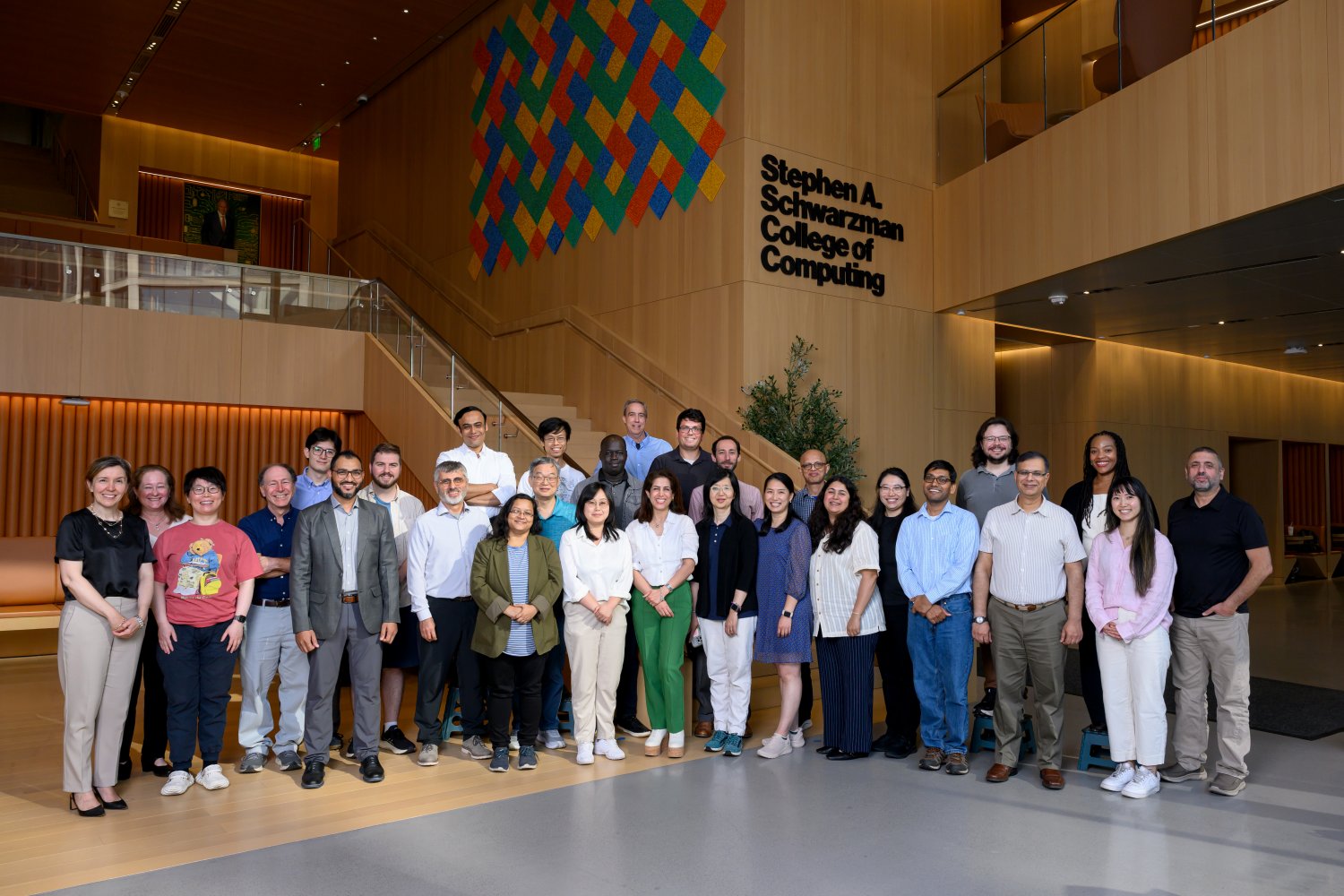
A weeklong summer workshop brought higher education faculty to campus to explore how AI and machine learning materials can be adapted for their classrooms.
We use cookies to run the site and, with your consent, for analytics and to show ads.
See our Cookie Policy.