This work reports on the construction and verification of numbat, a machine-learning stack written in one general-purpose language (Zig) with no third-party runtime dependencies, and treats a widely used reference implementation as an executable specification and verify against it at five levels.
Abstract
Machine-learning systems are built almost exclusively on a few large Python-orchestrated frameworks, and they inherit those stacks'engineering costs: environments of hundreds of version-coupled packages, separate export toolchains for deployment, and the split between the language research is written in and the language products ship in. We report on the construction and verification of numbat, a machine-learning stack written in one general-purpose language (Zig) with no third-party runtime dependencies. The stack spans tensor computation, automatic differentiation, neural-network modules, mixed precision, multi-GPU training, data loading and monitoring; an SDK exposes it behind a stable, additively versioned C ABI of over 1,400 entry points, with bindings for six languages; and its clinical domain planes encode regulatory requirements as executable acceptance gates rather than documentation. Verifying such a stack is the harder half of building it: a defective training run rarely fails, it converges quietly to a slightly worse model. We treat a widely used reference implementation as an executable specification and verify against it at five levels, from operator gradient checks to an automated trajectory gate against a same-machine reference run - the arrangement our companion study formalizes as a trajectory-level differential oracle. The protocol surfaced ten silent recipe divergences, which we catalog with mechanisms and symptoms. As the acceptance test, we train a 25.9M-parameter detector of the YOLOv8m class from random initialization on COCO 2017 for the full 500-epoch schedule: the exported weights score 0.4956 mAP50-95 under the official protocol, scored by the reference stack's own validator (published endpoint 0.502), with single-GPU step time at parity on identical hardware. Weights, per-epoch metrics and the full run manifest are released.
Flama is presented, an open-source Python framework for developing and deploying production-ready web APIs, machine learning services, and large-language-model (LLM) applications that unifies REST API development, predictive model serving, and generative AI inference in one architecture.
José A. Perdiguero López, Miguel A. Durán-Olivencia· 0 citations
Whether independently implemented training stacks can serve as differential oracles for a whole fine-tuning pipeline, rather than the operators and inference paths that prior differential testing targets, is studied.
Open-source language models have a reproducibility problem. Despite releasing weights, training data, and recipes, none of them are provably reproducible due to the non-associativity of floating-point arithmetic. Deep learning frameworks often offer a deterministic execution mode, allowing reproducible operations on th...
John Donaghy, B. Wilcox, Oğuzhan Ersoy et al.· 0 citations
Machine-learning performance modeling is a uniquely hostile terrain for long-lived software: the assumptions baked into today's abstractions are invalidated by tomorrow's models and systems, forcing perpetual refactoring of performance-modeling frameworks. Meanwhile, AI coding agents have become fast and capable enough...
Samuel Kushnir, Kimia Noorbakhsh, Kavya Sreedhar et al.· 0 citations
This work presents LACE, an AutoML framework that instead searches over complete executable pipeline programs: an evolutionary loop maintains a population of scikit-learn-compatible Python classes, and a large language model acts as the variation operator.
Sofoklis Kitharidis, C. Veenman, J. V. van Rijn et al.· 0 citations
Production machine learning (ML) stacks often split graph compilation and kernel execution across different layers and languages, making backend behavior, deployment guarantees, and performance fallbacks hard to reason about end-to-end. RLX addresses this gap with a single Rust codebase that combines compiler and runti...
Eugene Hauptmann, Nataliya Kosmyna· 0 citations
Related blog posts
MIT News · Artificial Intelligence· news.mit.eduOct 2, 2026
Martin Trust Center Managing Director Bill Aulet introduces Dear Dreamer, a free platform for middle and high school students who want to learn about entrepreneurship.
Microsoft Research Blog· microsoft.comSep 30, 2026
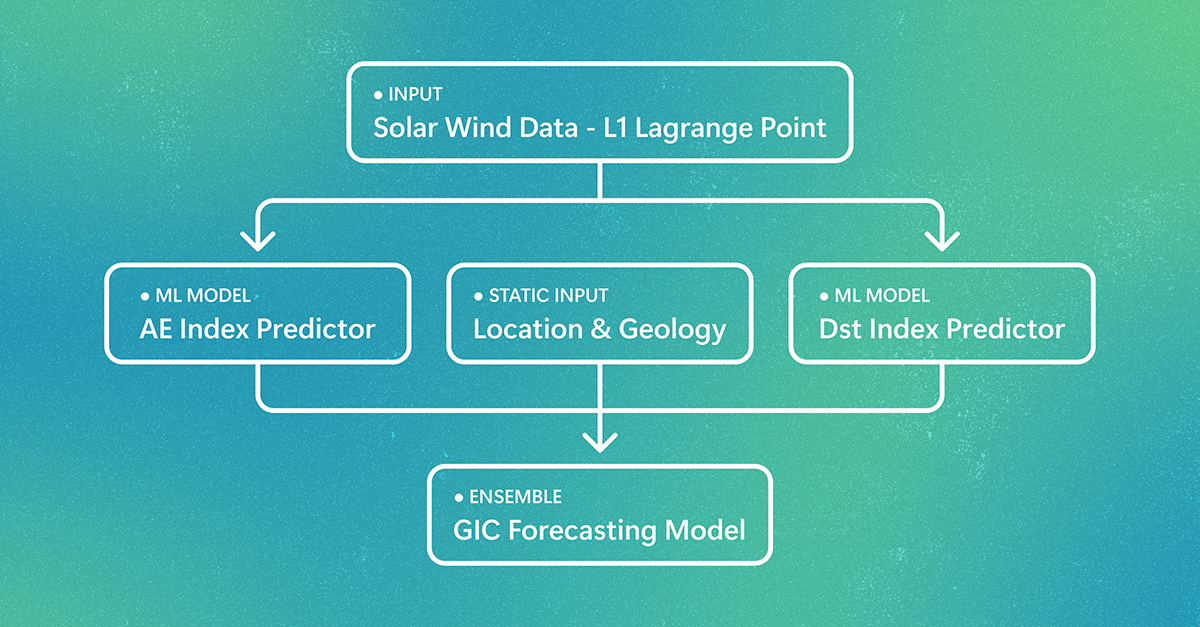
Extreme space-weather events can damage power systems on Earth and degrade GPS accuracy and satellite operations. A new machine learning system can predict where damage is likely to occur 30-60 minutes before a storm arrives. The post Forecasting space weather risks on power grids appeared first on Microsoft Research.
We use cookies to run the site and, with your consent, for analytics and to show ads.
See our Cookie Policy.