Sep 2026· SN Social Sciences· Vol 6· 0 citations· 65 references
Artificial Intelligence in Healthcare and Education
TL;DR
The findings suggest that fostering AI literacy, integrating Collaborative Intelligence (CI), and emphasizing human creativity are essential for enhancing human-AI interaction in academic writing.
The increasing use of Artificial Intelligence (AI) writing tools has changed the way English as a Foreign Language (EFL) students seek feedback on their academic writing, particularly during the demanding process of preparing a research proposal or thesis. This study aims to explore how final-semester EFL students perc...
Saudah Saudah, Taufik Suadiyatno, Imansyah Imansyah· Pendidikan Bahasa dan Sastra· 0 citations
This study aims to examine Bachelor of Communication students’ current perceptions, practices, and the scope of generative AI technologies in the university education process. In particular, perceptions, concerns, and insights into students’ practices with generative AI systems in conducting graded assignments. Data we...
Tomas Mitkus, Vaida Nedzinskaitė-Mitkė· Creativity Studies· 1 citation
This article reports on self-regulated writing strategies in AI-enhanced academic writing among EFL doctoral students in Indonesia. The study aimed to identify the level of strategy use and to examine its application, as well as the challenges and solutions, across the stages of the academic writing process. A mixed-me...
Berlinda Mandasari, Yazid Basthomi, H. Loppies et al.· Advances in Education· 0 citations
This study aims to investigate undergraduate EFL students’ writing behaviors and ethical considerations in using Generative Artificial Intelligence (GenAI) during undergraduate thesis writing. The study focuses on how students use GenAI as an assistive tool in planning, drafting, and revising their theses, as well as h...
Z. Zuraida, Intan Susana· Journal of Social and Scient...· 0 citations
The findings revealed a dual-pathway effect: on one hand, AI functions as a cognitive scaffold that enhances understanding, supports idea generation, and improves academic performance, and on the other hand, it acts as a cognitive substitute that reduces analytical engagement, encourages and promotes superficial learni...
B. Usman· International journal of edu...· 0 citations
The study concludes that assessing AI-supported writing is a pedagogical and interpretative practice rather than a purely technical or rule-based process and highlights the need for context-sensitive assessment frameworks, clearer institutional guidance, and professional development to support lecturers in navigating A...
Enforcing physics-based constraints prevents AI models from generating unreliable predictions for complex nonlinear systems in weather, climate, and turbulent flows.
MIT News · Artificial Intelligence· news.mit.eduNov 20, 2026
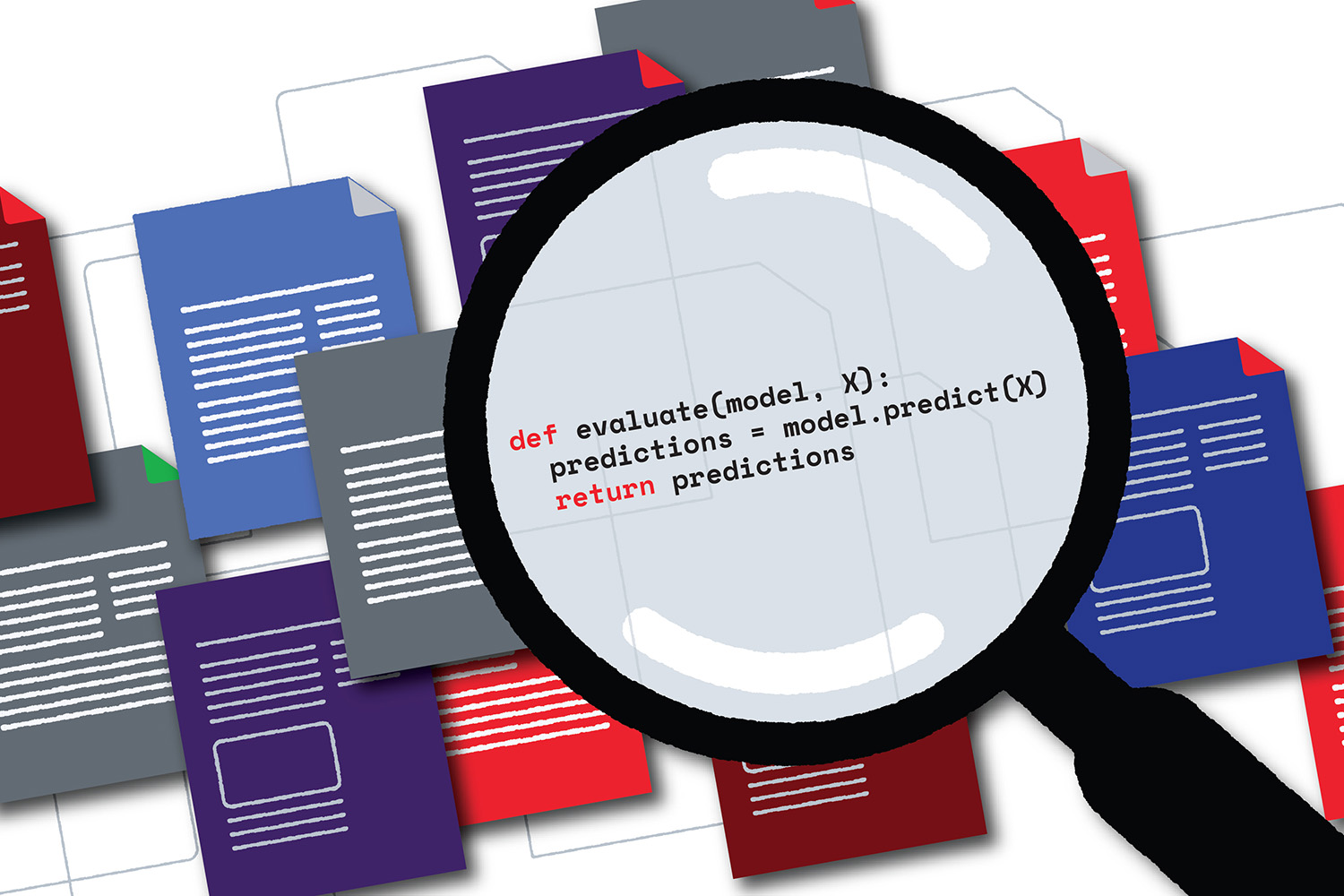
An MIT and Dana-Farber Institute-led team used large language models to examine nearly 4,000 studies and hundreds of code repositories, revealing gaps in the information needed to scrutinize and reuse published research.
We use cookies to run the site and, with your consent, for analytics and to show ads.
See our Cookie Policy.