Sep 2026· Zenodo (CERN European Organization for Nuclear Research)
Ethics and Social Impacts of AI
Abstract
Agentic artificial intelligence (AI) is shifting from decision support to autonomous coordination, challenging established assumptions about managerial authority. This qualitative conceptual paper synthesises recent literature in algorithmic management, organisational theory, and human-computer interaction to examine how agentic AI reshapes organisational sensegiving. The analysis argues that autonomous decision-making systems function as an organising layer that reallocates decision rights, displaces managerial power, and creates agency loops in which accountability circulates between human and artificial actors. Findings highlight three consequences: erosion of middle-manager sensegiving, professional identity threat and ontological insecurity, and the need for an Agentic Operating Model that embeds meaningful human oversight, control layers, and governance accountability. The paper contributes a theoretically integrated account of agentic AI as an organisational actor and offers practical implications for maintaining human agency, ethical judgment, and organisational resilience in AI-orchestrated firms.
This publication proposes a definition and a classification of agile software development approaches and analyses ten software development methods that can be characterized as being "agile" against the defined criterion.
P. Abrahamsson, O. Salo, Jussi Ronkainen et al.· arXiv.org· 727 citations· ⚡54
The study shows that agile practices improve both informal and formal communication, but indicates that, in larger development situations involving multiple external stakeholders, a mismatch of adequate communication mechanisms can sometimes even hinder the communication.
M. Pikkarainen, Jukka Haikara, O. Salo et al.· Empirical Software Engineeri...· 401 citations· ⚡48
The results indicate that software engineering work practices are chosen opportunistically, adapted and configured to provide value under the constrains imposed by the startup context.
Nicolò Paternoster, Carmine Giardino, M. Unterkalmsteiner et al.· Information and Software Tec...· 394 citations· ⚡54
The possibility of inferring high-dimensional data inference in a model that consists of a prior and an auxiliary differentiable constraint given some additional information is considered, thereby allowing a range of potential applications in adapting models to new domains and tasks.
Alexandros Graikos, Esmeralda S. Whitammer, N. Jojic et al.· Neural Information Processin...· 316 citations· ⚡15
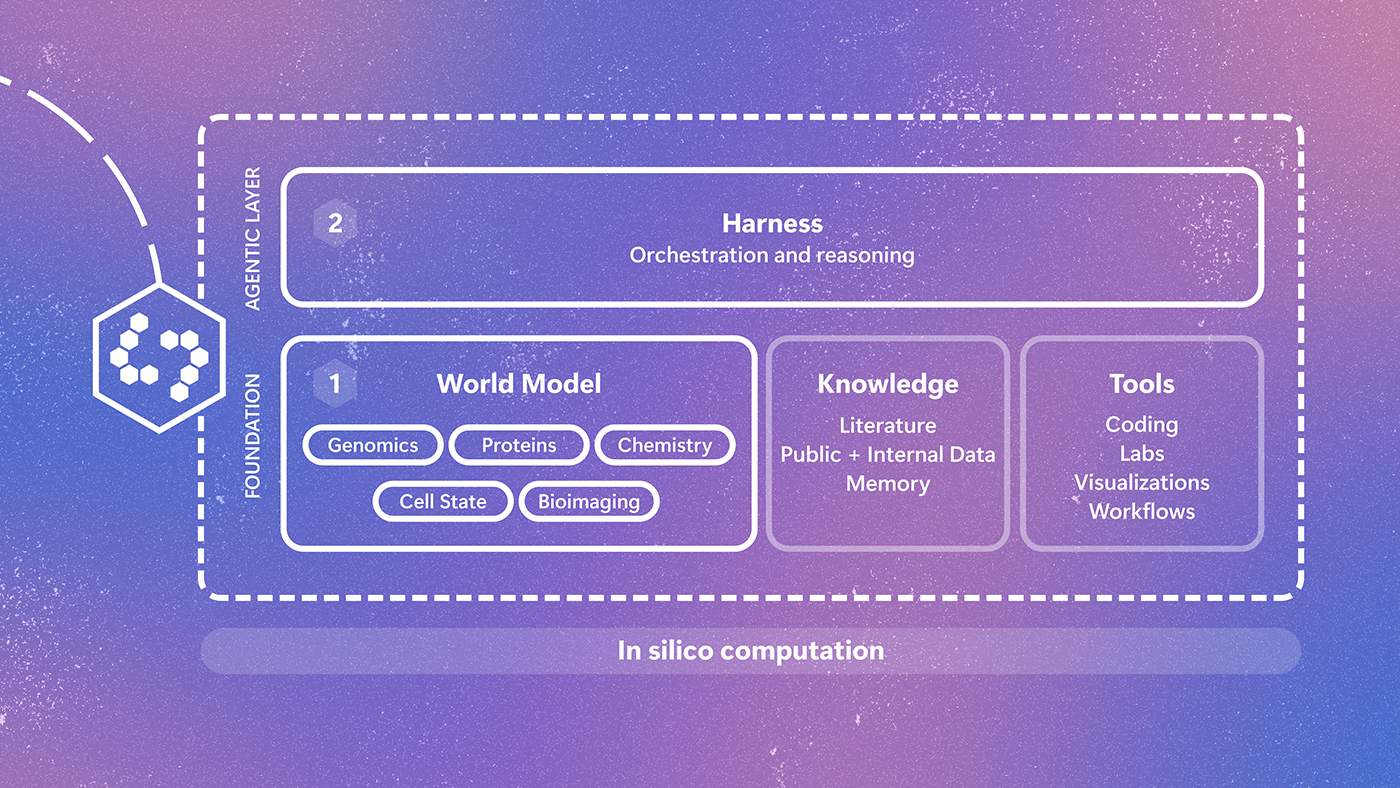
Biology doesn't operate in silos, and neither should the AI representation of it. Quine is an early-stage research effort to create a multimodal world model of biology. By connecting insights across biological scales and modalities, Quine helps scientists computationally search a space far larger than intuition allows and prioritize hypotheses before they reach the lab. Experimental results provide important feedback, helping researchers sharpen future research directions. The post Introducing Q…
MIT News · Artificial Intelligence· news.mit.eduJul 14, 2026
Through research and entrepreneurship, Professor Devavrat Shah is helping to design methods that can handle constant decision-making using limited computational resources.
MIT News · Artificial Intelligence· news.mit.eduSep 30, 2026
Able to defeat top-ranked human players and more efficient than other models, the new system could help decision-makers in military maneuvers or business negotiations.