Current progress in genome editing strategies for improving resistance against bacterial, fungal, oomycete, and viral pathogens through targeted manipulation of host susceptibility factors, immune receptors, transcription factors, and defense-signaling components are summarized, while critically evaluating the limitati...
Theivanayagam Maharajan, S. A. Ceasar, Niranjan Ravindra Thakur et al.· Plant Science· 0 citations
Ep epigenetic regulation emerges as a compelling strategy to facilitate high-fidelity gene knock-in, offering valuable mechanistic clues and actionable epigenetic targets to gene editing for basic research and therapeutic translation.
Xin Chen, S. Qin, Ce Yang et al.· Cell Proliferation· 0 citations
Grasspea is an important grain legume crop due to its hardiness and high protein content. However, the presence of a neurotoxic compound
β
-ODAP, which is associated with lathyrism, limits its widespread cultivation and consumption. In this study, the
LsBOS
gene, which encodes
β
-ODAP synthase, was PCR-amplif...
N. Kushwah, Prity Kushwaha, M. Rathore et al.· Israel journal of plant scie...· 0 citations
Reach audiences
Advertise in front of researchers, engineers, and readers.
Domesticated pennycress (Thlaspi arvense L.) is an emerging winter annual oilseed crop developed from field pennycress to deliver commercial agronomic performance, low-carbon feedstock for biofuel production, and value-added animal feed. Effective breeding, seed production, and stewardship of this newly domesticated cr...
Tito Lavaire, Donal McLaughlin, Sheng-Jun Liu et al.· bioRxiv· 0 citations
MYB transcription factors (TFs) represent a conserved family of DNA-binding regulators involved in diverse cellular and physiological processes. MYB TFs are well-characterized in terrestrial plants, but their evolutionary history and functional diversity in algae remain poorly understood. This review summarizes current...
Repo Summary: This repository contains the summary annotation files for the naked mole-rat (Heterocephalus glaber) telomere-to-telomere genome, mHetGla1.1, and the primary assembly for the Cape-dune mole-rat genome (Bathyergus suillus), mBatsui1.1-pri, resources. Materials and methods for all sequencing, assembly, anno...
Dustin Sokolowski, Alexander Nater, Mihai Miclăuș et al.· Zenodo (CERN European Organi...· 0 citations
Minor Changes Upgrade from Material UI (MUI) v7 to v9, and from MUI X Data Grid v8 to v9. Removed the unused @mui/lab dependency. (@vitessce/styles) (#2601) Patch Changes Add annotation story editing to the annotation controller (frames, text, view state capture, and shapes drawn on spatial/scatterplot views via a new...
Mark S. Keller, Ilan Gold, Trevor Manz et al.· Zenodo (CERN European Organi...· 0 citations
Well-differentiated gastroenteropancreatic neuroendocrine tumors (GEP-NETs) are commonly regarded as
immunologically “cold,” yet this label does not explain their marked spatial heterogeneity in immune infiltration, antigenpresentation
machinery, stromal organization, and malignant-cell state. Intratumoral bacterial...
Birupaksha Biswas· International Journal of Con...· 0 citations
Pancreatic ductal adenocarcinoma (PDAC) is one of the most prevalent and deadliest cancers. It is predicted to become the second leading cause of cancer mortality within a decade, with an overall 5-year survival of 9%. The existing literature extensively supports the notion that epigenetic modifications and alterations...
Andrea Terrasi· Universitätsbibliothek der L...· 0 citations
Wheat (Triticum aestivum L.) is an important staple food and feed crop that makes a major contribution to global food and nutritional security, yet continued improvement is increasingly constrained by climate change, evolving pathogens, and the slow pace of conventional breeding.Recent evidence indicates that, in some...
Unknown authors· Plant and Crop Letters· 0 citations
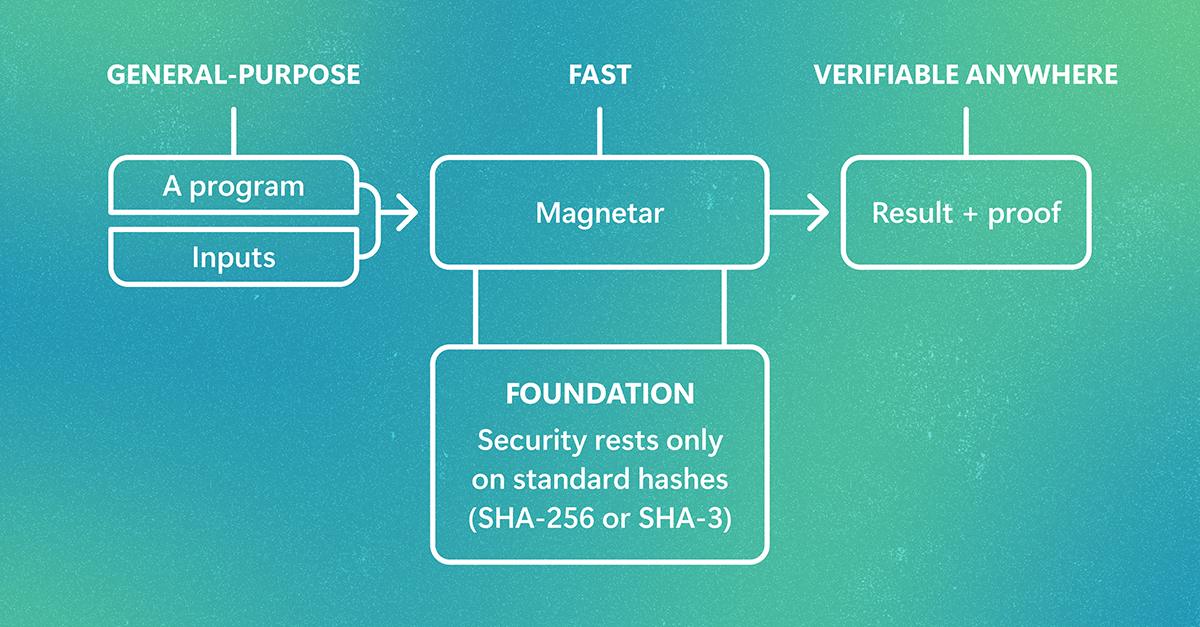
Zero-knowledge proofs can verify computing results without rerunning workloads or exposing sensitive data. Magnetar helps bring them into the mainstream with support for standard programming languages, major speed gains, and quantum-resistant security. The post Proof-based general-purpose computing with Magnetar appeared first on Microsoft Research.
Exploring how generative AI could make machine vision more accessible to businesses. The post GenEye in a Box: Making Machine Vision Something You Can Just Ask For appeared first on GPT-Lab.
We use cookies to run the site and, with your consent, for analytics and to show ads.
See our Cookie Policy.