Dataset Description This repository contains the synthetic genomic workflow dataset generated and used for the experimental evaluation of the PRIVAGEN-SHIELD framework, “PRIVAGEN-SHIELD: Privacy-Preserving Genomic Anomaly Detection via Hierarchical Blockchain-Authenticated Merkle Trees and Local Differential Privacy.”...
R. Kannadasan, C Prabakaran· Zenodo (CERN European Organi...· 0 citations
Plant adaptation to drought, salinity, temperature extremes, pathogens, and herbivorous insects depends on coordinated hormone signalling, transcriptional control, and metabolic reprogramming. The jasmonic acid (JA) pathway is a major regulator of defence and the growth-defence trade-off, and the bHLH transcription fac...
Liu-Qing Yang, S. Shu, Yong-Hao Zhang et al.· Frontiers in Plant Science· 0 citations
Delivering therapeutic macromolecules to defined cell populations in vivo remains a central unsolved problem in biomedicine. Proteins, nucleic acids and viral vectors are cleared by phagocytes, degraded by enzymes, blocked by endothelial and interstitial barriers, and trapped in acidifying endolysosomes. Pre-existing i...
Gamma-aminobutyric acid (GABA) technology is a promising biotechnology method for enhancing stress tolerance and nutritional quality in agricultural plants. Although tomato (Solanum lycopersicum) is a major vegetable crop consumed worldwide and is rich in vitamins, minerals, and antioxidants, tomato fruits naturally co...
Rizwan Ali, Muzeev Ahmad, Sheza Siddiqui et al.· International Journal of Env...· 0 citations
Reach audiences
Advertise in front of researchers, engineers, and readers.
The CRISPR-Cas9 system's gene-editing fidelity relies on the HNH nuclease domain's ability to hydrolyze DNA via metal-ion catalysis. While IscB-ωRNA variants offer advantages for viral delivery due to their small size, their editing efficiency is much lower than Cas9. The understanding of how HNH-domain dynamics and me...
Ganggang Bai, Buyong Ma, Jingjing Li et al.· AIP Publishing· 0 citations
Reproducibility archive for the study “Adult heart failure molecular anchoring and functional mapping diverge across cardiac systems.” This v1.0.0 package contains original figure-generation scripts, derived figure-source tables, and final PNG/SVG exports for Main Figures 1–5 and Supplementary Figures S1–S8, together w...
Zisen Zhou· Zenodo (CERN European Organi...· 0 citations
CRISPR/Cas9-induced DNA double-strand breaks (DSBs) are widely used for genome engineering, yet their capacity to provoke sister chromatid exchange (SCE) and associated genome instability remains incompletely understood, in part because exchanges between identical sister chromatids leave no sequence change and are invi...
Peter Chovanec, Shiyang He, Yi A. Yin· eLife· 0 citations
Imagine being able to find a particular spelling mistake in the enormous instruction manual of life and correct it. This is the basic idea behind one of the most exciting technologies in modern biology: CRISPR-Cas gene editing. Our DNA contains the genetic instructions that control how cells develop and function. Chang...
Priyanka Malakar and Kanchan Singh· Zenodo (CERN European Organi...· 0 citations
Dataset Description This repository contains the synthetic genomic workflow dataset generated and used for the experimental evaluation of the PRIVAGEN-SHIELD framework, “PRIVAGEN-SHIELD: Privacy-Preserving Genomic Anomaly Detection via Hierarchical Blockchain-Authenticated Merkle Trees and Local Differential Privacy.”...
R. Kannadasan, C Prabakaran· Zenodo (CERN European Organi...· 0 citations
Reproducibility archive for the study “Adult heart failure molecular anchoring and functional mapping diverge across cardiac systems.” This v1.0.1 package contains original figure-generation scripts, derived figure-source tables, and final PNG/SVG exports for Main Figures 1–5 and Supplementary Figures S1–S8, together w...
Zisen Zhou· Zenodo (CERN European Organi...· 0 citations
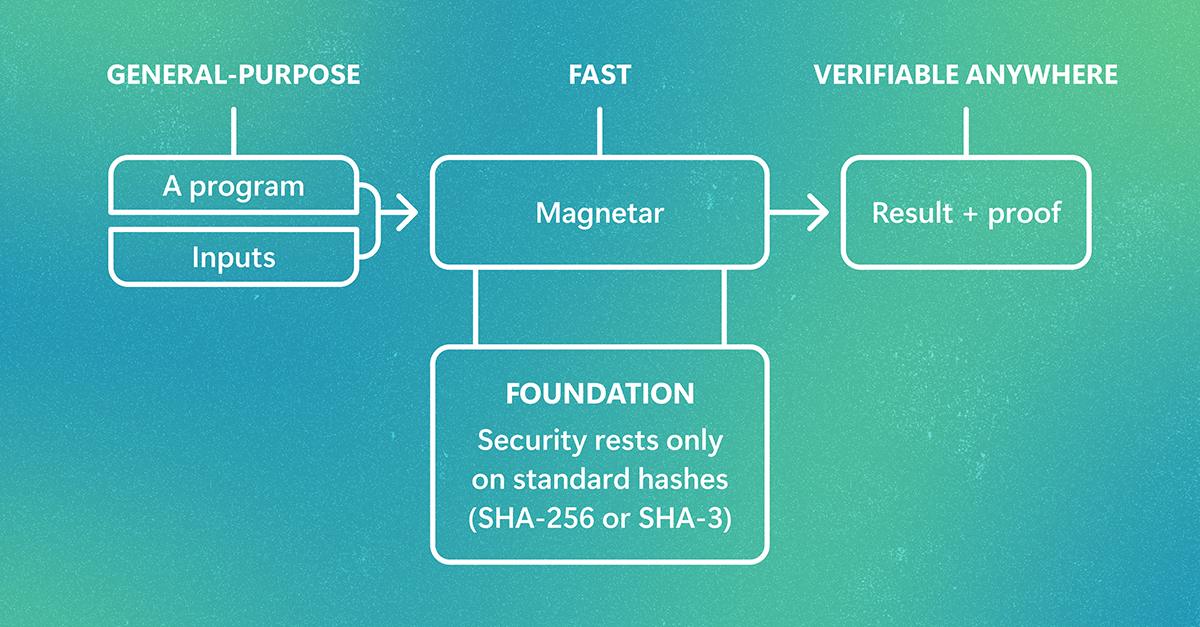
Zero-knowledge proofs can verify computing results without rerunning workloads or exposing sensitive data. Magnetar helps bring them into the mainstream with support for standard programming languages, major speed gains, and quantum-resistant security. The post Proof-based general-purpose computing with Magnetar appeared first on Microsoft Research.
Exploring how generative AI could make machine vision more accessible to businesses. The post GenEye in a Box: Making Machine Vision Something You Can Just Ask For appeared first on GPT-Lab.
We use cookies to run the site and, with your consent, for analytics and to show ads.
See our Cookie Policy.