Myostatin (MSTN) is a key negative regulator of skeletal muscle growth and an important candidate gene for genetic improvement of economically relevant livestock traits. CRISPR/Cas9-mediated genome editing using ribonucleoprotein (RNP) delivery offers a precise approach for targeted MSTN modification in caprine embryos...
SHIVA PRATAP SINGH, Juhi Pathak, Manisha Pathak et al.· Zenodo (CERN European Organi...· 0 citations
Myostatin (MSTN) is a potent negative regulator of skeletal muscle growth and differentiation. Buffalo myoblasts were isolated from the longissimus dorsi muscle and characterized by binucleate morphology and Pax7/myosin immunostaining. Myoblasts were nucleofected with MSTN guide RNA and Cas9, and three independently de...
Meeti Punetha, Sristi Bhatia, Bhavya Magoo et al.· Zenodo (CERN European Organi...· 0 citations
Adoptive transfer of proinflammatory myeloid cells enhances antitumor T‐cell responses and limits tumor growth in murine models. Previous work identified transcription factors NF‐κB p50 and STAT6 as key regulators whose inactivation enhances the inflammatory potential of murine myeloid cells. Herein, we translate murin...
Theresa Barberi, Alan D. Friedman· Molecular Oncology· 0 citations
ABSTRACT Over recent years, stem cell therapy has transitioned from a potentially viable approach to an actual method of tissue repair and regeneration. This review highlights advances in the study of stem cell biology, their classification, and application in medical practice. In particular, the use of different sourc...
Dr.A.L. T Kalyani, M. Akanksha, T. Thanuja· Zenodo (CERN European Organi...· 0 citations
Reach audiences
Advertise in front of researchers, engineers, and readers.
ABSTRACT Over recent years, stem cell therapy has transitioned from a potentially viable approach to an actual method of tissue repair and regeneration. This review highlights advances in the study of stem cell biology, their classification, and application in medical practice. In particular, the use of different sourc...
Dr.A.L. T Kalyani, M. Akanksha, T. Thanuja· Zenodo (CERN European Organi...· 0 citations
Diabetes mellitus is a chronic metabolic disorder with a rapidly increasing global prevalence, posing significant health and economic challenges. More than 500 million adults are currently affected worldwide, with projections indicating further increases, particularly in low- and middle-income countries. The disease ma...
P. Patel, Amar M. Raval, H. Patel et al.· Pharmacology & toxicology re...· 0 citations
This chapter provides a comprehensive overview of genomic safety considerations for both small molecules and cell and gene therapies. For small chemical entities, testing is essential to identify a possible genotoxic potential early in drug development. Mutations in somatic and germline cells can lead to cancer or heri...
DNA lesions impede RNA polymerase II, yet the transcriptional consequences of that stress are less understood than the lesions themselves. We reanalysed total RNA and matched whole genomes from 438 liver lesions across four divergent mouse backgrounds, one of them the separate species M. caroli, 428 of them induced by...
Osagie G. Izuogu, M. Jackson· bioRxiv· 0 citations
To develop gene therapy tools based on CRISPR-associated transposons (CASTs), it is essential to define how transposon ends are recognized and paired during transposition. Transposon 7 (Tn7)–like transposons typically contain asymmetric left- and right-end sequences that flank and define DNA cargo. However, how the tra...
Vinh H. Truong, Darcie J. Miller, Shirin Fatma et al.· Science Advances· 0 citations
Millions of genetic variants are linked to human disease but identifying underlying mechanisms is challenging because most variants are noncausal and lie within the noncoding genome. We developed a Micro Capture-C variant-to-function platform (MCCv) based on analysis of single-allele chromatin structure. This can ident...
Joseph C. Hamley, Wei-Jiao Zhang, Daniel Willmott et al.· Nature Genetics· 0 citations
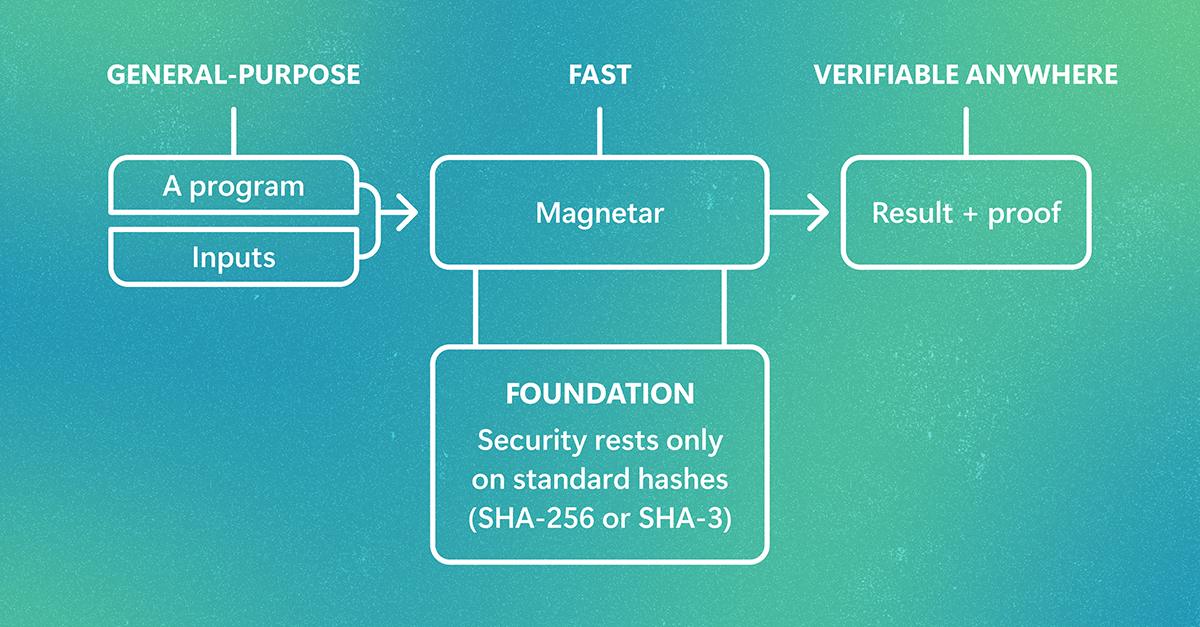
Zero-knowledge proofs can verify computing results without rerunning workloads or exposing sensitive data. Magnetar helps bring them into the mainstream with support for standard programming languages, major speed gains, and quantum-resistant security. The post Proof-based general-purpose computing with Magnetar appeared first on Microsoft Research.
Exploring how generative AI could make machine vision more accessible to businesses. The post GenEye in a Box: Making Machine Vision Something You Can Just Ask For appeared first on GPT-Lab.
We use cookies to run the site and, with your consent, for analytics and to show ads.
See our Cookie Policy.