The results support neuromorphic acoustic anomaly detection as a practical candidate for low-power, persistent machine monitoring and support autoencoder-based acoustic anomaly detection on an Intel Loihi 2 neuromorphic processor.
Steven C. Nesbit, Victor M. Vergara, Michael A. Felix et al.· 0 citations
This work proposes a principled VLM TTA method called \algname, and theoretically reveals that the InfoNCE loss can be neatly reformulated as a Wasserstein OT formulation, thereby unifying the objectives of the inference and adaptation of VLMs to achieve their mutual benefits.
Qi Yu, Zhichen Zeng, Katherine Tieu et al.· 0 citations
Two distinct effects are reported: paired-example FedAvg partially recovers the missing-ECG gap, while validation-selected completion is a task-specific classifier-logit correction rather than literal ECG recovery.
This paper proposes debiased inference with multiple imperfect measurements (DMM), a framework that combines multiple error-prone AI measurements to enable valid downstream inference without gold-standard labels and proves that the DMM estimator is consistent and asymptotically normal.
Naoki Egami, Sooahn Shin· 0 citations
Reach audiences
Advertise in front of researchers, engineers, and readers.
Background. Advances in agentic systems are simultaneously, and rapidly, saturating benchmarks. Despite this often discussed phenomena, benchmark scores remain difficult to interpret due to the lack of control and characterization of task difficulty. More specifically, we currently have little understanding of what makes one task harder than another, and to what extent task difficulty is predictable from static task properties. Aims. We propose a measurement framework to investigate and systematically quantify what structural properties of software tasks correspond to agent success rates for issue resolution tasks. Method. We conducted a large scale empirical study on CoderForge-Preview, the largest open dataset of coding agent trajectories to date, by extracting features across task patch, repository and prompt. We evaluated the predictive power of each feature against task outcomes using ensemble methods, SHAP attribution, and effect size analysis. Results We found that task difficulty is substantially predictable from static features (AU C = 0.863) and is largely driven by patch fragmentation and repository scale. Prompt linguistic features become visible among top contributors for tasks in the mid-band, revealing a layered structure of difficulty. Conclusion. The difficulty of an issue resolution task is encoded in its structure. This enables static, pre-hoc difficulty estimation and lays the groundwork for difficulty-controlled benchmark construction for evaluation of agents.
Fine-grained wildlife re-identification remains a challenging area in research. Current state-of-the-art approaches apply a detection and re-identification pipeline. We propose a one-stage end-to-end detection and re-identification model that performs identity searching within the latent space. We adopt DINOv2 for robust spatial geometry and MegaDescriptor for wildlife re-identification. We enhance latent queries with prompt re-identification features. A detection decoder queries the scene latent space to establish object boundaries around the target identity. Preliminary findings reflect a competitive mean average precision score of 30.584% compared to the state-of-the-art two stage approach of 44.89%. Qualitative results depict effective bounding and identification of animal identities.
Mufhumudzi Muthivhi, Jiahao Huo, Terence van Zyl et al.· 0 citations
Recent work has shown that representational alignment between biological and artificial neural networks is asymmetric: model representations predict neural responses much better than neural responses predict model representations. This asymmetry raises the question of whether representational geometry contributes to bidirectional representational alignment. We hypothesized that steering representational geometry during training can systematically influence bidirectional alignment. To test this hypothesis, we developed a computational framework that integrates spectral regularization with bidirectional predictivity analyses. As an initial demonstration, we evaluated our framework using self-supervised contrastive vision models. Steering the spectral geometry of the learned representations substantially increased reverse predictivity with modest reductions in forward predictivity, yielding a 55% relative improvement in bidirectional predictivity. These improvements were accompanied by reduced effective dimensionality and a reorganization of the shared representational subspace, within which forward and reverse predictivity became approximately symmetric at intermediate spectral exponents. Overall, these findings demonstrate that representational geometry can be systematically steered to modulate bidirectional representational alignment between biological and artificial neural networks.
Samuel Kostousov, Abhinn Kaushik, Brokoslaw Laschowski· 0 citations
GigaBrain-WBC-0.5, the first Behavior World Model for humanoid whole-body control, is presented, which trains a causal Transformer to jointly predict its next action, next state, and the distribution over its next latent behavior command, so the network that acts also models how the environment shapes what it can do next.
Ziyang Cheng, Tianshu Tang, Jinxi Lan et al.· 0 citations
Distribution-free risk control adds organ-specific recall guarantees to frozen segmentation. We calibrate per-organ thresholds for an AMOS-trained nnU-Net, audit transfer to RAOS, and estimate local re-certification cost using case-level voxel false-negative rate (FNR). The AMOS control passes, but $7/12$ organs exceed $\alpha{=}0.10$ after transfer; smaller calibration sets can mask exceedances with conservative or vacuous thresholds. Risk-Controlling Prediction Sets (RCPS) give high-probability control of population-mean risk, whereas Conformal Risk Control (CRC) gives weaker expectation control. Both require exchangeability; fixed and global thresholds give no per-organ guarantee. The Waudby--Smith--Ramdas (WSR) betting bound re-certifies six Tier-1 organs with 25 local cases, versus 30--40 for Hoeffding--Bentkus (HB). CRC needs 10--15 but has a heavier individual-case tail. No Tier-2 organ meets our illustrative precision criterion with 25 cases.
Souraj Adhikary, Negar Chabi, André Mastmeyer· 0 citations
This systematic review evaluates 55 studies from 2017 to 2023 on the application of machine learning techniques to ASD, highlighting key challenges and opportunities, particularly the need for models that can integrate complex data to improve diagnostic accuracy and treatment outcomes.
Rafael Muñoz-Terol, Jesús Peral, Sandra Amador et al.· Heliyon· 4 citations· ⚡1
In the past few years, machine learning (ML) has been widely (and to an extent, successfully) implemented in medicine. However, uncertainties surrounding ML have made it difficult to establish the bases of its epistemic and methodological warrants. In the literature, a parallel has been drawn between medicine and ML, suggesting that we should model epistemic and methodological standards for ML on the standards of clinical translation. By developing tools from Hesse work, we characterise the nature of this parallel as a generative analogy between the process of clinical translation and the process of building ML systems. We identify more precisely the epistemic and methodological warrants of clinical translation that are typically only mentioned when appealing to the analogy, and we show in which sense such warrants apply analogically to the context of ML. In particular, we interpret warrants of clinical translation in reliabilist terms, and we show how this can inform a new form of ML reliabilism, which is distinct from (though compatible with) existing reliabilist accounts in philosophy of AI.
A quantum-attribution audit is introduced that quantifies how much of any gain is genuinely attributable to the quantum component of quantum models, and attributes this to classical preprocessing and regularisation rather than quantum effects.
Syeda Anshrah Gillani, Mirza Samad Ahmed Baig, Shahid Munir Shah et al.· 0 citations
A weeklong summer workshop brought higher education faculty to campus to explore how AI and machine learning materials can be adapted for their classrooms.
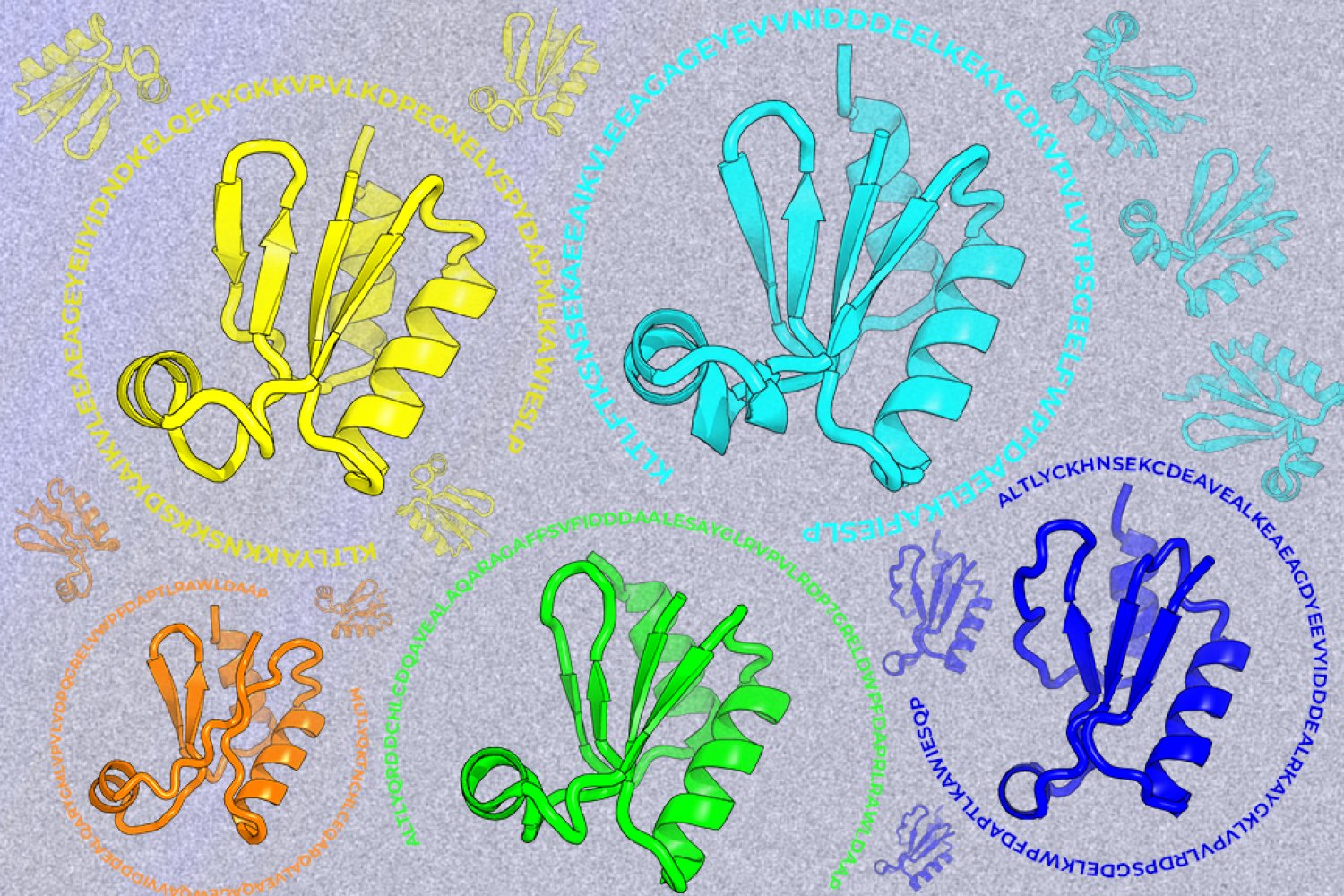
A new machine-learning framework aims to improve the success rate of computational protein design while moving away from results that reproduce sequences found in nature.
MIT News · Artificial Intelligence· news.mit.eduAug 24, 2026