Experimental results show that RUPA consistently outperforms existing UQ methods by providing more accurate uncertainty estimates, enabling earlier failure detection, and improving uncertainty-guided agent execution across diverse agent tasks.
This work introduces EgoCITE (Egocentric Context-augmented Indexing and Time-aware Evidence retrieval), a long-horizon agentic memory framework for egocentric QA that improves accuracy over agentic memory baselines by at least 4.4--14.2% while achieving 36$\times$ lower cost than long-context LLM agents.
This work demonstrates a full-stack pathway from efficient trillion-parameter model post-training on Ascend infra to domain-specialized Flash models for solver-grounded mathematical modeling, advancing frontier-model systems for complex reasoning.
Dongfang Li, Xiaodong Luo, Ruoyu Sun et al.· 0 citations
Extended experiments with Chinese and Russian confirm that first-token broadcasting is script-specific in GPT-2, with non-Latin languages handled at layer 0 - the same locus as the instruction-tuned model.
Arjun Pillai, Christian Hoang, Anjelo Jann Laroza· arXiv.org· 0 citations
Reach audiences
Advertise in front of researchers, engineers, and readers.
As AI labs approach a data ceiling where compute capacity outpaces the rate of new high-quality text generation, language model pretraining is shifting toward a data-constrained, compute-abundant regime that demands productive multi-epoch training on fixed corpora. Standard autoregressive (AR) pretraining overfits severely in this setting, reaching its optimum early and then continuously deteriorating. We investigate training-time data augmentation as a regularizer to mitigate this overfitting and enable productive training for hundreds of epochs on the same data. We introduce three orthogonal categories of augmentation for AR pretraining: token-level noise (masking, random replacement), sequence permutations (right-to-left prediction, Fill-in-the-Middle), and target offset prediction ($x_{t+i}$ for $i > 1$). Through systematic ablations, we find that individual augmentations delay overfitting and lower validation loss relative to the baseline, with random token replacement achieving the best minimum loss among individual methods. Combining augmentation categories further lowers the minimum validation loss. Our experiments demonstrate that data augmentations mitigate AR pretraining's data inefficiency and offer a promising solution to the data-constrained regime~\footnote{All code and data are available at https://github.com/ michaelchen-lab/ data-augmentations-for-pretraining.
Michael K. Chen, Xikun Zhang, Fan Bai et al.· 0 citations
This work builds an order parameter combining the predicted distribution with embedding overlap, as a density matrix, and shows sharp jumps resembling phase transitions, which characterize this near-synonym mechanism and need recalibration before extrapolation.
V. Prakash, J. Dontabhaktuni· arXiv.org· 0 citations
EgoMemReason is introduced, a comprehensive benchmark for week-long egocentric video understanding through memory-driven reasoning that evaluates three complementary memory types: entity memory, tracking how object states evolve and change across days; event memory, recalling and ordering activities separated by hours or days; and behavior memory, abstracting recurring patterns from sparse, repeated observations over the whole week period.
This work forms a canonical key-conditioned extractive question answering over OCR-derived clinical reports and introduces key coverage as a metric to quantify inventory completeness, showing that key coverage is a dominant factor for end-to-end performance.
Semi-structured information extraction (IE) from OCR-derived clinical reports is crucial for efficiently reconstructing patients' longitudinal medical histories. In practice, this scenario commonly involves three tasks: (i) field-header (key) discovery, (ii) key-conditioned question answering (QA), and (iii) end-to-end key-value pair extraction. However, existing evaluations often under-model two factors: heterogeneous and incompletely known key representations, and OCR-induced noise. This makes it difficult to assess model robustness in real-world settings.
We present MedStruct-S, a benchmark specifically designed to evaluate these tasks under unknown keys and OCR noise. MedStruct-S contains 3,582 annotated real-world clinical report pages. Using MedStruct-S, we benchmark two representative paradigms: encoder-only sequence labeling with post-processing and decoder-only structured generation, covering four encoder-only and five decoder-only models spanning 0.11B to 103B parameters. Our results show that encoder-only models achieve the best performance for non-null-value key-conditioned QA despite being substantially smaller than decoder-only models. When comparing models of similar order of magnitude, encoder-only models still perform better overall. Without controlling for model scale, fine-tuned decoder-only models deliver the strongest overall results. These findings show that the benchmark provides a reliable and practical basis for selecting and comparing models across different semi-structured IE settings.
Understanding when Vision-Language Models (VLMs) will behave unexpectedly, whether models can reliably predict their own behavior, and if models adhere to their introspective reasoning are central challenges for trustworthy deployment. To study this, we introduce the Graded Color Attribution (GCA) dataset, a controlled benchmark designed to elicit decision rules and evaluate participant faithfulness to these rules. GCA consists of line drawings that vary pixel-level color coverage across three conditions: world-knowledge recolorings, counterfactual recolorings, and shapes with no color priors. Using GCA, we ask both VLMs and human participants to state a threshold rule: the share of an object's pixels that must be a given color for the object to receive that color label. We then compare these rules with their subsequent color attribution decisions. Our findings reveal that models systematically violate their own introspective rules. For example, GPT-5-mini violates its stated introspection rules in nearly 60% of cases on objects with strong color priors. Human participants remain faithful to their stated rules, with any apparent violations being explained by a well-documented tendency to overestimate color coverage. In contrast, we find that VLMs can accurately estimate color coverage, yet directly contradict their own reasoning in their final responses. Across all models and strategies for eliciting introspective rules, world-knowledge priors systematically degrade faithfulness in ways that do not mirror human cognition. Our findings challenge the view that VLM reasoning failures are difficulty-driven and suggest that VLM introspective self-knowledge is miscalibrated, with direct implications for high-stakes deployment.
Jonathan Nemitz, Carsten Eickhoff, Junyi Jessy Li et al.· 0 citations
A pipeline that integrates a large language model to generate intermediate implicit premises based on the explicit premise and claim, a neuro-symbolic reasoner based on a SAT solver to determine entailment, and a neuro-symbolic reasoner based on a SAT solver to determine entailment is proposed.
Xuyao Feng, Anthony Hunter· arXiv.org· 2 citations
NINJA (short for Needle-in-haystack jailbreak attack), a method that jailbreaks aligned LMs by appending benign, model-generated content to harmful user goals to reveal fundamental vulnerabilities in modern LMs.
R. Shah, C. Wu, Shashwat Saxena et al.· arXiv.org· 4 citations
A new method, called CW-Net, translates the reasoning process of an autonomous vehicle’s AI system into understandable concepts that explain its behavior.
MIT News · Artificial Intelligence· news.mit.eduAug 31, 2026
With millions of users across the world, Julia has been used to conduct cutting-edge research and to design new drugs, jet engines, heat pumps, and more.
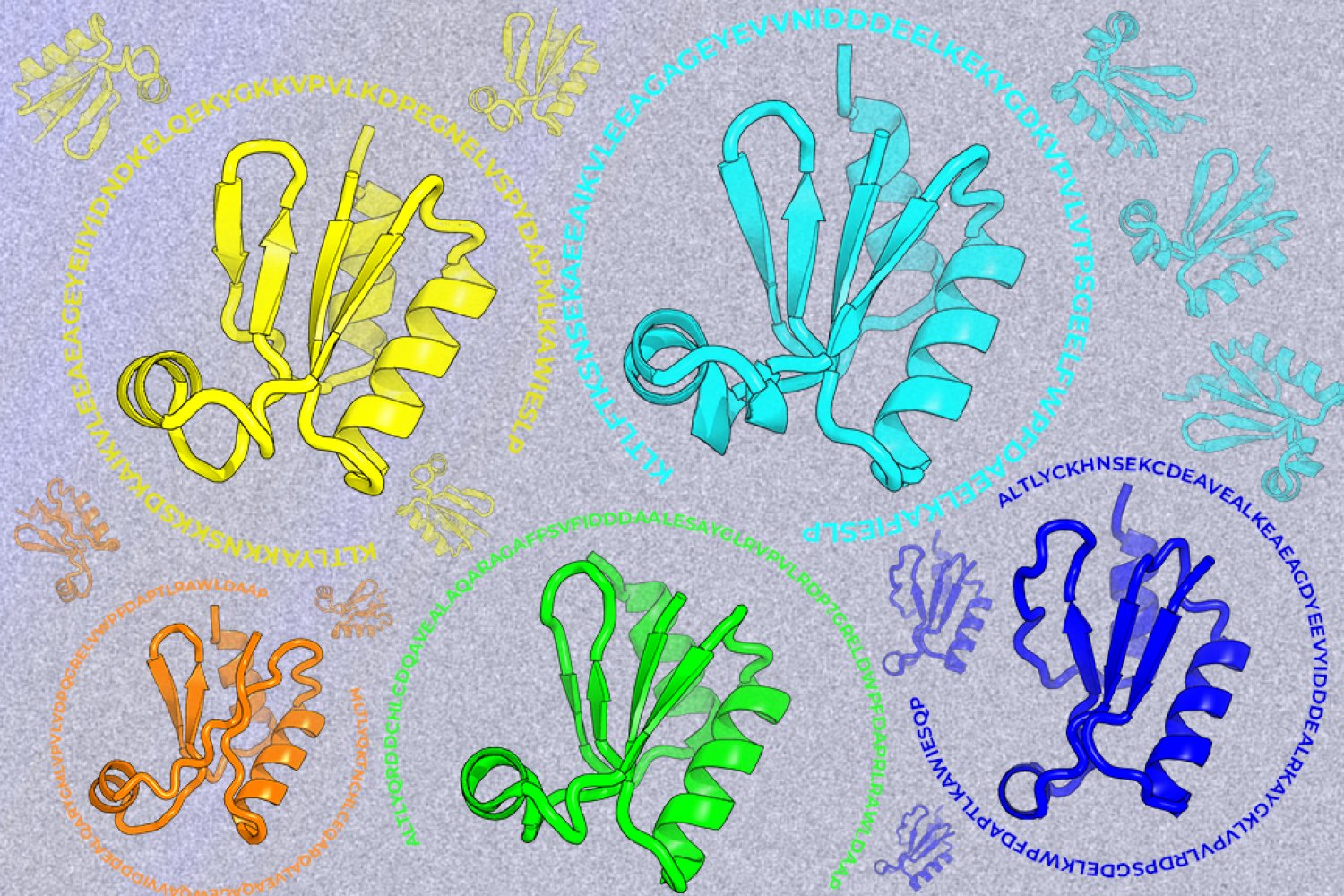
A new machine-learning framework aims to improve the success rate of computational protein design while moving away from results that reproduce sequences found in nature.
New MIT research could lead to better materials for a fossil-fuel-free process for making the chemical that's essential to fertilizer and other products.