Modern learning systems represent perceptual signals with continuous vectors, but comparison, retrieval, memory, alignment, and reasoning are often symbolic. In language, tokens provide this interface; for speech and audio, it must be learned. Existing audio tokenizers rely on local quantization, clustering, or reconstruction, leaving sequence consistency, compactness, length, termination, and edit geometry only indirectly controlled. We introduce PairAlign, a framework for compact audio tokenization through autoregressive self-alignment. An encoder maps speech to a continuous condition, and an autoregressive decoder emits tokens from BOS to EOS. Given two content-preserving views, PairAlign derives a canonical anchor target and trains both views to predict it, with unrelated in-batch targets as competing sequences. It first learns an autoregressive bridge from VQ targets and then transitions to EMA-teacher self-alignment with grounding and anti-collapse controls. On 3 s speech, PairAlign produces shorter, non-degenerate sequences while retaining ordered paired-view consistency. On the TIMIT retrieval archive, it operates at 8.28 tokens/s, reducing archive token count by 70.65% and the edit-distance work proxy by 91.87% relative to Stage I. Positive-negative probes show strong separation across phone-disjoint, trigram-disjoint, and temporally rearranged negatives, while rate-controlled post-hoc BPE does not recover the same compactness-consistency operating point. These results expose a rate-granularity trade-off: PairAlign does not uniformly outperform denser tokenizers on every local metric, but provides a lower-rate symbolic interface preserving ordered and relational structure. Conceptually, PairAlign follows JEPA-style predictive learning by predicting an abstract target rather than reconstructing the input; here, the target is a learned variable-length symbolic sequence.
Despite their sophisticated general-purpose capabilities, Large Language Models (LLMs) often fail to align with diverse individual preferences because standard post-training methods, like Reinforcement Learning with Human Feedback (RLHF), optimize for a single, global objective. While Group Relative Policy Optimization (GRPO) is a widely adopted on-policy reinforcement learning framework, its group-based normalization implicitly assumes that all samples are exchangeable, inheriting this limitation in personalized settings. This assumption conflates distinct user reward distributions and systematically biases learning toward dominant preferences while suppressing minority signals. To address this, we introduce Personalized GRPO (P-GRPO), a novel alignment framework that decouples advantage estimation from immediate batch statistics. By normalizing advantages against preference-group-specific reward histories rather than the concurrent generation group, P-GRPO preserves the contrastive signal necessary for learning distinct preferences. We evaluate P-GRPO across diverse tasks and find that it consistently achieves faster convergence and higher rewards than standard GRPO, thereby enhancing its ability to recover and align with heterogeneous preference signals. Our results demonstrate that accounting for reward heterogeneity at the optimization level is essential for building models that faithfully align with diverse human preferences without sacrificing general capabilities.
Jialu Wang, Heinrich Peters, Asad A. Butt et al.· 0 citations
Safety evaluation of multimodal large language models requires tracking not only whether an attack succeeds, but also how the interaction unfolds across turns and input modalities. We present MUSE (Multimodal Unified Safety Evaluation), an open-source, browser-based, run-centric platform for multimodal safety evaluation. MUSE treats each attack run as the persistent unit of execution, inspection, and analysis, preserving its configuration, multi-turn trajectory, delivered modalities and media, target responses, and safety judgments. A five-level response taxonomy further distinguishes full Compliance from Partial Compliance and refusal behavior, yielding hard ASR, soft ASR, and gray-zone width (GZW).
Across 11,700 evaluations on six multimodal LLMs, direct text-only requests yield only 3.1% macro hard ASR and 4.4% soft ASR, while iterative attack procedures are substantially more effective. Attack effectiveness also varies substantially with the attacker backbone. In contrast, Inter-Turn Modality Switching (ITMS), evaluated as a controlled delivery-modality probe, does not consistently increase attack success. These results demonstrate the value of run-centric, fine-grained evaluation for characterizing multimodal safety behavior beyond a single binary success metric.
Zhongxi Wang, Yueqian Lin, Jingyang Zhang et al.· 0 citations
Group Relative Policy Optimization (GRPO) remains the dominant critic-free approach for fine-tuning LLMs and VLMs, but its compatibility with constrained policy optimization (e.g. for safety-critical domains) has not been carefully examined. In this work, we introduce Constrained GRPO, a Lagrangian-based extension of GRPO for constrained policy optimization. We show that the standard practice of scalarizing rewards before normalization introduces a critical Lagrangian-specific failure mode: GRPO's within-group normalization makes constrained optimization highly sensitive to how multi-component learning signals are aggregated. We show that scalarizing rewards before normalization introduces shared-denominator coupling, so that changing one multiplier alters not only the emphasis on its corresponding constraint, but also the relative weighting of the reward and other constraints. We address this with a simple but crucial modification: scalarizing standardized advantages rather than rewards. This yields a better-conditioned update by addressing the coupling induced by reward scalarization, resulting in better-behaved multiplier dynamics and more stable constraint enforcement in practice. Empirically, across a controlled gridworld, a real-world autonomous driving benchmark, and a mathematical reasoning task, Constrained GRPO consistently achieves better adherence to specified constraints while maintaining or improving task performance.
Roger Girgis, Rodrigue de Schaetzen, Luke Rowe et al.· 0 citations
Reach audiences
Advertise in front of researchers, engineers, and readers.
Post-training pretrained autoregressive models (ARMs) into masked diffusion models (MDMs) provides an efficient route to diffusion language modeling, but it remains unclear whether the resulting models reuse inherited autoregressive computation or reorganize it for non-autoregressive generation. We compare two 7B ARM-MDM families across four controlled diagnostic tasks and find a task-dependent mechanism shift. On prefix-dominant tasks, MDMs largely preserve inherited high-attribution pathways or exhibit only modest changes in where computation occurs. On globally constrained tasks, the reorganization is substantially stronger, with task-relevant computation shifting toward earlier layers. This depth-wise pattern persists across prompt resampling, circuit budgets, and tested inference budgets, while targeted ablations support the functional importance of the identified structures under the tested intervention protocols. At the component level, diagnostic probes suggest that ARMs rely more strongly on sharply specialized components, whereas MDMs exhibit weaker single-component specialization and more diffuse output-space alignment. Together, these results suggest that diffusion post-training selectively preserves or reorganizes inherited computation according to task structure, rather than uniformly replacing autoregressive mechanisms.
Large Language Models (LLMs) exhibit systematic biases across demographic groups. Auditing is proposed as an accountability tool for black-box LLM applications, but suffers from resource-intensive query access. We conceptualise auditing as uncertainty estimation over a target fairness metric and introduce BAFA, the Bounded Active Fairness Auditor for query-efficient auditing of black-box LLMs. BAFA maintains a version space of surrogate models consistent with queried scores and computes uncertainty intervals for fairness metrics (e.g., $\Delta$ AUC) via constrained empirical risk minimisation. Active query selection narrows these intervals to reduce estimation error. We evaluate BAFA on two standard fairness dataset case studies: \textsc{CivilComments} and \textsc{Bias-in-Bios}, comparing against stratified sampling, power sampling, and ablations. BAFA achieves target error thresholds with up to 40$\times$ fewer queries than stratified sampling (e.g., 144 vs 5,956 queries at $\varepsilon=0.02$ for \textsc{CivilComments}) for tight thresholds, demonstrates substantially better performance over time, and shows lower variance across runs. These results suggest that active sampling can reduce resources needed for independent fairness auditing with LLMs, supporting continuous model evaluations.
David Hartmann, Lena Pohlmann, Lelia Hanslik et al.· 0 citations
Training process reward models (PRMs) requires step-level correctness labels, obtained either through expensive human annotation or by relying on ground-truth answers, limiting the ability to scale process-level supervision. We propose ScalePRM, which scales verification compute as an alternative: given a problem and a candidate solution, we generate multiple independent verifications of each reasoning step and aggregate their judgments to produce synthetic step-level labels without ground truth. We explore two representative inference-time scaling strategies, parallel scaling through self-consistency and sequential scaling through meta-critique, and train generative PRMs on the resulting synthetic data. On ProcessBench, a benchmark for identifying erroneous steps in mathematical reasoning, PRMs trained on step-level self-consistency data achieve 67.5 F1, surpassing reference-guided training with ground-truth access (66.4 F1) and GPT-4o as a critic (61.9 F1). When deployed as reward signals in RL training with Qwen2.5-Math-7B, our best PRM achieves 47.4% average accuracy across six mathematical reasoning benchmarks, outperforming ground-truth-based RLVR (43.9%). We also identify and address reward exploitation patterns unique to generative PRM-based RL. Our results demonstrate that scaling verification compute is a viable alternative to ground-truth supervision for training process reward models.
Salman Rahman, Sruthi Gorantla, Arpit Gupta et al.· 0 citations
Sparse Autoencoders (SAEs) decompose language-model activations into sparse, interpretable features, but standard encoders usually treat the latent dictionary as a flat set of independent coordinates, leaving hierarchy and feature interactions to emerge only implicitly. We propose KronSAE, a design that factorizes the latent space into heads and forms post-latent features as pairwise compositions of lower-dimensional pre-latents using mAND, a differentiable AND-like interaction. This imposes a compositional co-activation prior while remaining compatible with standard SAE objectives and variants such as TopK, Matryoshka, and Switch SAEs. KronSAE matches strong baselines on the EV-FLOPs frontier, improves interpretability of the latents, better captures the underlying correlated feature structure, and reduces encoder computational cost as an additional benefit. Code is available at https://github.com/corl-team/kronsae.
Vadim Kurochkin, Yaroslav Aksenov, Daniil Laptev et al.· 0 citations
In contrast to RNNs, which compress their history into a single hidden state, Transformers can attend to all past tokens directly. However, standard Transformers rely solely on the hidden state from the previous layer to represent the entire context. We show that this design creates pressure toward representation collapse and can degrade performance. To address this issue, we introduce Layer-Integrated Memory (LIMe), a lightweight extension that leverages existing key-value buffers and learns per-head, per-layer routing weights to integrate representations from previous layers. Across language modeling, synthetic reasoning, and deep architectures, LIMe improves perplexity per FLOP in the studied regimes and yields strong gains on synthetic tasks while preserving higher value-vector entropy and token separability. Finally, learned routing weights reveal systematic reuse of local and long-distance features, showing how LIMe enriches attention-time memory without increasing hidden-state size. Code is available at https://github.com/corl-team/lime.
Gleb Gerasimov, Yaroslav Aksenov, Nikita Balagansky et al.· 0 citations
Autoregressive large language models (LLMs) compress knowledge from their training data through next-token conditional distributions. This limits tractable querying of this knowledge to start-to-end autoregressive sampling. However, many tasks of interest -- including sequence continuation, infilling, and other forms of constrained generation -- involve sampling from intractable posterior distributions. We address this limitation by using amortized Bayesian inference to sample from these intractable posteriors. Such amortization is algorithmically achieved by fine-tuning LLMs via diversity-seeking reinforcement learning algorithms: generative flow networks (GFlowNets). We empirically demonstrate that this distribution-matching paradigm of LLM fine-tuning can serve as an effective alternative to maximum-likelihood training and reward-maximizing policy optimization. As an important application, we interpret chain-of-thought reasoning as a latent variable modeling problem and demonstrate that our approach enables data-efficient adaptation of LLMs to tasks that require multi-step rationalization and tool use.
Edward J. Hu, Moksh Jain, Eric Elmoznino et al.· 0 citations
Autonomous scientific research agents are increasingly applied to end-to-end scientific workflows, including literature review, data analysis, experimentation, and report generation. However, open-ended research tasks often do not clearly specify the analyses, methods, and success criteria required to complete the task. As a result, agents may miss important analyses, use inappropriate methods, or draw conclusions that are insufficiently supported by evidence. To address the problem, we present AutoSciRub, an evaluation-first framework that induces a task-specific executable rubric before research execution, and uses it to guide execution, criterion-level verification as well as iterative revision. AutoSciRub decomposes an underspecified instruction into atomic scientific goals, grounds them in relevant literature and task-visible data, and synthesizes specific, actionable, and verifiable criteria. The resulting rubric makes implicit experimental and evidential requirements explicit, providing guidance for experiments and analyses. During revision, rubric-guided verification identifies unmet criteria and enables targeted refinement of the research report and its supporting artifacts. On ResearchClawBench, AutoSciRub consistently improves all tested configurations, with an average gain of 2.08 points across three backbone LLMs under the fixed Codex harness and 2.95 points across three agent harnesses using a fixed DeepSeek-V4-Flash backbone. On a randomly sampled 20-task subset of AstaBench E2E Discovery, AutoSciRub further achieves an average improvement of 16.8 points across three agent harnesses, while maintaining or increasing the number of successfully completed tasks. These results demonstrate that evaluation-first guidance provides an effective and generalizable control mechanism for autonomous scientific research (Code: https://github.com/zjunlp/AutoSciRub).
Xuehai Wang, Haowei Qin, Tongxin Liu et al.· 0 citations
Supervised fine-tuning (SFT) trains a base language model to imitate target responses, and these targets may require knowledge the base model has not robustly internalized. We study this as a source of hallucinations and frame a group of mitigation methods as \emph{knowledge-aligned SFT}: constraining SFT training targets to the base model's parametric knowledge. Under a unified setup, we compare existing generation-based and estimation-based knowledge-alignment methods and introduce two new variants: Evidence Rewrite, which verifies base-model generations using external evidence, and Recall Rewrite, which retains claims only when they can be consistently recalled by the base model. Experiments with Qwen 3 4B and OLMo 3 7B show that knowledge-aligned SFT can reduce factual hallucinations on WildHalu and Biography while largely preserving general capabilities. Recall Rewrite yields the strongest factuality gains and improves refusal behavior on UnknownBench. It thereby confirms that SFT targets beyond the base model's knowledge drive hallucination behavior.
AR Becker, Jakob Kemmler, David Thulke et al.· 0 citations
A new method, called CW-Net, translates the reasoning process of an autonomous vehicle’s AI system into understandable concepts that explain its behavior.
MIT News · Artificial Intelligence· news.mit.eduAug 31, 2026
With millions of users across the world, Julia has been used to conduct cutting-edge research and to design new drugs, jet engines, heat pumps, and more.
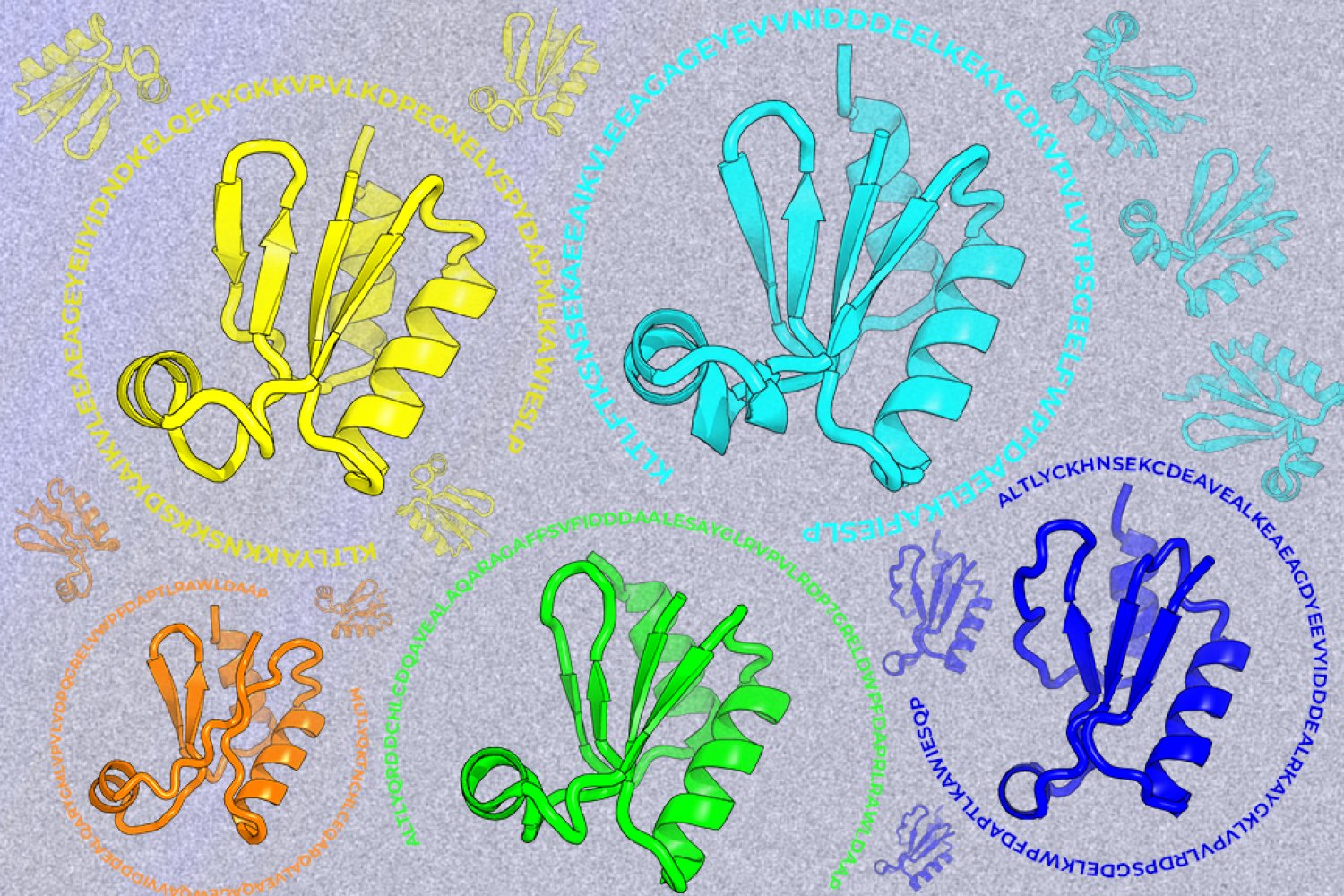
A new machine-learning framework aims to improve the success rate of computational protein design while moving away from results that reproduce sequences found in nature.
New MIT research could lead to better materials for a fossil-fuel-free process for making the chemical that's essential to fertilizer and other products.