While automatic speech recognition (ASR) models have achieved remarkable improvements in recent years, performance disparities persist across different speaker populations. One such disparity is for speakers whose first languages (L1) are from families distant from English. This paper investigates the relationship between first language background and English ASR performance. Through empirical analysis, we observe that the correlation between speakers' L1 distance and ASR error rates yields a systematic effect on English Speech, with its strength varying across datasets and models. This association is statistically significant in a follow-up analysis accounting for dataset-level variation in Tweedie mixed-effects models ($p<0.001$ across evaluated models). In addition, analysis of the latent space reveals a L1-based spatial segregation across deeper acoustic layers in the majority of evaluated architectures
Ting-Hui Cheng, Line Katrine Harder Clemmensen, Sneha Das· 0 citations
Long-context compression is essential for reducing the cost and latency of large language model inference. However, existing methods can fragment important evidence, require additional training or alignment, and often depend on the target model for effective compression. We introduce TopoCompress, a training-free and model-agnostic framework that compresses long contexts by selecting coherent semantic spans. TopoCompress first scores each span using dense and lexical query relevance together with semantic acceleration. It then constructs a hybrid graph that connects spans based on semantic similarity and sequential adjacency, and propagates the query-guided relevance scores over the graph. Across five long-context tasks-HotpotQA, 2WikiMQA, MuSiQue, Qasper, and MultiFieldQA-en-TopoCompress consistently outperforms strong compression baselines. Notably, TopoCompress achieves performance comparable to the strongest baseline while using a 4x smaller compression budget, and provides a 1.41x smaller compression time over the fastest baseline.
Runtime guardrails are essential for reliable large language model (LLM) deployment, yet existing approaches typically rely on independent, external models that introduce additional inference cost, delayed safety signals, and a capacity mismatch with increasingly capable base models. To address these issues, we introduce SingProbe, a lightweight intrinsic runtime guard that directly reuses hidden states produced during LLM inference and operates alongside autoregressive decoding. Within a unified framework, SingProbe continuously predicts query intent, response safety, and hallucination risk at the token level with negligible additional guardrail inference overhead, offering a "free-lunch" solution. We further introduce SingStreamBench, a benchmark designed to assess whether streaming guardrails remain inactive on benign prefixes while promptly detecting emerging unsafe content. Extensive experiments show that SingProbe achieves competitive or superior performance compared with substantially larger standalone guardrails and specialized hallucination detectors, with only $\approx$2M parameters and $<0.5\%$ extra overhead. Beyond passive detection, we also show that SingProbe scores can anticipate future generation risk and guide constrained safe decoding. We further extend this paradigm to medical generation through SingProbe-Med, which selectively activates risk-directed decoding interventions only when clinically relevant risks emerge. Together, these results demonstrate that internal model representations provide an effective and efficient interface for generation-time monitoring and control.
Large language models are increasingly used as agents for multistep retrosynthesis, raising the question of how much their search policy contributes independently of the underlying reaction model. We investigate this question in a biological setting through rule-based retrobiosynthesis: a deterministic biochemical engine generates the same validated transitions for every method, searching for routes that terminate in metabolites available to an \emph{Escherichia coli} chassis, while the policy only selects which frontier molecule to expand next. Prompted and LoRA-tuned Qwen2.5-7B policies use a strict choice-only interface. The fine-tuned policy reaches $65\pm1$\% solve rate at 10 expansions on LASER versus 59\% for MCTS, and at 200 expansions reaches $78\pm1$\% versus 75\% on LASER, $88\pm3$\% versus 80\% on the RetroPath RL Golden benchmark, and $63\pm2$\% versus 45\% on the BioNavi-NP benchmark. Fine-tuning also consistently outperforms direct prompting. These results show that route-supervised frontier selection can improve budgeted search without altering biochemical generation, although performance remains dependent on frontier construction and reaction ranking.
Philippe Meyer, Guillaume Gricourt, Thomas Duigou et al.· 0 citations
Reach audiences
Advertise in front of researchers, engineers, and readers.
Language models can answer from precomputed memory, a model's saved reading of a body of material, reused across requests instead of read again at each. This paper maps where that practice preserves correctness and the conditions under which it fails. Across experiments on Llama-3.1-8B-Instruct using both saved key-value caches and trained compressions of them, precomputed memory degrades when assembled from separately prepared parts, stays current only through rebuilds costing a large fraction of full preparation in our measurements, and ignores corrections served beside it conditional on phrasing. If precomputed memories can be served alongside one another, be cost-efficiently rebuilt, and be superseded by new information arriving in real-time, they can serve as a way to avoid re-feeding context to a model over repeated queries. The implication of our results for a deployed system that deals with a variety of queries is that precomputed memories are best rebuilt on the cadence at which new information changes what the memory was originally computed from. Both warm-rebuilding trained compressions of key-value caches and serving specifically-phrased updates beside a memory, as pasted text or injected cache state, show particular promise for keeping precomputed memories current, the latter as an interim measure between rebuilds, and we measure the cost and name the remaining questions associated with each.
Reliable uncertainty estimation is a crucial requirement for deploying large language models (LLMs) and vision-language models (VLMs) in safety-critical settings, especially when the model parameters are not accessible (black-box). We propose BiG-SURE, an uncertainty estimator based on cross-temperature semantic agreement. The method samples low-temperature responses as stable semantic anchors and high-temperature responses as probes under meaning-preserving input transformations. It then constructs an anchor-probe Bipartite Graph (BiG) using NLI-based entailment scores and defines confidence through the normalized squared spectral energy of this matrix, with uncertainty given by its complement. This bipartite graph-based Semantic Uncertainty and Reliability Estimation (SURE) score measures whether high-temperature probes remain semantically aligned with the model's stable low-temperature belief or not. We evaluate BiG-SURE on text QA, multilingual QA, and multimodal QA tasks across multiple model families. In these experiments, BiG-SURE improves average abstention AUROC over prior black-box uncertainty estimators, while remaining simple, unsupervised, and applicable to black-box model settings.
Reinforcement learning (RL), particularly RL with Verifiable Rewards (RLVR), has recently emerged as a central paradigm for enhancing large language models' (LLMs) reasoning abilities, demonstrating remarkable effectiveness across reasoning tasks. Recent studies suggest that high-entropy tokens play an exceptionally important role in model training, since training with only the highest 20% entropy tokens yields significant performance gains. However, why such high-entropy tokens are beneficial remains insufficiently understood. In this work, we find that although high-entropy tokens within one answer tend to correlate with large gradient magnitude, entropy alone fails to consistently reflect token importance across different answers, considering the variations in the answer-level reward signals. Based on this observation, we introduce the Gradient Magnitude-based Token Selection (GMTS) method to quantify token importance, which leverages the entropy-gradient connection to approximate gradient-magnitude rankings for token selection. We find that training on the top 20% tokens ranked by GMTS consistently outperforms entropy-based token selection across three reasoning domains and various model sizes, suggesting that GMTS provides a more fine-grained estimate of token contribution for RLVR training.
Large language models are increasingly capable in general, but their utility can remain modest in niche or understudied areas. One approach to address this limitation is to specialise existing models through additional training on target-domain corpora. In this work, we investigate such continued pre-training for adapting large language models to Swedish journalism, using a high-quality dataset that we curate from millions of news articles. To evaluate the adaptation efficacy, we also construct a novel domain-specific benchmark that covers six editorial tasks. Through full and parameter-efficient fine-tuning across two model sizes, we find that continued pre-training yields benefits in the target domain, but only when paired with experience replay to mitigate forgetting. We observe consistent enhancements in the models' generation quality and factual knowledge, but not their proficiency in discriminative tasks. Exploring a training-free method to facilitate instruction following, we see further improvements, but exclusively for models trained with low-rank adaptation. Crucially, we demonstrate the importance of targeted evaluation in the adaptation process, as an existing Swedish benchmark largely fails to capture the models' in-domain performance gains.
Lukas Borggren, Jenny Kunz, Marco Kuhlmann· 0 citations
The language a legislature uses to debate women's rights, even in favour of them, encodes systematic patterns of sexism that persist across two centuries. In this work, we analyse 6,531 speeches over 200 years of UK parliamentary debate (Hansard, 1803-2005) by using large language models to classify a speaker's perspective towards women's suffrage and political representation, as well as analyse sexist speech in parliament from the lens of the Ambivalent Sexism Inventory. We also release this parliamentary dataset, an organized and metadata-enriched version of the publicly available Hansard Corpus optimized for computational social science research, with 6.7 million speeches across 1.2 million debates, with 89% gender-matching for speeches by MPs from the House of Commons. We find that 54% of speeches opposing women's representation contain sexist content, compared to 21% of speeches that are for the cause, and that the two sides use fundamentally different types of sexism: anti-suffrage rhetoric combines hostile and benevolent framing, while pro-suffrage sexism is overwhelmingly benevolent. Female MPs support women's political rights at 93% compared to 70% for male MPs, a gap that closes only after enfranchisement. Our findings are evidence that benevolent and hostile sexism are used in different rhetorical contexts in a manner consistent with the theory of Ambivalent Sexism.
Mohammad Omar Khursheed, Mandira Sawkar, Ashiqur R. KhudaBukhsh· 0 citations
Strategic deception by LLM and VLM agents has emerged as a central AI alignment and safety concern. Social-deduction games (where each player holds a hidden role and communicates with others to deduce identities) serve as the canonical testbed, particularly in multi-agent settings. Existing testbeds, however, are text-only and run on a single fixed agent configuration, missing the non-verbal sensorimotor channels treated as core by deception taxonomies and leaving it ambiguous whether an observed behavior reflects the underlying model or the surrounding harness. We introduce MineAmongUs, a 3D multimodal Among Us sandbox where imposter agents must deceive crewmates through joint verbal and non-verbal action. We also propose ARIA, a configurable VLM-agent harness that exposes five cognitive-component ablation axes; and an atom- and arc-level annotation scheme grounded in deception taxonomies and operationalized at scale by an LLM-as-a-Judge reaching near-human atom-labeling agreement. Empirical results show that VLM agents pursue imposter wins through joint verbal and non-verbal deception, with non-verbal channels emerging as the more decisive winning contributors across both harness ablation and cross-VLM evaluation. Taken together, our work opens a new path for embodied VLM-agent alignment research.
Jaewoo Ahn, Junseo Kim, Hyunseo Kim et al.· 0 citations
Speculative decoding speeds up generation with an efficient draft model (drafter) that proposes tokens for a target model to verify in one pass, preserving the target's output distribution. High-acceptance block-diffusion drafters such as DFlash and DFlare fill an entire block in one parallel pass. In many cycles, the target accepts the whole block, so the drafter exhausts its trained block horizon before verification fails. We call this unrealized acceptance stranded speed-up. A mean committed length, per prompt or per cycle, hides it, whereas the acceptance histogram exposes it as a spike in the ceiling bin, the fraction of cycles that accept the entire block. We recommend the histogram as a preflight check before spending training compute. Naively widening the block at inference does not recover the speed-up, because once the block outgrows its training size, the drafter's bidirectional attention shifts its distribution even at early positions and erodes front-of-block verification. Instead, we post-train the drafter on a longer block with a short curriculum that emphasizes the newly exposed positions, a method we call DBloom. Expanding the pretrained DFlash and DFlare drafters from block size 16 to 24 across Qwen3-8B and Qwen3-4B targets raises the per-prompt committed length on the high-ceiling benchmarks by a median of +0.8 tokens (up to +1.1). Once continuation fine-tuning precedes expansion, the increase reaches 1.37 tokens. The same expansion also lifts committed length on all seven benchmarks for Gemma-4-12B-IT, a different model family, by a median of +0.41 tokens (Arm A), and the full continuation-then-expand pipeline (Arm B) adds +0.29 to +0.98 tokens over the same B16 drafter. In a prompt-matched comparison against JetSpec, a contemporary tree-based drafter not used in our design, DBloom commits more tokens on every benchmark at tree budgets up to 64 nodes.
Recurrent, attention-free sequence models share a structural weakness: a fading state cannot perform exact recall of something seen once, far in the past. We add to the Kathleen trunk a second memory layer -- a "notebook": a fixed-key holographic (HRR) associative store with a learned local write gate, a self-gating raw read, and write-triggered forgetting -- 25K parameters that attach to the logits of any trunk. (1) Mechanism: on a controlled needle-in-haystack task the notebook reaches 80-82% one-shot recall at 4x the training length, where the bare trunk scores ~4% and a parameter-matched attention head scores 100% inside its training length and 0% beyond it. Addressing is length-invariant by construction; the untrained memory alone recalls at 90% accuracy identically at 512, 2048 and 4096 bytes. Because the store is a linear superposition, two capabilities follow from arithmetic alone: selective unlearning (one subtraction erases one fact to chance, retained facts unharmed) and per-token attribution (counterfactual erasure names the source fact of every correct byte, 100% provenance). (2) Real text: on WikiText-2 bytes the notebook improves prediction of repeated rare words by +0.15-0.27 bits/byte, the gain growing with the distance between mentions and holding zero-shot at 4x training length; write-triggered forgetting eliminates memory pollution at 8x length (first-mention cost +0.33 -> -0.004). (3) Scope and scale: a parameter-matched attention head does generalize on natural-text repetition, so the notebook's claim is exact recall at O(L); on a WikiText-103 ladder (8 to 512 MB) the zero-shot repeat gain rises monotonically. All experiments are pre-registered, seeds reported, and reproducible on a single free-tier GPU.
A new method, called CW-Net, translates the reasoning process of an autonomous vehicle’s AI system into understandable concepts that explain its behavior.
MIT News · Artificial Intelligence· news.mit.eduAug 31, 2026
With millions of users across the world, Julia has been used to conduct cutting-edge research and to design new drugs, jet engines, heat pumps, and more.
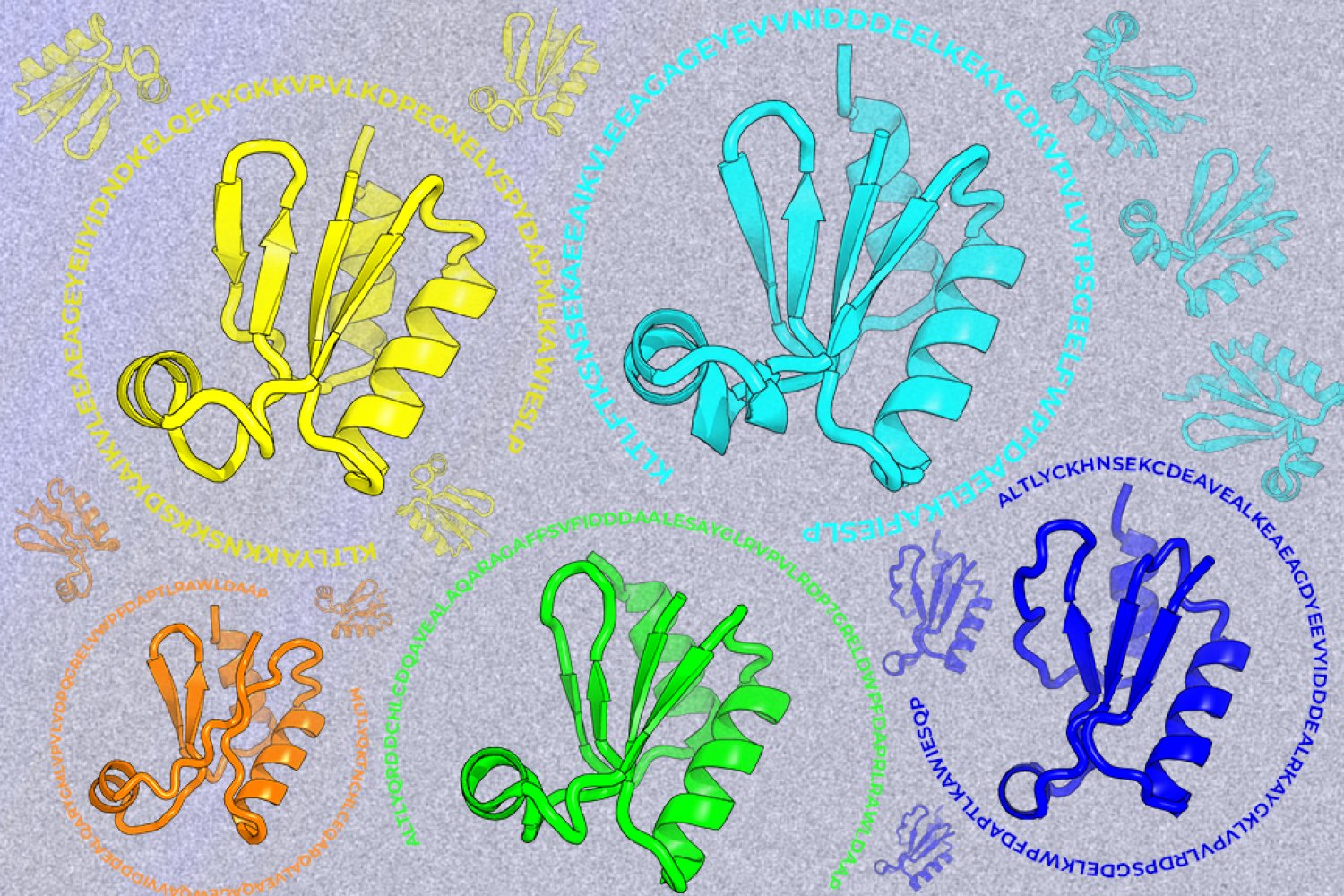
A new machine-learning framework aims to improve the success rate of computational protein design while moving away from results that reproduce sequences found in nature.
New MIT research could lead to better materials for a fossil-fuel-free process for making the chemical that's essential to fertilizer and other products.