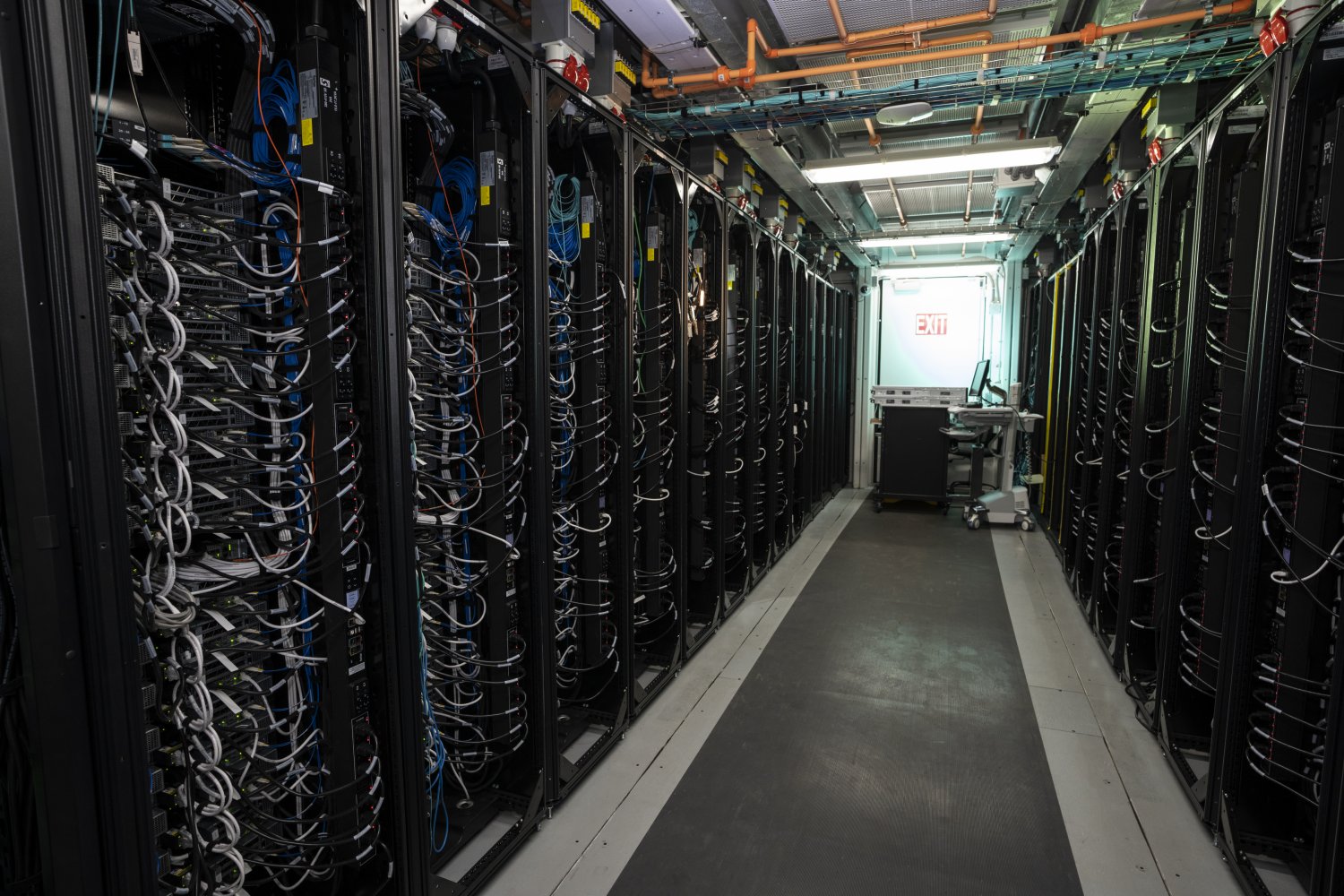
The design, deployment, and performance of cloud-based AI systems, especially scalability, system intelligence, and efficiency, and the challenges, such as latency problems in distributed computing systems, data privacy and security, and resource allocation, are indicated.
Harsh Verma· World Journal of Advanced Re...· 0 citations
This study develops a rule-based parts of speech tagging tool specifically for those people who want to learn or research on Bengali grammar and proposes and endeavor to implement this tool with an intent to achieve higher accuracy by optimizing memory overhead.
Shadikun Nahar Sakiba, Md Nasir Uddin Shuvo, Najia Hossain et al.· Lecture Notes in Networks an...· 7 citations
Reliability Beyond Accuracy in Crop Classification Benchmarks (Supplementary Materials)Introduction: Near-perfect crop-label accuracy can conceal uncertainty, perturbation sensitivity, and weak explanations. This study evaluates these reliability dimensions without treating benchmark classification as agronomic recomme...
Kwan Hong TAN· Zenodo (CERN European Organi...· 0 citations
Reach audiences
Advertise in front of researchers, engineers, and readers.
Reliability Beyond Accuracy in Crop Classification Benchmarks (Supplementary Materials)Introduction: Near-perfect crop-label accuracy can conceal uncertainty, perturbation sensitivity, and weak explanations. This study evaluates these reliability dimensions without treating benchmark classification as agronomic recomme...
Kwan Hong TAN· Zenodo (CERN European Organi...· 0 citations
This thesis investigates the complex and often contentious question of whether predictive models are epistemically superior to causal models. It challenges the simplistic dichotomy that often frames this debate, arguing that the epistemic superiority of a model is not an intrinsic property but is contingent upon the sp...
Kwan Hong TAN· Zenodo (CERN European Organi...· 0 citations
This paper explores the complex and often contradictory relationship between hyperconnectivity and democracy. Drawing on novel theoretical frameworks inspired by quantum mechanics, network science, and temporal dynamics, we argue that the hyperconnected world is not simply an extension of the classical political landsc...
Kwan Hong TAN· PhilPapers (PhilPapers Found...· 0 citations
The term “post-truth” has become a ubiquitous yet contentious descriptor of our contemporary socio-political landscape. This paper delves into the heart of the debate, examining whether post-truth represents a novel epistemic condition—a fundamental shift in how we know and what we believe—or if it is merely a rhetoric...
Kwan Hong TAN· Zenodo (CERN European Organi...· 0 citations
The question of whether algorithms can be considered epistemic agents represents one of the most profound challenges at the intersection of philosophy of mind, epistemology, and artificial intelligence. This paper develops a novel theoretical framework for understanding algorithmic epistemic agency through the introduc...
Kwan Hong TAN· Zenodo (CERN European Organi...· 0 citations
Professor Paris Smaragdis develops computers with superhuman hearing for applications like speech recognition, music understanding, and environmental monitoring.
Microsoft Research Blog· microsoft.comOct 21, 2026
For decades, a fundamental question about the difficulty of computing in high-dimensional spaces has resisted proof. New research resolves this question, removing a major theoretical obstacle to understanding the efficiency of randomized algorithms used across science and computing. The Kannan–Lovász–Simonovits (KLS) conjecture was proposed in 1995. It asks whether, for a broad class of high-dimensional […] The post Solving a 31-year-old grand challenge in mathematics – the KLS conjecture appear…
MIT News · Artificial Intelligence· news.mit.eduOct 15, 2026
A new computational approach reveals how cells communicate to assemble into tissues. This could accelerate stem cell engineering, improve disease models, and inform therapies.
Microsoft Research Blog· microsoft.comOct 15, 2026
Zero-knowledge proofs can verify computing results without rerunning workloads or exposing sensitive data. Magnetar helps bring them into the mainstream with support for standard programming languages, major speed gains, and quantum-resistant security. The post Proof-based general-purpose computing with Magnetar appeared first on Microsoft Research.
MIT News · Artificial Intelligence· news.mit.eduOct 8, 2026