Cysteine-Inspired Photosensitizer with Efficient Tumor Accumulation Enables Thermoresistance Reversal for Reciprocal Enhancement of Photodynamic-Photothermal Therapy.
Sep 2026· ACS Applied Materials and Interfaces· 0 citations
Medicine
Abstract
Abstract Insufficient tumor accumulation and heat shock protein (HSP)-mediated adaptive resistance remain major barriers to effective cancer therapy. Here, a cysteine-inspired conjugated polymer photosensitizer (CP-PCys) was developed to integrate enhanced tumor accumulation, hydrogen sulfide (H2S) generation, photodynamic therapy (PDT), and photothermal therapy (PTT). Dense cysteine functionalization promoted cellular uptake, resulting in approximately 2.4-fold higher accumulation in 4T1 cells than that of the polyethylene glycol-functionalized control after 24 h. Meanwhile, the conjugated backbone enabled NIR-II fluorescence imaging, a photothermal conversion efficiency of 52.3%, and efficient reactive oxygen species generation (58.6%). Intracellular H2S disrupted energy metabolism and suppressed HSP70 expression, while PDT-generated reactive oxygen species further reinforced this effect. Combined irradiation reduced HSP70 expression to approximately 57% of the PBS control level, thereby sensitizing tumor cells to PTT. Conversely, PTT-induced hyperthermia enhanced reactive oxygen species generation and potentiated PDT, aggravating mitochondrial dysfunction and DNA damage. In 4T1 tumor-bearing mice, CP-PCys rapidly accumulated in tumors and produced stable mild photothermal heating. Combined PDT–PTT achieved an 89% tumor inhibition rate without detectable skin injury or systemic toxicity, demonstrating the potential of CP-PCys for effective and atraumatic cancer phototherapy.

The comparison of adopter and non-adopter sample reveals three potential adoption inhibitor, security, data privacy, and portability, which underlines the importance of the technical and security perspectives for research investigating the adoption of technology.
Nattakarn Phaphoom, Xiaofeng Wang, S. Samuel et al.· Journal of Systems and Softw...· 111 citations· ⚡8
This study investigates how Lean internal startup facilitates software product innovation in large companies and identifies its enablers and inhibitors, and shows the potential of the method-in-action framework to investigate the Lean startup approach in non-startup context.
Henry Edison, Nina M. Smørsgård, Xiaofeng Wang et al.· Journal of Systems and Softw...· 78 citations· ⚡6
This paper highlights the challenges to conduct proper affect-related studies with psychology, provides a comprehensive literature review in affect theory, and proposes guidelines for conducting psychoempirical software engineering.
D. Graziotin, Xiaofeng Wang, P. Abrahamsson· SSE@SIGSOFT FSE· 56 citations· ⚡4
This study conducts a multiple case study on twenty European software startups and proposes a prototype-centric learning model in early stage software startups, and identifies factors that occur as barriers but also facilitators for prototyping in earlystage software startups.
Anh Nguyen-Duc, Xiaofeng Wang, P. Abrahamsson· International Conference on...· 44 citations· ⚡5
It is demonstrated that linker-free PROTACs can outperform traditional designs, marking a paradigm shift in PROTAC development for targeted protein degradation.
Pinal, a 16-billion-parameter foundation model that produces protein candidates from natural-language functional descriptions, supports natural language as a high-level interface for candidate generation in protein design, enabling programmable exploration with reduced reliance on manually specified structural or seque...
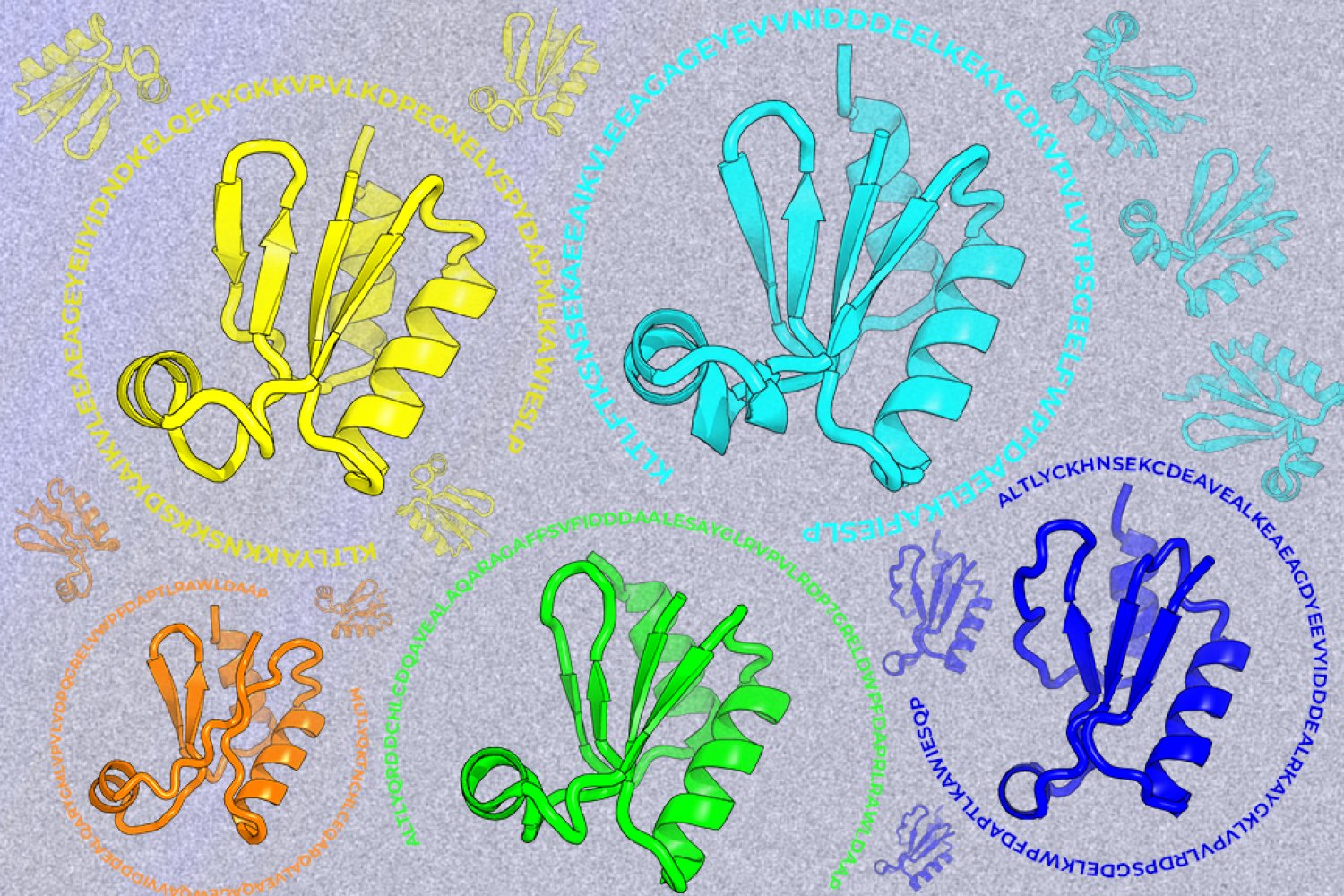
A new machine-learning framework aims to improve the success rate of computational protein design while moving away from results that reproduce sequences found in nature.