Skip to content
#protein folding Open access

An In Silico Investigation of the Structural and Evolutionary Features of MAPEG Proteins in Bacteria

Sep 2026 · Current Issues in Molecular Biology · Vol 48 · 0 citations · 45 references
Medicine

Abstract

The Membrane-Associated Proteins in Eicosanoid and Glutathione metabolism (MAPEG) superfamily comprises integral membrane proteins involved in lipid metabolism, detoxification, and redox regulation. While extensively characterised in eukaryotes, bacterial MAPEG homologs remain poorly understood. In this study, we conducted an in silico analysis of bacterial MAPEG proteins and performed a comparative investigation with selected eukaryotic homologs to assess structural conservation and evolutionary relationships. Sequence alignment and phylogenetic reconstruction showed that the bacterial proteins have the typical MAPEG signature motifs, including residues associated with glutathione binding. Homology modelling and structural prediction analyses indicated conservation of the characteristic trimeric transmembrane architecture typical of the MAPEG family. Comparative structural analysis highlighted a preserved core fold across domains of life, accompanied by variations in loop regions and membrane-embedded segments that may reflect adaptation to distinct cellular environments. Molecular docking simulations suggested a conserved glutathione-binding pocket, although subtle differences in the surrounding residues may influence substrate specificity. Overall, our findings support an evolutionarily conserved structural framework within the MAPEG superfamily and provide insight into the diversification of bacterial members relative to their eukaryotic homologs. This study contributes to a deeper understanding of MAPEG protein evolution and lays the groundwork for future functional and biochemical investigations.

Read PDF

Similar papers

Open access Nov 2026

Comparative Structural Analysis of Substrate- and Cofactor-Binding Regions in Malic Enzyme Homologs

Malic enzyme (ME) catalyzes the oxidative decarboxylation of malate to pyruvate, a key reaction in central metabolism across all domains of life. Aberrant ME activity is associated with cancer cell proliferation through enhanced glycolysis and lipogenesis, while disease-causing mutations in human MEs highlight their bi...

Zhuo-Jia Chen, Alaidi Osama, R. Narayanan et al. · 0 citations
#protein folding Open access Oct 2026

Structural and Evolutionary Analysis of Non-specific Lipid Transfer Proteins (nsLTPs) in Cereus (Cactaceae)

The results provide the first integrated characterization of nsLTPs in Cereus, supporting a gate-modulation hypothesis in which structural variation concentrated at tunnel entrances may contribute to functional diversification while preserving the conserved nsLTP fold (four-helix scaffold).

M. I. Oliveira Cardoso, J. A. Teodoro, T. Costa-Silva et al. · 0 citations
Open access Sep 2026

Comparative Structural and Functional Analysis of Perilipin-2 (PLIN2) in Dog and Human revealing Extensive Evolutionary Conservation of Lipid Droplet-associated Features

Perilipin-2 (PLIN2) is a ubiquitously expressed lipid droplet-associated protein that plays a central role in lipid storage, lipid droplet stabilization and cellular lipid metabolism. Although PLIN2 has been extensively investigated in human metabolic disorders and cancer, comparative information regarding its structur...

Ghanshyam Sahu, Amrita Behera, Franco P. S. et al. · 0 citations
Open access Oct 2026

Comparative In-Silico Sequence and Structural Analysis of Catalase from Escherichia coli and Humans

Hydrogen peroxide (H2O2) is a significant reactive oxygen species that can lead to cellular damage, particularly in eukaryotic organisms. Catalase, an enzyme, plays a crucial role in detoxifying H2O2 and sustaining cellular functions. Although substantial research has been conducted on catalase, limited comparative ana...

Sadiq Salisu Yunusa, M. A. Dikwa, A. Y. Abubakar et al. · 0 citations
#protein folding Open access Sep 2026

In silico structural and functional characterisation of two hypothetical proteins from the plant‑associated bacterium Kosakonia cowanii F52

Findings generate specific, testable hypotheses and provide a foundation for future experimental work on the molecular basis of K. cowanii plant growth-promoting activity.

Md. Zahirul Islam, Md Jahid Hasan Dewan, A. B. Keyhani et al. · 0 citations

Related blog posts

Google DeepMind Blog Sep 30, 2026

Introducing SynthID Bio

Proof of concept for watermarking AI-generated proteins while preserving biological function.

MIT News · Artificial Intelligence Aug 27, 2026

Looking beyond natural sequences

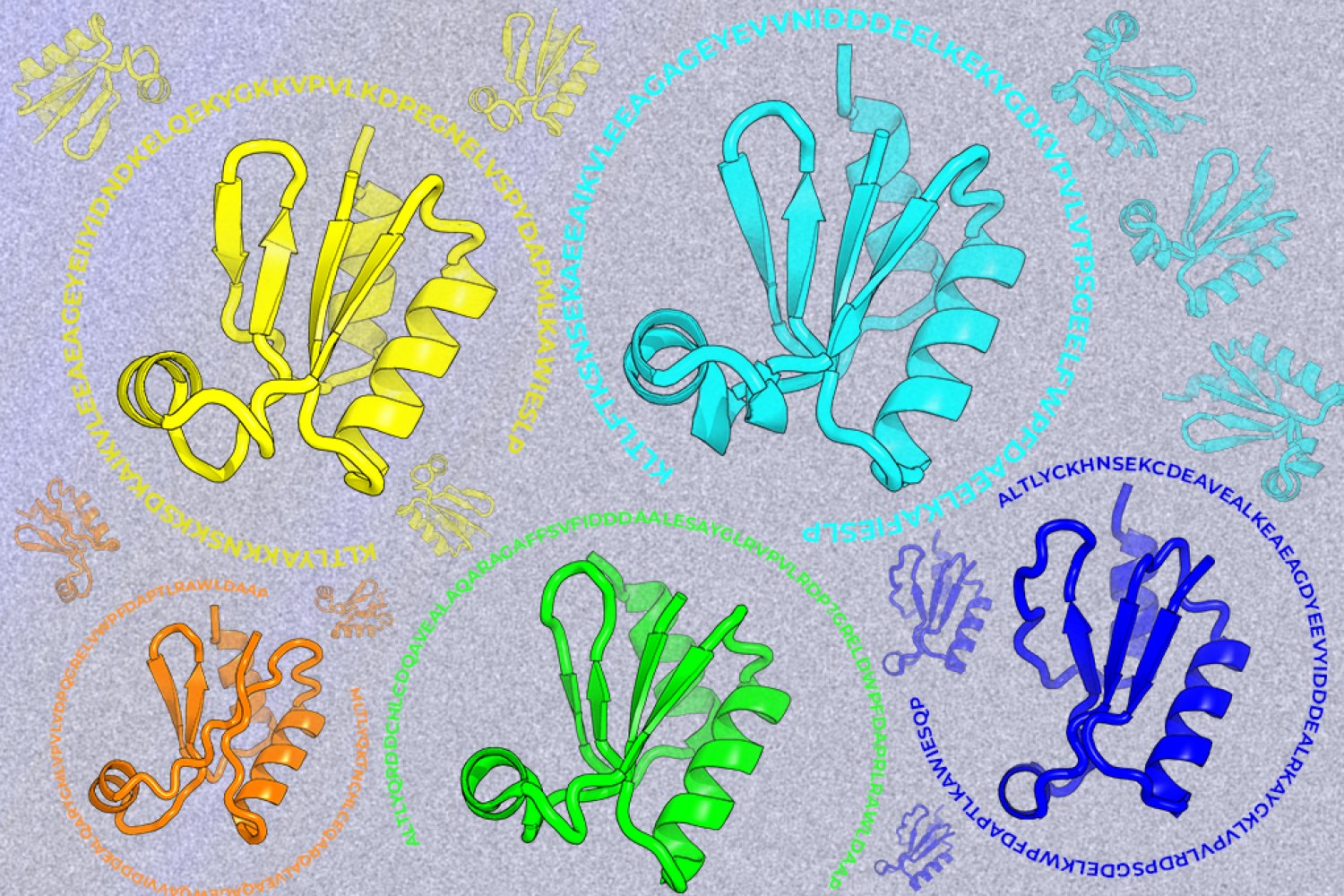
A new machine-learning framework aims to improve the success rate of computational protein design while moving away from results that reproduce sequences found in nature.

We use cookies to run the site and, with your consent, for analytics and to show ads. See our Cookie Policy.