Sep 2026· Molecules and Cells· Vol 86 18, pp.
3822-3839.e7
· 0 citations
Medicine
Abstract
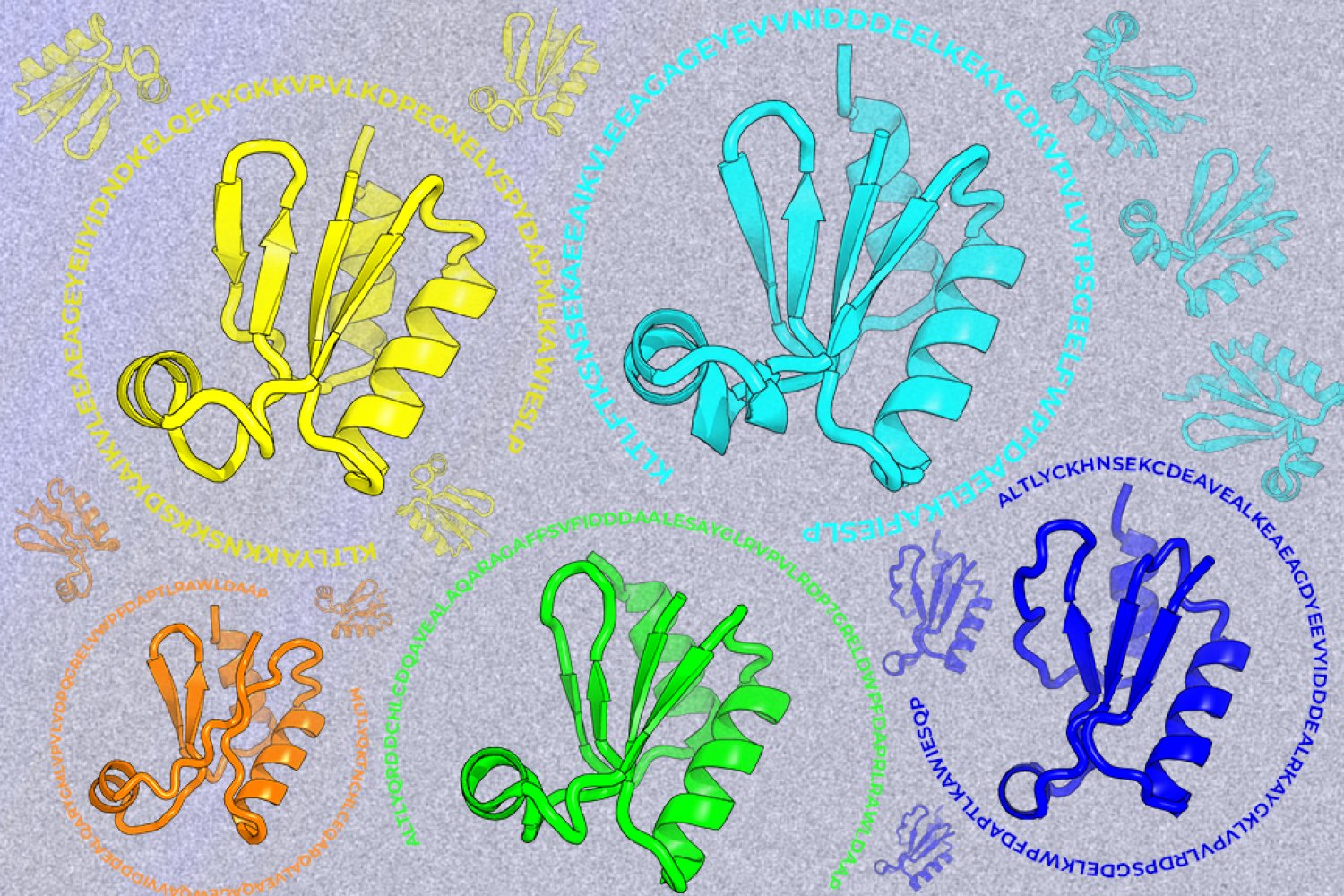
Traditional deep mutational scanning (DMS) encodes every single amino-acid substitution from a wild-type sequence. We hypothesize that combinatorial DMS (CDMS) libraries, incorporating all mutations in all combinations, can enable the discovery of high-affinity protein (super)binders by capturing epistatic, non-linear amino-acid interactions. Here, we introduce origin-independent and context-exhaustive high-throughput integration of combinatorial DMS libraries (ORCHID), which systematically maps regions of wild-type-independent epistasis across all mutational contexts and trajectories. For benchmarking, we build a high-throughput peptide display assay measuring PIN1WW-domain affinity for a CDMS peptide library containing phosphoserine via amber codon suppression. ORCHID raises prediction accuracy by 45% over non-epistatic models. We identify and structurally characterize two epistatic superbinders, SPY-tide and LYR-tide, binding 3- to 5-fold tighter than current optimal PIN1WW-domain binders through "fold-and-turn" and register-shifted conformational changes. We also identify two molecular determinants of epistasis, PIN1F25 and PIN1R14, that natively encode non-linear binding and, when mutated, abolish it. Hence, natural proteins recognize peptides non-linearly, offering opportunities for improved binder design.

The comparison of adopter and non-adopter sample reveals three potential adoption inhibitor, security, data privacy, and portability, which underlines the importance of the technical and security perspectives for research investigating the adoption of technology.
Nattakarn Phaphoom, Xiaofeng Wang, S. Samuel et al.· Journal of Systems and Softw...· 111 citations· ⚡8
This study investigates how Lean internal startup facilitates software product innovation in large companies and identifies its enablers and inhibitors, and shows the potential of the method-in-action framework to investigate the Lean startup approach in non-startup context.
Henry Edison, Nina M. Smørsgård, Xiaofeng Wang et al.· Journal of Systems and Softw...· 78 citations· ⚡6
This paper highlights the challenges to conduct proper affect-related studies with psychology, provides a comprehensive literature review in affect theory, and proposes guidelines for conducting psychoempirical software engineering.
D. Graziotin, Xiaofeng Wang, P. Abrahamsson· SSE@SIGSOFT FSE· 56 citations· ⚡4
This study conducts a multiple case study on twenty European software startups and proposes a prototype-centric learning model in early stage software startups, and identifies factors that occur as barriers but also facilitators for prototyping in earlystage software startups.
Anh Nguyen-Duc, Xiaofeng Wang, P. Abrahamsson· International Conference on...· 44 citations· ⚡5
It is demonstrated that linker-free PROTACs can outperform traditional designs, marking a paradigm shift in PROTAC development for targeted protein degradation.
Pinal, a 16-billion-parameter foundation model that produces protein candidates from natural-language functional descriptions, supports natural language as a high-level interface for candidate generation in protein design, enabling programmable exploration with reduced reliance on manually specified structural or seque...
A new machine-learning framework aims to improve the success rate of computational protein design while moving away from results that reproduce sequences found in nature.