Transcriptional reprogramming with endogenous cis- and trans-elements for efficient food protein expression from safe substrates in Komagataella phaffii.
Sustainable economy and social development require a paradigm shift in the modes of production of edible proteins. Komagataella phaffii is a preferred host for food protein expression. However, its methanol-dependent production mode and host improvement with exogenous bioelements pose challenges for the manufacturing and approval of bulk food proteins. In this study, we report an endogenous streamlined promoter-regulator integrated transcriptional (ESPRIT) system for efficient expression on non-methanol substrates in K. phaffii. A strong and simplified PAOX1 variant, PAA13-t13, was obtained through core promoter mining and streamlining of upstream regulatory sequences, with a 57% reduction in promoter length and expression increased to 3.4-fold that of PAOX1 under methanol conditions. Overexpression of the transactivator Mit1 enabled PAA13-t13 to drive high-level expression on glucose, glycerol, and ethanol. Endogenous zinc-finger transactivators were screened from genome, and their activation regions were fused with the DNA-binding domain of Mit1, resulting in 25 synthetic transactivators. Combinatory function of the engineered endogenous promoter and transactivator established the ESPRIT system, which achieved 6.8-fold and 10.1-fold expression levels on glucose that of methanol-inducible PAOX1 on methanol and constitutive PGAP on glucose, respectively. It also allowed efficient production of three food proteins under methanol-free conditions. In the bioreactor, the ESPRIT system produced 5.14 g/L β-lactoglobulin and 1.95 g/L brazzein on glucose, achieving 3.0-fold and 1.9-fold as compared to the commercial methanol-dependent PAOX1 system, respectively. These results established the ESPRIT system as an alternative expression platform for efficient food protein production from non-methanol substrates in K. phaffii.
The comparison of adopter and non-adopter sample reveals three potential adoption inhibitor, security, data privacy, and portability, which underlines the importance of the technical and security perspectives for research investigating the adoption of technology.
Nattakarn Phaphoom, Xiaofeng Wang, S. Samuel et al.· Journal of Systems and Softw...· 111 citations· ⚡8
This study investigates how Lean internal startup facilitates software product innovation in large companies and identifies its enablers and inhibitors, and shows the potential of the method-in-action framework to investigate the Lean startup approach in non-startup context.
Henry Edison, Nina M. Smørsgård, Xiaofeng Wang et al.· Journal of Systems and Softw...· 78 citations· ⚡6
This paper highlights the challenges to conduct proper affect-related studies with psychology, provides a comprehensive literature review in affect theory, and proposes guidelines for conducting psychoempirical software engineering.
D. Graziotin, Xiaofeng Wang, P. Abrahamsson· SSE@SIGSOFT FSE· 56 citations· ⚡4
This study conducts a multiple case study on twenty European software startups and proposes a prototype-centric learning model in early stage software startups, and identifies factors that occur as barriers but also facilitators for prototyping in earlystage software startups.
Anh Nguyen-Duc, Xiaofeng Wang, P. Abrahamsson· International Conference on...· 44 citations· ⚡5
It is demonstrated that linker-free PROTACs can outperform traditional designs, marking a paradigm shift in PROTAC development for targeted protein degradation.
Pinal, a 16-billion-parameter foundation model that produces protein candidates from natural-language functional descriptions, supports natural language as a high-level interface for candidate generation in protein design, enabling programmable exploration with reduced reliance on manually specified structural or sequence constraints.
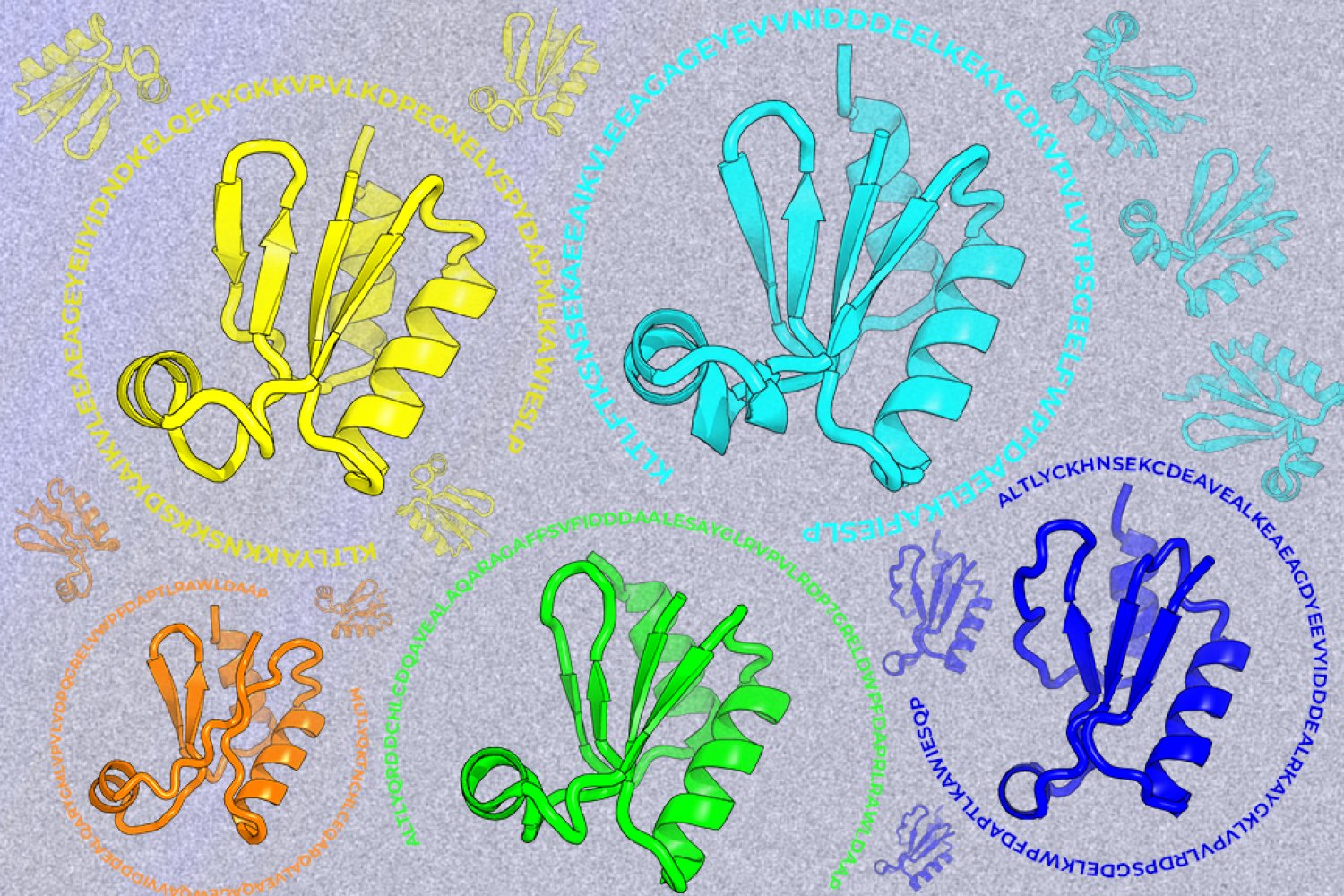
A new machine-learning framework aims to improve the success rate of computational protein design while moving away from results that reproduce sequences found in nature.