Abstract This review explores the potential of plant-based agro-industrial by-products as sustainable protein sources. It examines how enzymatic hydrolysis can modify and enhance their techno-functional properties for food applications. A literature search (2020–2025) in major databases identified experimental studies...
Isabelly de Campos Gonçalves Cabassa, M. Egea, Sibele Santos Fernandes· Critical reviews in food sci...· 0 citations
Agro-industrial by-product valorization promotes the circular bioeconomy, food security, and sustainability by recycling waste products into reusable resources. This study evaluated various protein extraction methods for processed mustard seed (Brassica juncea) meal, including conventional alkaline (CON), enzyme-pretre...
Piyathida Chanaim, S. Taesuwan, S. Phongthai et al.· Foods· 0 citations
Sacha inchi (
Plukenetia volubilis
L.) press cake is a protein-rich agro-industrial by-product whose functional utilization is constrained by antinutritional factors and suboptimal techno-functional properties. To improve its performance as a protein ingredient, the effect of chemical modification under acidic, neu...
Ruby Aracely Narváez Cadena, D. Roa-Acosta, H. S. Villada et al.· Frontiers in Sustainable Foo...· 0 citations
Pomegranate peel, a rich source of polyphenols, is largely underutilized. To address the challenges of high polarity, poor solubility, and instability of these bioactive compounds, a green ultrasound-enzyme combined extraction system was developed for sour pomegranate (Punica granatum L.) peels from Xinjiang, China. Pr...
Pei-Feng Yu, Cheng-Ke Teng, Dai-Ping Li et al.· Horticulturae· 0 citations
Related blog posts
MIT News · Artificial Intelligence· news.mit.eduNov 9, 2026
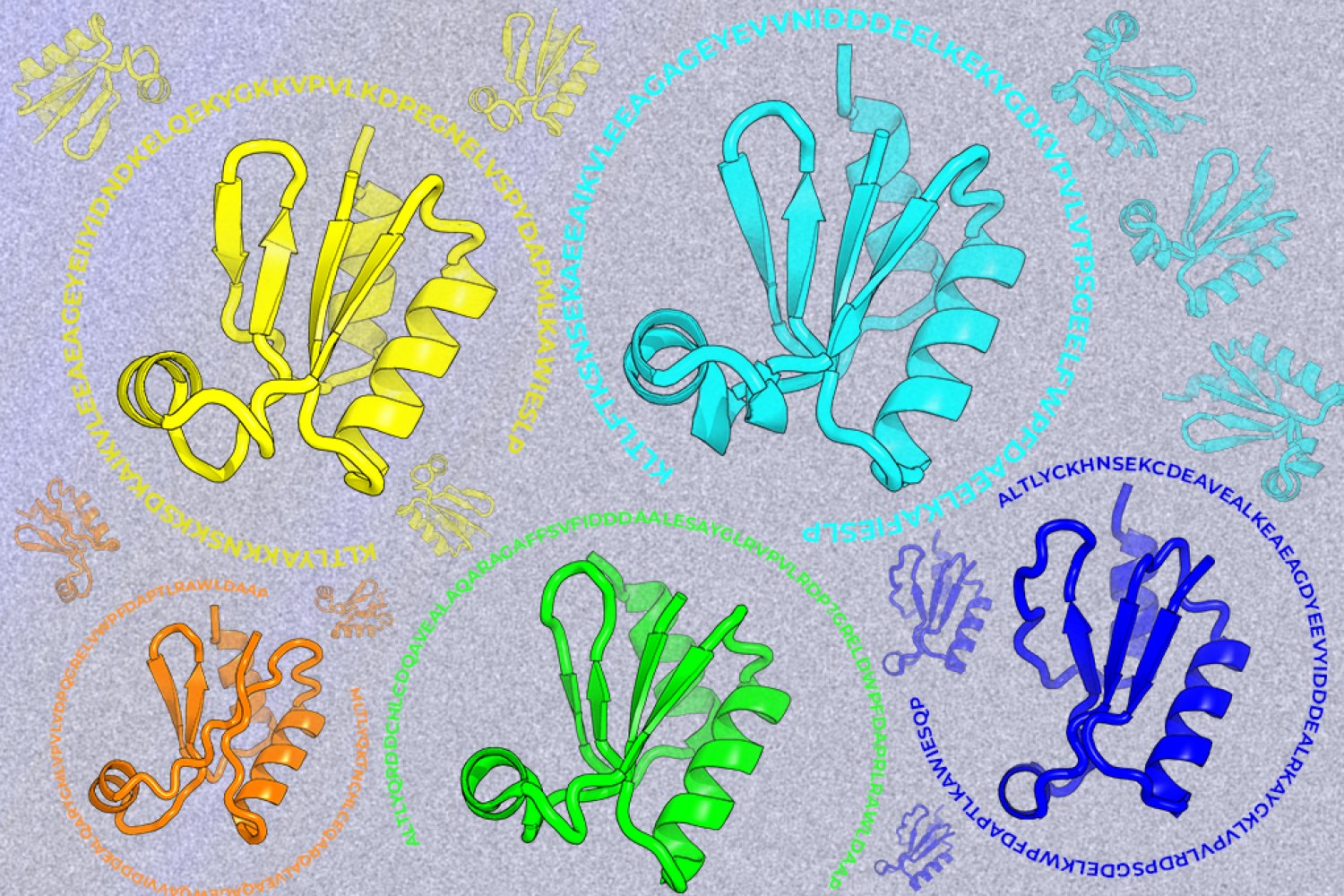
A new machine-learning framework aims to improve the success rate of computational protein design while moving away from results that reproduce sequences found in nature.