Skip to content

Molecular mechanisms of protein disulfide isomerase antagonism by punicalagin.

Aug 2026 · Biochemical and Biophysical Research Communications - BBRC · Vol 834, pp. 154462 · 0 citations · 65 references
Medicine

TL;DR

Biochemical oxidase and reductase assays on PDI showed that punicalagin inhibits both activities with micromolar potency, thereby extending earlier work that described disulfide reductase inhibition.

Abstract

Punicalagin, an ellagic acid polyphenol from pomegranate, has been proposed as an antagonist of protein disulfide isomerase (PDI) and endoplasmic reticulum resident protein 57 (ERp57)-thiol isomerases that regulate protein folding and extracellular thrombotic signaling. Here, biochemical oxidase and reductase assays on PDI showed that punicalagin inhibits both activities with micromolar potency, thereby extending earlier work that described disulfide reductase inhibition. Using purified domains to determine potential interaction sites indicated that punicalagin antagonizes both the N-terminal a and C-terminal a' domains similarly. Broader profiling of the PDI family demonstrated that punicalagin selectively inhibits the oxidase activity of multiple thiol isomerases while leaving ERp72 unaffected. In parallel, jump-dilution experiments revealed a reversible mechanism of inhibition. Thiol labeling of PDI's catalytic cysteines detected no change in the redox state, supporting a noncovalent, allosteric mechanism. Complementary spectrophotometric and fluorometric assays showed that punicalagin coordinates with zinc to further inhibit PDI, suggesting metal complexation as an additional feature that may shape its interaction with thiol isomerases. Extensive molecular docking and molecular dynamics simulations showed that punicalagin binds stably and preferentially to defined sites on both the N- and C-terminal domains through extensive hydrogen bonding and van der Waals contacts. Finally, artificial intelligence-driven network analysis identified PDI as a high-confidence target of punicalagin and related galloylated polyphenols, alongside additional signaling proteins. Together, these findings provide further mechanistic framework for punicalagin-mediated antagonism of PDI and highlight galloylated polyphenols as promising scaffolds for PDI-targeted therapeutics.

View source

Similar papers

Aug 2026

Molecular insights into the anti-browning effect of protocatechualdehyde.

Polyphenol oxidase (PPO) is a vital polyphenol-metabolizing enzyme responsible for the enzymatic browning of fruits and vegetables. This study assessed the anti-PPO activity of protocatechualdehyde (PCA), yielding an IC50 value of 94 μM (95% CI: 91.8 to 96.4 μM). Kinetic analysis revealed that PCA acted as a reversible and competitive inhibitor of PPO. Molecular docking indicated that hydrogen bonding and hydrophobic interactions were the main driving forces for PCA-PPO binding. Fluorescence spectroscopy further demonstrated that PCA binding altered the microenvironments around tyrosine and tryptophan residues, leading to conformational rearrangements and partial unfolding of the enzyme, evidenced by significant fluorescence quenching. Molecular dynamics simulation demonstrated that PCA perturbed the secondary structure of PPO and caused stretching of its overall structure, thereby inhibiting the catalytic activity of the enzyme. Furthermore, PCA demonstrated excellent anti-browning activity by regulating phenolic metabolism, reducing membrane lipid peroxidation, enhancing the ascorbic acid-glutathione cycle, and modulating cell wall metabolism to delay cellular senescence. Collectively, these findings offer some valuable insights into the development of PPO inhibitor and anti-browning agent, and provide a theoretical foundation for the potential application of PCA in the area of food preservation.

Yan-Ping Lin, Dong-Yan Zhou, Shang-Guang Du et al. · 0 citations
Jul 2026

Insights into the enzyme kinetics, structural features, and in silico inhibition of Leishmania donovani prolidase.

Prolidase is a specialized metalloprotease that overcomes the resistance of proline-containing peptide bonds to proteolysis by exclusively hydrolyzing dipeptides with a C-terminal proline. Despite its potential significance in the life cycle of protozoan parasites, knowledge of prolidase in these organisms remains limited. In this study, the complete coding sequence of Leishmania donovani prolidase (LdProl) was cloned into an expression vector. The recombinant protein was purified using affinity chromatography, and its molecular weight was assessed by size-exclusion chromatography. The purified LdProl exhibited enzymatic activity with a strong substrate preference for Trp-Pro-pNA, and manganese ions were identified as essential cofactors for optimal activity. LdProl also stimulated innate immune mechanisms through elevating pro-inflammatory cytokines and nitric oxide levels, suggesting a role in macrophage-mediated immunomodulation. Fluorescence spectroscopy revealed pH-dependent conformational changes, particularly under strongly acidic conditions, whereas circular dichroism spectroscopy indicated a predominantly α-helical structure that was most stable at neutral pH. Computational modeling demonstrated a conserved three-dimensional structure, metal-binding site, and stable dimeric interface similar to prolidases from other organisms. Docking studies identified Trp-Pro-pNA as the substrate with the highest binding affinity, and molecular dynamics simulations confirmed the formation of stable enzyme-substrate complexes. Virtual screening yielded two lead compounds with higher binding affinities for LdProl than for its human counterpart, along with favorable ADME properties. Molecular dynamics simulations further validated these compounds by demonstrating the stability of enzyme-inhibitor complexes. Overall, this study presents the first comprehensive report on the enzyme kinetics, structural characteristics, and in silico inhibition of metal-dependent prolidase from trypanosomatid parasites.

Janish Kumar, Jyotisha, Rahila Qureshi et al. · 0 citations
Open access Aug 2026

Elucidating the Antiglycation Potential of Plumbagin Against Methylglyoxal-Induced Glycation of Bovine Liver Catalase.

Non-enzymatic glycosylation of proteins leads to the formation of advanced glycation end products (AGEs), implicated in oxidative stress and the progression of several chronic diseases. Among the reactive carbonyl compounds, methylglyoxal (MGO) is highly potent in inducing glycoxidative damage by modifying proteins. Herein, we investigated the protective effect of plumbagin, a naphthoquinone derived from Plumbago zeylanica, to counteract MGO-induced glycation of catalase, employing integrated biophysical and computational approaches. AGE-specific fluorescence at 335 and 370 nm, ThT dye fluorescence, and microscopic visualizations confirmed that plumbagin markedly reduces AGEs formation and aggregation. Fluorescence quenching experiments revealed a stable catalase-plumbagin complex formation having binding affinity (Ka): 0.205 × 10⁶ M-1 and a stoichiometry of one binding site (n ≈ 1.1), suggesting a single, specific binding pocket. Isothermal titration calorimetry (ITC) confirmed an exothermic, enthalpy-driven interaction. Molecular dynamics simulations (MDS) analysis displayed a more compact and ordered conformation of complex, as evidenced by reduced Rg, SASA, and RMSF values. H-bonds stabilized the complex without altering the catalytic residues (His74, Asn147, Tyr357). PCA and FEL showed complex remained confined to a single deep energy minimum, indicating enhanced thermodynamic stability. These findings highlight plumbagin as a potent multifunctional compound capable of mitigating MGO-induced glycation.

Faiza Iram, Ayesha Aiman, Deepanshi Vijh et al. · 0 citations
Jul 2026

A Peptidase A1 domain protein from Stropharia rugosoannulata: ACE inhibition and multi-pathway vascular modulation.

A Peptidase A1 domain-containing protein (SRP, 43.1 kDa, >95% purity) was isolated from the edible mushroom Stropharia rugosoannulata and characterized for its structural properties, and ACE inhibitory and vascular modulatory activities. This represents the first report of an intact Peptidase A1 family protein exhibiting bioactivities beyond its canonical proteolytic role. SRP inhibited ACE (IC50 = 108.84 ± 3.42 μg mL-1) through strong intermolecular interactions, with Glu264 contributing 45% (-20.76 kcal mol-1) of the total binding energy and additional contributions from conserved active-site residues. Isothermal titration calorimetry confirmed high-affinity binding to ACE (KD = 1.12 × 10⁻⁸ M), driven by both enthalpic and entropic contributions with entropy as the dominant thermodynamic force, suggesting a complex binding mode involving both primary and secondary interaction sites. In a zebrafish hypertension model, SRP at 62.5 μg mL-1 decreased cardiac output by 20-24% and increased vessel diameter by 17-18%, with effects comparable to those of captopril at the tested concentration. Integrative transcriptomic and proteomic analyses revealed that SRP reversed the downregulation of core genes and key proteins, modulating multiple vascular homeostasis pathways including calcium signaling, vascular smooth muscle contraction, Toll-like receptor signaling, and neuroactive ligand-receptor interaction. These findings expand the known functional repertoire of Peptidase A1 family proteins and highlight the multi-pathway modulatory potential of food-derived intact proteins.

Wen Li, Wanchao Chen, Zhong Zhang et al. · 0 citations
Open access Jul 2026

Structural and biochemical insights into an anthocyanin-related glutathione transferase from bilberry and its inhibition by quercetin.

The anthocyanin biosynthetic pathway (ABP), a branch of the phenylpropanoid pathway, is responsible for the production of a wide range of flavonoid compounds in plants. Anthocyanin-related glutathione transferases (arGSTs) have long been proposed to act as non-catalytic carrier proteins, mediating the vacuolar sequestration of anthocyanins. However, recent structural and biochemical evidence has suggested a potential catalytic role for arGSTs in the ABP, notably in catalyzing the dehydration of flavan-3,3,4-triol to anthocyanidin. Despite their importance, only a limited number of arGSTs have been characterized biochemically and structurally. Here, we investigated the arGST isoform from bilberry, one of the richest fruit sources of anthocyanins. We showed that the expression of arGST gene in bilberry increases during fruit ripening in parallel with other ABP genes and putative transcription factors. Biochemical and structural analyses highlighted the remarkable ability of GSTs to adapt to their substrates and revealed a possible inhibitory effect of quercetin on arGST activity, as quercetin is a by-product of the anthocyanin biosynthetic pathway.

Laura Morette, S. Mathiot, S. Rochoux et al. · 0 citations

Related blog posts

MIT News · Artificial Intelligence Aug 27, 2026

Looking beyond natural sequences

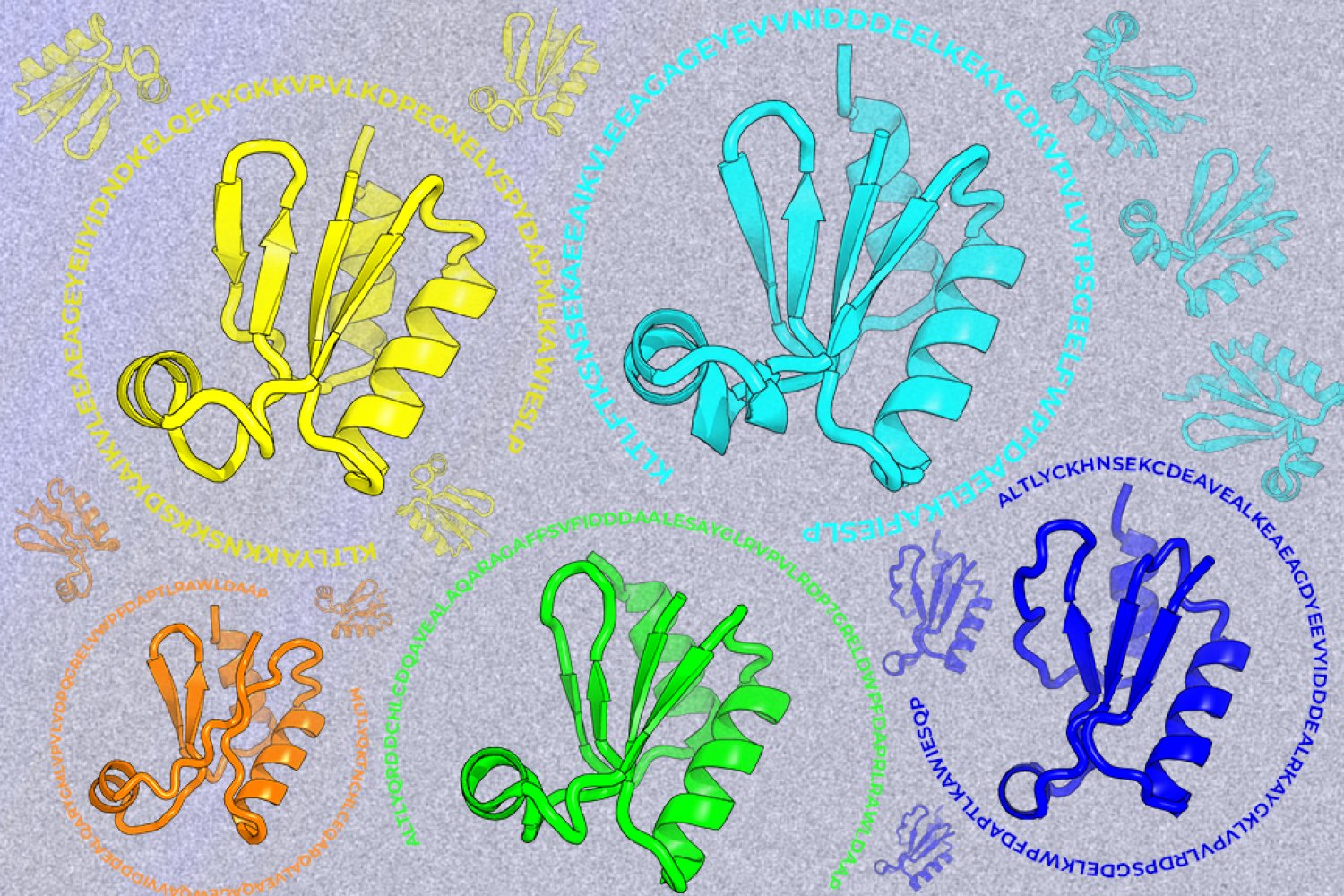
A new machine-learning framework aims to improve the success rate of computational protein design while moving away from results that reproduce sequences found in nature.

Google DeepMind Blog Nov 25, 2025

AlphaFold: Five years of impact

Explore how AlphaFold has accelerated science and fueled a global wave of biological discovery.