Skip to content

The Counterfactual Preservation Principle: Evidence Decay and the Limits of AI Delegation

Sep 2026 · Zenodo (CERN European Organization for Nuclear Research)
Ethics and Social Impacts of AI

Abstract

AI delegation can remove the comparison evidence needed to establish whether automation continues to improve outcomes. This paper develops the counterfactual preservation principle: sustained claims of current comparative benefit require a continuing source of identification whose temporal relevance remains defensible. A bounded-loss model establishes identification intervals under comparator withdrawal, an evidence-renewal horizon, finite-window error and confidence bounds, and an estimator-independent rate obstruction under fixed randomised quotas. A sufficient allocation frontier links comparator flow, task volume, temporal drift, and precision, including integer and single-period boundaries. Exact calculations and 5,000 simulated trajectories per design and scenario compare six designs under stationarity, gradual reversal, and abrupt misspecification. In the specified gradual reversal, retiring the comparator yields root-mean-squared error of 0.08972, compared with 0.01319 when 5% of tasks retain comparison over 22 periods, despite unchanged AI performance. Retirement performs best among tested designs under stationarity, while abrupt changes expose failures of an understated drift envelope. The contribution integrates causal and statistical methods into an institutional design principle: credible delegation requires a falsifiable comparison, with allocation determined by evidence needs and ethical eligibility rather than a universal retention percentage.
View source

Similar papers

#computer vision Review Sep 2017

Agile Software Development Methods: Review and Analysis

This publication proposes a definition and a classification of agile software development approaches and analyses ten software development methods that can be characterized as being "agile" against the defined criterion.

P. Abrahamsson, O. Salo, Jussi Ronkainen et al. · 727 citations · ⚡54
#computer vision Jun 2008

The impact of agile practices on communication in software development

The study shows that agile practices improve both informal and formal communication, but indicates that, in larger development situations involving multiple external stakeholders, a mismatch of adequate communication mechanisms can sometimes even hinder the communication.

M. Pikkarainen, Jukka Haikara, O. Salo et al. · 401 citations · ⚡48
#machine learning Review Open access Oct 2014

Software development in startup companies: A systematic mapping study

The results indicate that software engineering work practices are chosen opportunistically, adapted and configured to provide value under the constrains imposed by the startup context.

Nicolò Paternoster, Carmine Giardino, M. Unterkalmsteiner et al. · 394 citations · ⚡54
#computer vision Review Mar 2008

Agile methods in European embedded software development organisations: a survey on the actual use and usefulness of Extreme Programming and Scrum

The results show that the embedded industry has been able to apply agile methods in its development processes and that the appreciation of the agile methods and their individual practices appears to increase once adopted and applied in practice.

O. Salo, P. Abrahamsson · 238 citations · ⚡9
#computer vision Open access Jul 2017

What happens when software developers are (un)happy

Consequences of happiness and unhappiness that are beneficial and detrimental for developers' mental well-being, the software development process, and the produced artifacts are found.

D. Graziotin, Fabian Fagerholm, Xiaofeng Wang et al. · 236 citations · ⚡13
#computer vision Open access Oct 2004

Mobile-D: an agile approach for mobile application development

The Mobile-D approach is briefly outlined here and the experiences gained from four case studies are discussed, which helped develop an agile development approach for mobile application development.

P. Abrahamsson, Antti Hanhineva, H. Hulkko et al. · 225 citations · ⚡18

Related blog posts

MIT News · Artificial Intelligence Sep 30, 2026

This game-playing AI is the new champ at Stratego

Able to defeat top-ranked human players and more efficient than other models, the new system could help decision-makers in military maneuvers or business negotiations.

Microsoft Research Blog Sep 29, 2026

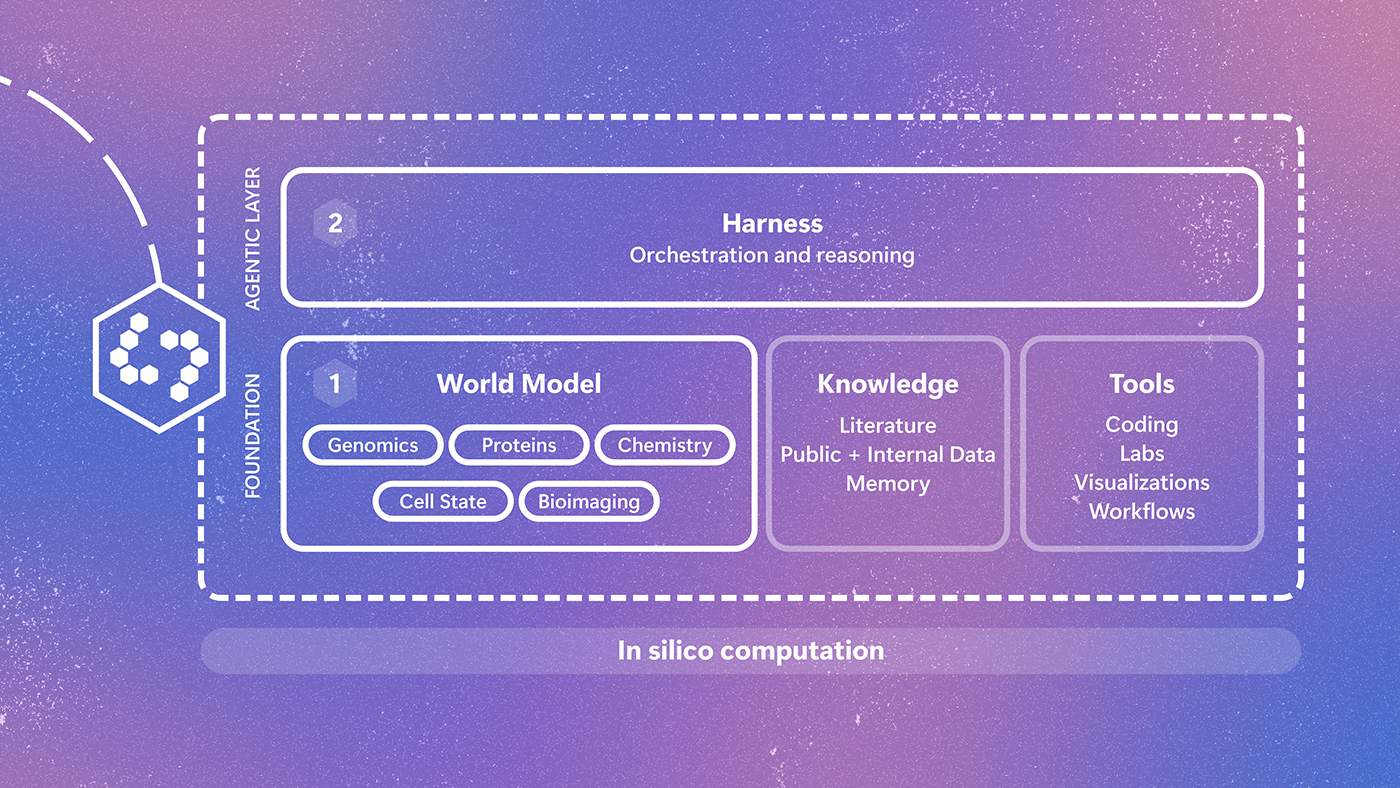
Introducing Quine: An AI research system designed for the complexity of biology

Biology doesn't operate in silos, and neither should the AI representation of it. Quine is an early-stage research effort to create a multimodal world model of biology. By connecting insights across biological scales and modalities, Quine helps scientists computationally search a space far larger than intuition allows and prioritize hypotheses before they reach the lab. Experimental results provide important feedback, helping researchers sharpen future research directions. The post Introducing Q…

We use cookies to run the site and, with your consent, for analytics and to show ads. See our Cookie Policy.