Skip to content

From Folding Reagents to Catalysts: Spatially Organized Diselenide-Cyclodextrins Enable Catalytic Oxidative Protein Folding.

Oct 2026 · Biomacromolecules · Vol 27 11, pp. 7537-7548 · 0 citations · 57 references
Medicine

Abstract

Oxidative folding, involving disulfide (SS) bond formation and isomerization, is essential for the maturation of many secreted and membrane proteins. Although numerous small-molecule mimics of protein disulfide isomerase, a key enzyme that catalyzes oxidative folding, have been developed, most require superstoichiometric amounts relative to the substrate. Here, we report cyclodextrin (CD)diselenide conjugates that create artificial folding reaction fields by spatially integrating substrate capture with redox catalysis within a topology-preserving bivalent architecture. Systematic variation of CD size, substitution pattern, and linker structure identified a γ-CDcyclic diselenide conjugate bearing two hydrophobic inclusion sites as the most effective catalyst across multiple model proteins. Mechanistic studies suggest that this bivalent architecture maintains a multivalent substrate-capture environment throughout the redox cycle, organizing protein thiols and mispaired SS bonds near the redox center to promote both SS formation and isomerization while suppressing aggregation. This reaction-field design transforms conventional folding reagents into true catalysts and establishes a molecular design principle for catalytic oxidative protein folding and the efficient production of SS-rich proteins.
View source

Similar papers

Nov 2026

Beyond Thiol-First Chemistry: Thiophosphonium-Gated Activation-State Capture in Disulfide Bioconjugation

Disulfide bonds are structural elements, redox-responsive motifs, and native entry points for protein modification, yet most disulfide-directed workflows generate readouts only after reduction to free thiols. Reduction−alkylation, one-pot reductive conjugation, and rebridging are powerful because they convert S−S bon...

Prasenjit Gayen, K. Carroll · 0 citations
Open access Oct 2026

Molecular Origins of Catalysis in Random Heteropolymer Enzyme Mimics through All-Atom Simulations

Random heteropolymers (RHPs) have recently emerged as synthetic macromolecules capable of enzyme-inspired catalysis despite lacking defined secondary and tertiary structures. However, the molecular origins of their catalytic activity remain less understood. Here, we use all-atom molecular dynamics simulations to invest...

Shayna L. Hilburg, Ze-Xiang Han, Tian-Ying Jin et al. · 0 citations
Open access Nov 2026

Programmable amide bond formation using de novo ligases

Amide bond formation is of central importance in the chemical industry, underpinning the synthesis of small bioactive molecules, macrocycles, peptides and their conjugates. Conventional methods of amide synthesis rely on stoichiometric coupling agents and costly protecting group manipulations. While biocatalysis can al...

Saman Salike, Timo Flügel, M. Gantz et al. · 2 citations
Nov 2026

Rapid and Green One-Pot Synthesis in Water: Accessing Polypeptides with Two Disulfide Bridges.

Regioselective assembly of multiple disulfide bonds in peptides remains a formidable challenge in synthetic peptide chemistry. In this work, a rapid, eco-friendly one-pot strategy for the regioselective synthesis of polypeptides bearing two disulfide bonds was developed. The first disulfide bond was formed via hydrogen...

Bin Zhang, Cun-Lin Wang, Zi-Rui Lu et al. · 0 citations
#protein folding Oct 2026

Ultrathin Protein Films Create Living Catalytic Interfaces on Microbial Cells.

Spatial organization underpins efficient multistep catalysis in nature, yet recreating such organization on living cell surfaces using mild, enzyme-compatible and catalytically functional materials remains challenging. Here we report an l-cysteine-triggered silk fibroin/lysozyme ultrathin film (SLF) that assembles dire...

Mindi Ming, Meng-Lin Xiao, Cheng Xu et al. · 0 citations

Related blog posts

Google DeepMind Blog Sep 30, 2026

Introducing SynthID Bio

Proof of concept for watermarking AI-generated proteins while preserving biological function.

MIT News · Artificial Intelligence Aug 27, 2026

Looking beyond natural sequences

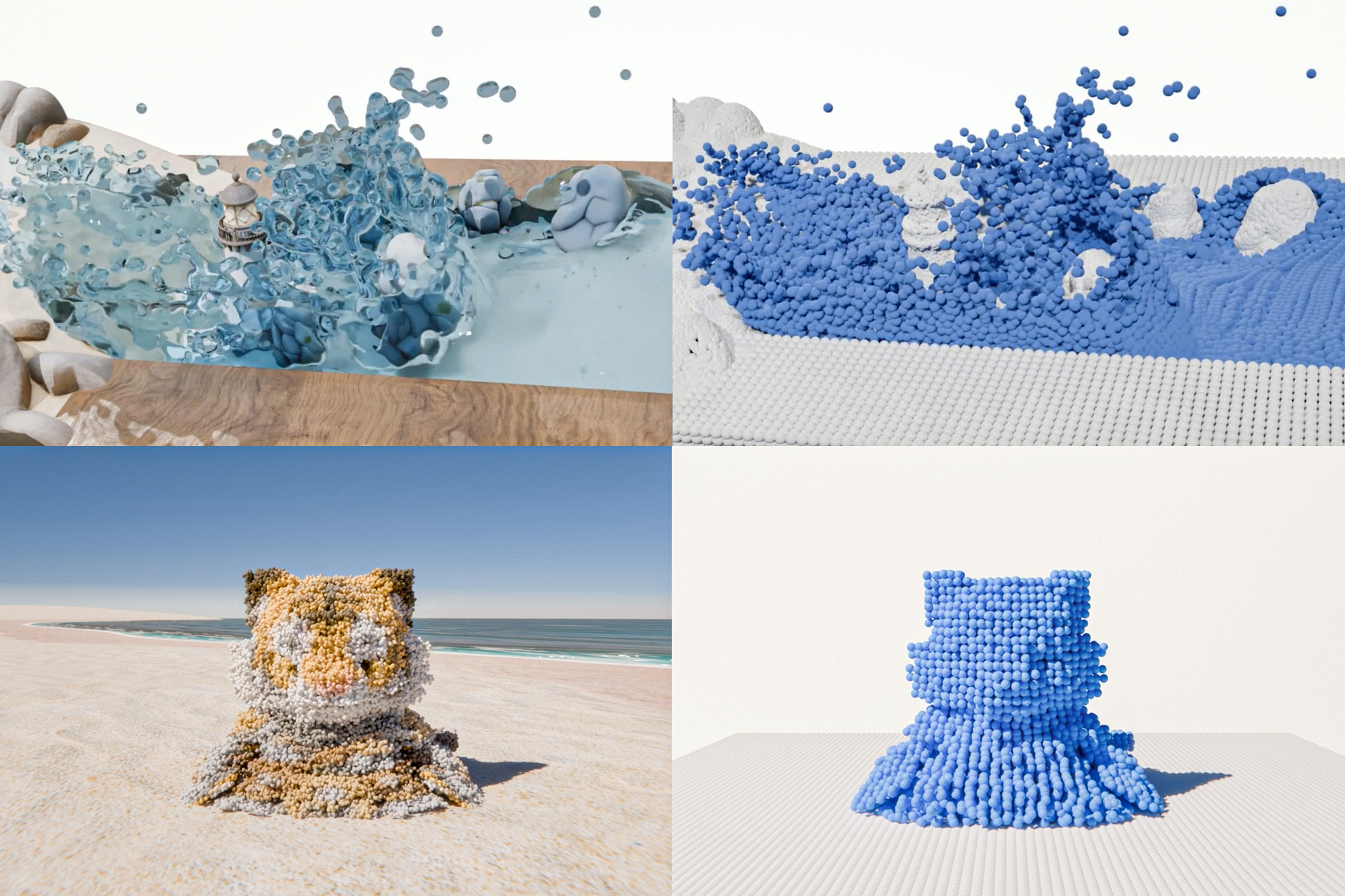
A new machine-learning framework aims to improve the success rate of computational protein design while moving away from results that reproduce sequences found in nature.

We use cookies to run the site and, with your consent, for analytics and to show ads. See our Cookie Policy.