May 2015· PeerJ Computer Science· Vol 1, pp. e18· 63 citations· ⚡ 5 influential· 116 references
Computer Science
TL;DR
This paper conducts a qualitative interpretive study based on face-to-face open-ended interviews, in-field observations, and e-mail exchanges to construct a novel explanatory theory of the impact of affects on development performance.
Abstract
Affects---emotions and moods---have an impact on cognitive activities and the working performance of individuals. Development tasks are undertaken through cognitive processes, yet software engineering research lacks theory on affects and their impact on software development activities. In this paper, we report on an interpretive study aimed at broadening our understanding of the psychology of programming in terms of the experience of affects while programming, and the impact of affects on programming performance. We conducted a qualitative interpretive study based on: face-to-face open-ended interviews, in-field observations, and e-mail exchanges. This enabled us to construct a novel explanatory theory of the impact of affects on development performance. The theory is explicated using an established taxonomy framework. The proposed theory builds upon the concepts of events, affects, attractors, focus, goals, and performance. Theoretical and practical implications are given.
A conceptual framework explaining the role and impact of Artificial Intelligence on engineering work is generated and the relationships between these factors are illustrated through a conceptual framework that will serve as the groundwork for further, empirical research.
Prarthona Paul, Cindy Rottmann· Proceedings of the Canadian...· 0 citations
Setting personal goals is a complex process dependent on appropriate skills, motivation, and context, making failure a common part of goal pursuit. While recent Human-Computer Interaction research has begun to address this complexity by exploring qualitative and long-term goals, little is known about how failure shapes...
Rebecca Lietz, Steve Whittaker, N. Su· Behaviour & Information...· 0 citations
This study explores how students in an online EdD in Instructional and Performance Technology experience personal growth, focusing on shifts in autonomy, self-acceptance, and purpose in life. Using an explanatory sequential mixed methods design, researchers administered Anderson et al.’s (2019) Personal Growth and Deve...
H. Handley, Lauren Adlof, Isabelle Knudsen et al.· Impacting Education Journal...· 1 citation
Jennifer Neville did not want to go into computer science—but that’s exactly where she landed. Neville discusses the starts and stops that led to her professional sweet spot and her work identifying “surprising failures” making it hard for AI to handle complexity. The post What AI gets wrong and what failure teaches us appeared first on Microsoft Research.
Microsoft Research Blog· microsoft.comJul 30, 2026
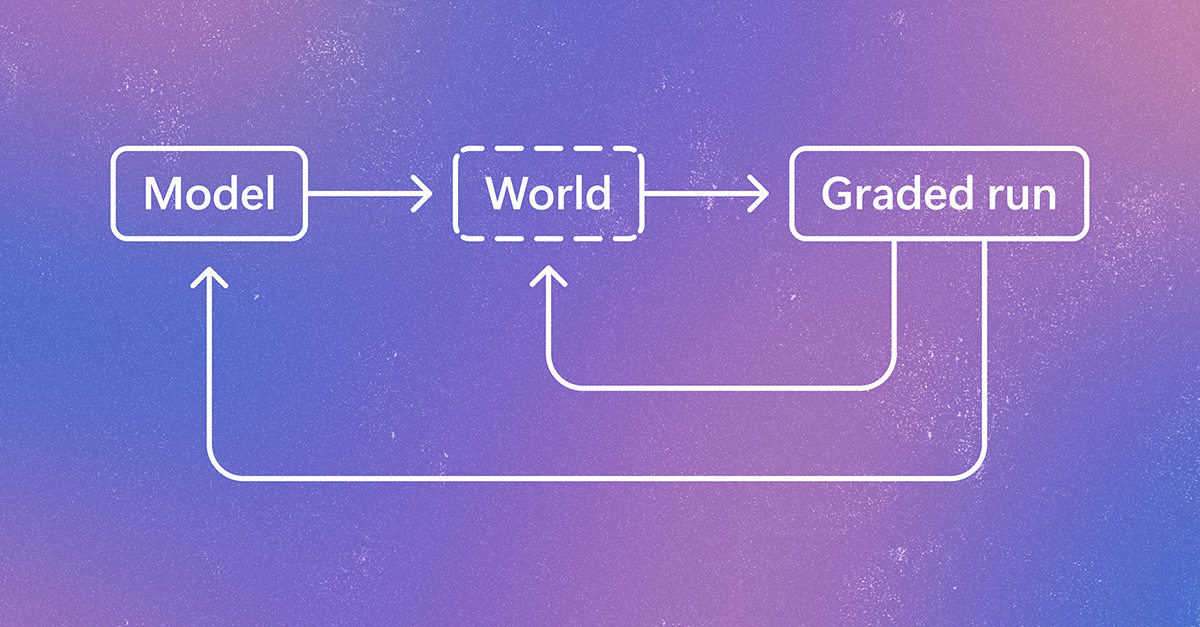
Computer-use AI agents struggle with multi-step workflows like email and customer support. Echoverse trains agents in realistic environments rather than simply providing more training tasks, helping them improve as the tasks, tests, and environments evolve. The post Echoverse: Deep, evolving environments for computer-use agents appeared first on Microsoft Research.
Zero-knowledge proofs can verify computing results without rerunning workloads or exposing sensitive data. Magnetar helps bring them into the mainstream with support for standard programming languages, major speed gains, and quantum-resistant security. The post Proof-based general-purpose computing with Magnetar appeared first on Microsoft Research.
We use cookies to run the site and, with your consent, for analytics and to show ads.
See our Cookie Policy.