This study provides the first large-scale empirical comparison of agentic frameworks for reasoning-intensive software engineering tasks and shows that framework selection should prioritize orchestration quality, especially memory control, failure handling, and cost management.
Abstract
Recent advances in agentic frameworks have enabled AI agents to perform complex reasoning and decision-making. However, evidence comparing their reasoning performance, efficiency, and practical suitability remains limited. To address this gap, we empirically evaluate 22 widely used agentic frameworks across three reasoning benchmarks: BBH, GSM8K, and ARC. The frameworks were selected from 1,200 GitHub repositories collected between January 2023 and July 2025 and organized into a taxonomy based on architectural design. We evaluated them under a unified setting, measuring reasoning accuracy, execution time, computational cost, and cross-benchmark consistency. Our results show that 19 of the 22 frameworks completed all three benchmarks. Among these, 12 showed stable performance, with mean accuracy of 74.6-75.9%, execution time of 4-6 seconds per task, and cost of 0.14-0.18 cents per task. Poorer results were mainly caused by orchestration problems rather than reasoning limits. For example, Camel failed to complete BBH after 11 days because of uncontrolled context growth, while Upsonic consumed USD 1,434 in one day because repeated extraction failures triggered costly retries. AutoGen and Mastra also exhausted API quotas through iterative interactions that increased prompt length without improving results. We also found a sharp drop in mathematical reasoning. Mean accuracy on GSM8K was 44.35%, compared with 89.80% on BBH and 89.56% on ARC. Overall, this study provides the first large-scale empirical comparison of agentic frameworks for reasoning-intensive software engineering tasks and shows that framework selection should prioritize orchestration quality, especially memory control, failure handling, and cost management.

Through applied case studies in pharmaceutical discovery and financial systems, common design patterns that make agentic systems successful are analyzed, and practical mitigation strategies for failure modes are discussed, such as verification pipelines, fallback mechanisms, and human-in-the-loop supervision.
Grace Hui Yang, P. Venkit, Hooman Sedghamiz et al.· Proceedings of the 32nd ACM...· 0 citations
A unified, taxonomy-driven, and deployment-oriented survey of agentic AI systems, synthesizing recent advances through a modular reference architecture and a four-dimensional taxonomy that characterizes agents along the axes of autonomy, tool use, collaboration, and safety–governance is presented.
Sparsh Bajoria, Shreyanshu Ranjan, Adhitya M et al.· Cognitive Computation· 0 citations
This position paper outlines a common abstraction layer that can substantially lower the effort for designing agents with constrained creativity, and demonstrates early promise of this paradigm for two SysOps use cases: Root Cause Analysis and Network Configuration Generation.
SayanSinha, Vipul Harsh, Yajie Zhou et al.· 1 citation
Analysis shows that BRANCH's advantage arises not only from exploring multiple reasoning paths, but also from recovering from truncation: its gains strongly correlate with the baseline rate of empty, budget-exhausted outputs, weakening the hypothesis that different problems require routing among test-time reasoning ope...
Sheng Zhang, Xiao-Min Wu, Xi-Yang Wu et al.· 0 citations
ClawTrack is presented, a dual-assessment benchmark that simultaneously measures what an agent achieves (Task Score) and how it achieves it (Process Score) and finds that process scores effectively attribute success and failure to specific reasoning dimensions, filtering lucky passes invisible to outcome-only evaluatio...
Xingjian Wu, Xuhan Zhu, Xing-Chen Liu et al.· arXiv.org· 0 citations
AgentFactory is presented, a framework that jointly optimizes both foundation models and workflow structures in agentic systems while considering multiple objectives including performance, cost, and efficiency, and establishes AgentFactory as a promising approach for developing more capable and efficient agentic system...
En-Ci Zhang, Hao-Fen Wang, Yue-Sheng Zhu et al.· Pacific Rim International Co...· 0 citations
Jennifer Neville did not want to go into computer science—but that’s exactly where she landed. Neville discusses the starts and stops that led to her professional sweet spot and her work identifying “surprising failures” making it hard for AI to handle complexity. The post What AI gets wrong and what failure teaches us appeared first on Microsoft Research.
Microsoft Research Blog· microsoft.comJul 30, 2026
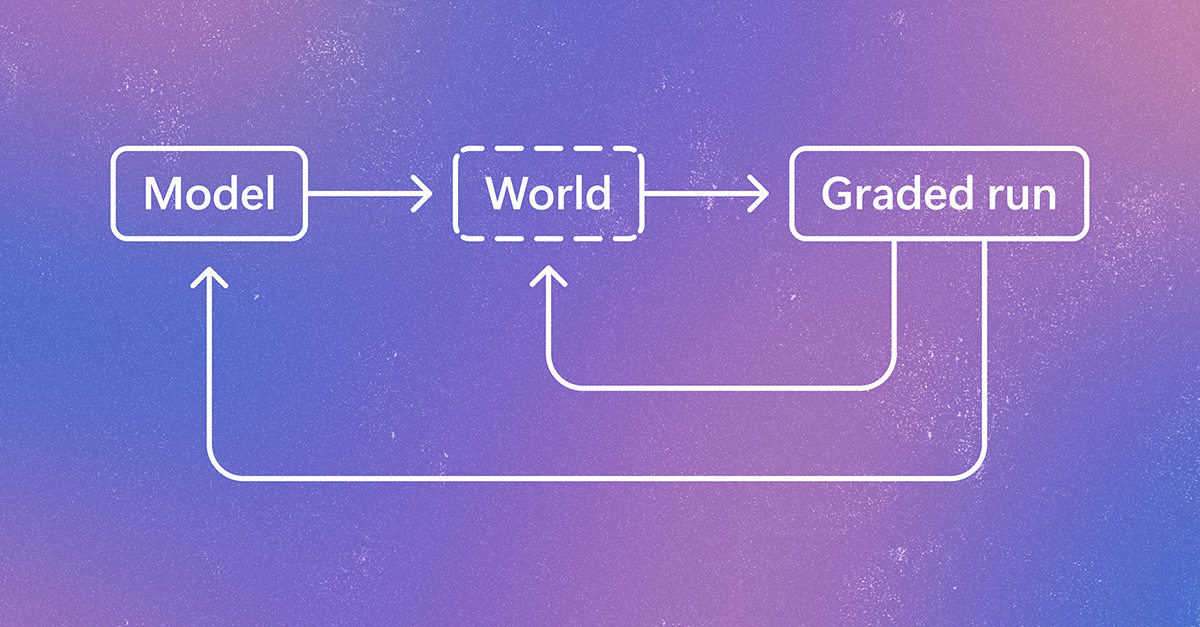
Computer-use AI agents struggle with multi-step workflows like email and customer support. Echoverse trains agents in realistic environments rather than simply providing more training tasks, helping them improve as the tasks, tests, and environments evolve. The post Echoverse: Deep, evolving environments for computer-use agents appeared first on Microsoft Research.