End-to-end driving policies can achieve strong task performance while offering limited control over their driving style. Driving style describes how a vehicle accelerates, brakes, and maintains distance. Policies trained without explicit preference conditioning lack a direct mechanism for adjusting these behaviors at inference. We propose YOUDrive, a vision--language--action planner for continuous and composable driving-style control. Each teacher's behavior is distilled into a task vector, a learned parameter update that induces a style direction in the planner's representation. These directions can be scaled and combined at inference without retraining the backbone. Conditioned on these directions, a flow-matching decoder models a multimodal trajectory distribution and generates kinematically feasible motion alternatives. We introduce the Style Alignment Score (SAS) to describe human-referenced kinematic behavior after safety and task gating. On NAVSIM navtest, a single coefficient monotonically controls assertiveness across six teacher-derived personas, while PDMS remains above 0.90 across the tested individual and blended configurations, reaching 0.954. Further analyses reveal systematic policy-specific kinematics after controlling for scene context, whereas the evaluated discrete style labels provide limited additional explanatory power. Code, checkpoints, and the metric will be released.

This publication proposes a definition and a classification of agile software development approaches and analyses ten software development methods that can be characterized as being "agile" against the defined criterion.
P. Abrahamsson, O. Salo, Jussi Ronkainen et al.· arXiv.org· 727 citations· ⚡54
The study shows that agile practices improve both informal and formal communication, but indicates that, in larger development situations involving multiple external stakeholders, a mismatch of adequate communication mechanisms can sometimes even hinder the communication.
M. Pikkarainen, Jukka Haikara, O. Salo et al.· Empirical Software Engineeri...· 401 citations· ⚡48
The results indicate that software engineering work practices are chosen opportunistically, adapted and configured to provide value under the constrains imposed by the startup context.
Nicolò Paternoster, Carmine Giardino, M. Unterkalmsteiner et al.· Information and Software Tec...· 394 citations· ⚡54
The possibility of inferring high-dimensional data inference in a model that consists of a prior and an auxiliary differentiable constraint given some additional information is considered, thereby allowing a range of potential applications in adapting models to new domains and tasks.
Alexandros Graikos, Esmeralda S. Whitammer, N. Jojic et al.· Neural Information Processin...· 316 citations· ⚡15
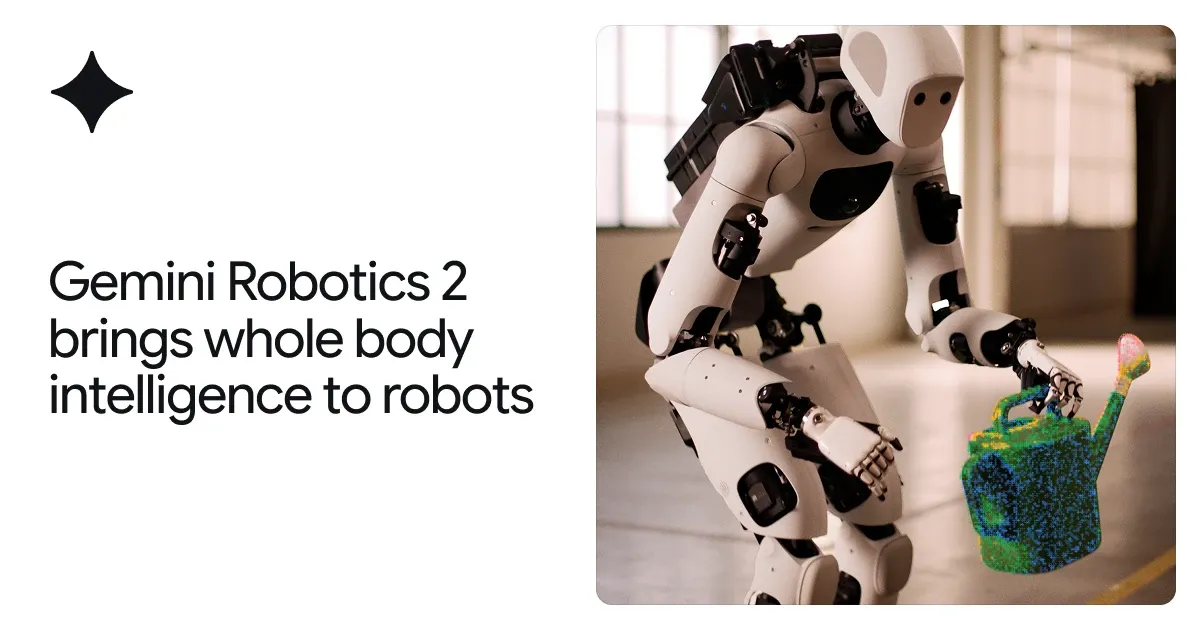
From feet to fingertips — we are teaching robots intelligent whole-body control, fine dexterity, and teamwork to complete a broad range of complex tasks.
Known for his clear and elegant writing style, Bertsekas shaped fields from control and optimization to large-scale computation and artificial intelligence.
We use cookies to run the site and, with your consent, for analytics and to show ads.
See our Cookie Policy.