This study investigated the synergistic effects of supercritical carbon dioxide (SCCD) combined with sucrose treatment on the foaming properties and freeze-thaw stability of egg white protein (EWP). The results demonstrated that SCCD-sucrose treatment significantly enhanced the foaming capacity, achieving a maximum of 139.5% (4.6-fold increase over the control) at 9 MPa for 60 min with 10 g/100 mL sucrose, while maintaining the foaming stability (FS) which was compromised by SCCD treatment alone. Furthermore, the treated EWP exhibited markedly improved stability against repeated freeze-thaw cycles. Mechanism analysis revealed that sucrose promoted the formation of larger protein aggregates, as evidenced by increased particle size, and significantly reduced surface tension, enhancing adsorption at the air-water interface. Fourier transform infrared spectroscopy indicated a rise in α-helix relative content, contributing to structural ordering, while rheological measurements showed improved elastic modulus (G′), supporting FS. Scanning electron microscopy further revealed a more cohesive and dense protein network of SCCD-sucrose treated group. These synergistic modifications counteracted the structural loosening induced by SCCD and facilitated the formation of a robust interfacial film. The findings provide an effective and promising physical modification strategy for enhancing the functional performance of frozen-stored egg white liquid in the egg processing industry.

Intelligent active food packaging films were developed by enhancing curcumin solubility through 2-hydroxypropyl-β-cyclodextrin inclusion complexes (EC). EC was incorporated at varying concentrations into a carboxymethyl cellulose (CMC)‑sodium alginate (SA) matrix. Sedimentation tests revealed that free curcumin exhibited severe precipitation (80.00%), whereas EC showed negligible sedimentation, confirming markedly improved aqueous dispersion. The optimized CMC-SA-EC3 film exhibited uniform morphology, enhanced thermal stability, strong intermolecular hydrogen bonding, and reduced water vapor permeability. It also demonstrated excellent antioxidant activity and broad-spectrum antibacterial effects against Gram-positive and Gram-negative pathogens. When applied as freshness indicators for refrigerated silver carp and beef, the films displayed distinct color transitions from yellow to red in response to spoilage. This formulation achieved the highest sensitivity and reliability for real-time spoilage detection. These findings provided a feasible strategy for designing dual-functional packaging materials that integrated preservation and intelligent sensing. Further work is needed to validate the long-term stability and scalability under practical storage conditions.
Fatma Eldahshan, Hmmam Zarif, Mohamed Abdin et al.· International Journal of Bio...· 0 citations
This work evaluated how ferulic acid (FA) impacted the conformational properties of whey protein isolate (WPI) and altered the environmental tolerance of oleogel/water (Og/W) emulsions formulated with Ganoderma lucidum spore oil (GLSO). Molecular dynamics simulation analyses revealed that FA interacted with α-lactalbumin via hydrogen bonding and hydrophobic interactions, whereas it bound into the hydrophobic cavity of β-lactoglobulin through a “lock-and-key” mode driven primarily by hydrophobic forces. Fourier transform infrared spectroscopy analysis verified that such non-covalent forces triggered the dissociation and structural extension of WPI, which was manifested as a significant loss of α-helix and β-sheet architectures along with a corresponding rise in random coils. FA addition increased the positive charge, mean droplet size, interfacial contact angle and antioxidant stability of WPI-FA nanoparticles when the WPI-to-FA ratio exceeded 1:2 (i.e., WPI was in excess relative to FA). The GLSO-based Og/W emulsions exhibited a weak gel structure with predominantly elastic characteristics. Furthermore, WPI-FA nanoparticles fabricated at a 2:1 ratio minimized emulsion droplet size and imparted optimal stability to the Og/W emulsions, demonstrating superior freeze–thaw and salt resistance, alongside suppressed GLSO flavor release. This work provides critical insights into tailoring protein-polyphenol interactions to stabilize GLSO-based Og/W emulsion delivery systems for food applications.
Wenjia Yan, Yuting Bao, Hao Wang et al.· Gels· 0 citations
The global trend toward low-fat diets is creating a critical need for efficient fat replacement technologies. This study explored the stabilization behavior of soybean protein isolate (SPI)-citrus pectin (CP) Pickering emulsions and their effectiveness as butter substitutes in pound cakes. The results indicated that emulsions with 5% particle concentration (c) and 50% oil phase volume fraction (ϕ) exhibited excellent storage, centrifugal, thermal, and lipid oxidation stability. It also demonstrated superior structural and rheological properties, effectively replicating the physical characteristics of butter. Moreover, replacing butter with SPI-CP Pickering emulsion significantly enhanced the quality of pound cakes, with a 40% substitution level proving optimal. At this ratio, the specific volume increased by 21.01%, while hardness and chewiness decreased by 57.48% and 52.43%, respectively. Meanwhile, a decrease in fat migration capacity was observed, along with increases in in vitro cholesterol adsorption capacity and sodium cholate adsorption capacity. Electronic nose analysis confirmed similar aroma profiles, and sensory evaluation yielded the highest scores, indicating that the SPI-CP-stabilized emulsion effectively maintained cake quality while serving as a butter alternative. This study offers valuable insights for developing low-fat foods and novel functional ingredients.
Yang Yang, Huixin Zheng, Yue Xu et al.· Food Research International· 0 citations
Pre-velveting foods suffer from significant flavor loss and limited shelf life during storage, motivating a demand for multifunctional starch-based carriers. To address this, corn starch (CS)-soy protein isolate (SPI) coacervates with varying CS ratios were fabricated to encapsulate fennel essential oil (FEO), yielding a pre-velveting material with antimicrobial and flavor-enhancing properties. Results indicated that higher CS/SPI ratios (4,1 and 5,1) enhanced viscoelasticity and reduced particle size by forming a dense polysaccharide-protein network that inhibited FEO aggregation compared with the lower ratios. The resulting microcapsules (CSSP4 and CSSP5) similarly demonstrated improved DPPH radical scavenging capacity (59.49% and 56.15%, respectively) and enhanced thermal stability. SEM and XRD confirmed increased cross-linking of CS upon coacervation with SPI, which provided the basis for the improved encapsulation efficiency of FEO via the dense structure, while FTIR and molecular dynamics simulations indicated that this structure was primarily driven by hydrogen bonding and electrostatic interactions between CS and SPI, and the starch-protein interface was visualized. Electronic nose combined with GC-MS analyses identified anethole as the primary flavor compound of FEO microcapsules and showed that the stable structure delayed its release, with CSSP4 exhibiting the slowest release due to its higher density. Furthermore, among all formulations, CSSP4 showed the lowest TBARS values and pH increase, as well as the most favorable volatile profile and improved textural properties in cooked chicken cubes. This study presents a novel starch-based carrier designed to improve flavor retention and extend the shelf life of pre-velveting foods.
Hengpeng Wang, Yang Meng, Yiwei Jin et al.· Food Research International· 0 citations
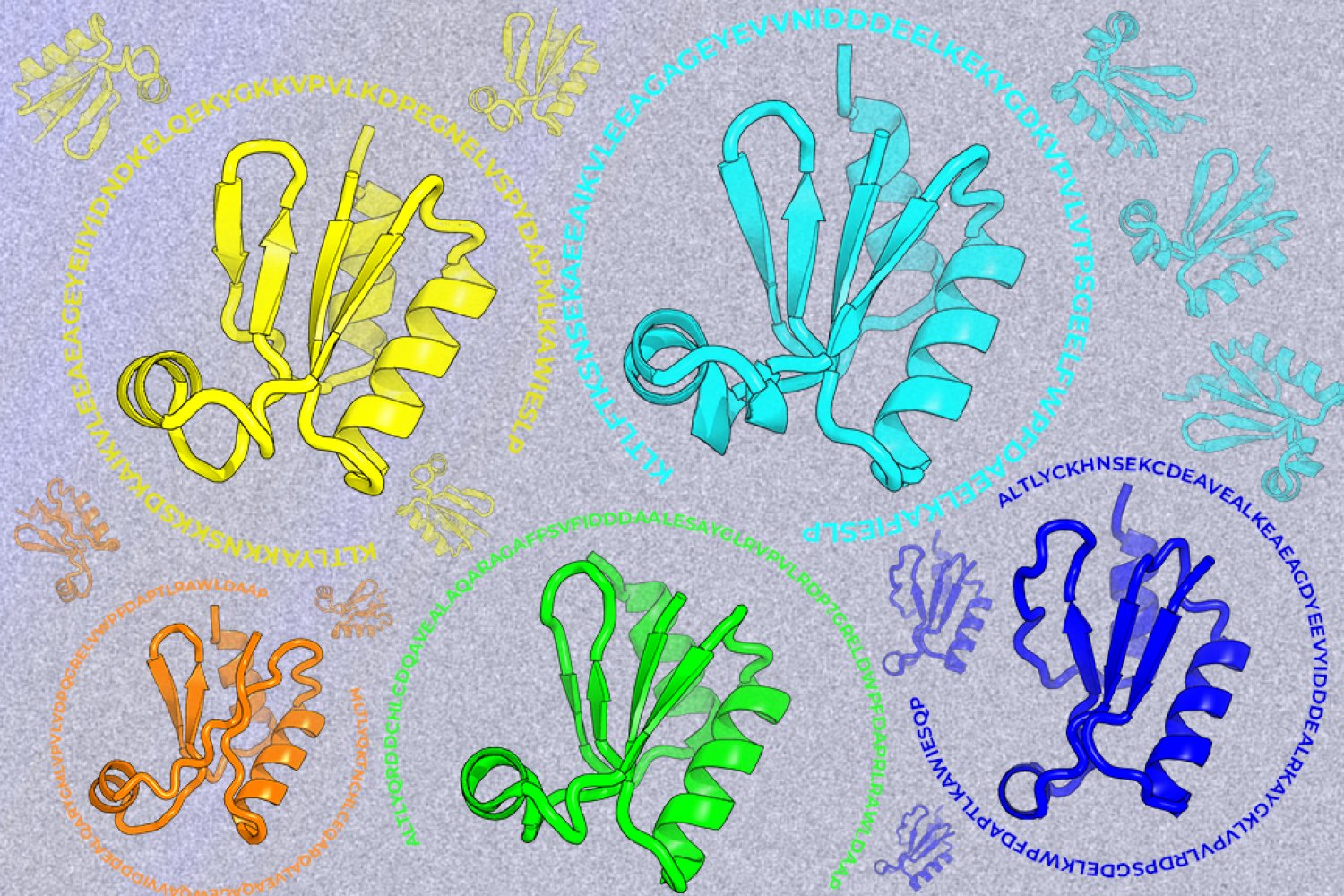
A new machine-learning framework aims to improve the success rate of computational protein design while moving away from results that reproduce sequences found in nature.