Aug 2026· Biological chemistry· 0 citations· 82 references
Medicine
TL;DR
3D models of the C-terminal SC region suggest that the major C-terminal domain of SC folds into a single-layer β-sheet structurally similar to the membrane occupation and recognition nexus (MORN) family of tandem repeats, which is critical for understanding SC-mediated fibrin generation.
Abstract
Abstract Staphylocoagulase (SC), a crucial virulence protein secreted by several strains of the major pathogen Staphylococcus aureus, functions as a potent inducer of blood clotting. SC binds its zymogen target, prothrombin (ProT) with subnanomolar affinity, allosterically inducing a thrombin-like active site in the bound zymogen. The resulting SC·(Pro)T* active complexes effectively convert fibrinogen (Fbg) into clot-forming fibrin (Fbn). We previously reported crystal structures of the N-terminal SC domains, responsible for ProT binding and activation, and characterized the mechanism of cofactor-induced zymogen activation in detail. However, the lack of three-dimensional (3D) structures for the C-terminal SC region has hampered a complete understanding of its role in Fbg recognition and cleavage. Here, we present and discuss 3D models of the Fbg-binding SC region. Our results suggest that the major C-terminal domain of SC folds into a single-layer β-sheet structurally similar to the membrane occupation and recognition nexus (MORN) family of tandem repeats. We further propose a folding pathway for this C-terminal SC region that is contingent upon the presence of its substrate, Fbg. These structural and mechanistic insights are critical for understanding SC-mediated fibrin generation, which is highly relevant to heart valve vegetations and biofilm formation during S. aureus infection.
The results establish the SdrC-plasminogen axis as a mechanistically characterized and pharmacologically tractable antivirulence target and suggest that SdrC-mediated plasminogen recruitment may contribute to persistence and tissue dissemination during invasive infection.
Elisa Bellan Menegussi, A. Pellegrini, L. Acquasaliente et al.· ACS Infectious Diseases· 0 citations
Findings suggest that PGK may function as a moonlighting protein, playing an essential role in the interaction of S. aureus with its host through plasminogen binding.
Rizelia Christina Rodrigues, Yashkumar Rathod, Sumit Biswas et al.· Microbial Pathogenesis· 0 citations
The Hom family and canilysin are defined as helicolysins, a previously uncharacterized metzincin subfamily distinguished by a conserved Thr-turn and an accessory ND, and implicates these proteins in host-pathogen interactions, adhesion, and immunomodulation.
A. Rodríguez-Banqueri, T. Goulas, Marina Girbal-González et al.· Journal of Molecular Biology· 0 citations
The results support a model in which N389 functions as a stable, charge-based scaffold that coordinates divalent cations and/or directly nucleates fibrin(ogen), while highlighting limitations of bulk clotting assays and the need for targeted thrombin generation, binding, aggregation, and contact-activation studies.
B. Pollo, F. M. Climacosa, S. Caoili· bioRxiv· 0 citations
Ability of QPyN14Ge to form interdigitated molecular packing, in which molecules insert themselves between lipid bilayers, thinning and compromising membrane integrity, resulted in antibacterial and antibiofilm activities.
Aleena Pious, Esackimuthu Paramasivam, S. Preetam et al.· RSC Advances· 0 citations
An atomistic model of STX is developed and it is demonstrated that STX significantly increases lipid packing and acyl chain order of STX–PG bilayer mixtures, and reduces the gel-to-liquid crystalline phase transition temperature, indicating a general stabilizing effect for the fluid phase of PG lipids of varying length.
David Ricardo Figueroa Blanco, Andrés Ballesteros, Julián M. Delgado et al.· bioRxiv· 0 citations
Related blog posts
MIT News · Artificial Intelligence· news.mit.eduAug 27, 2026
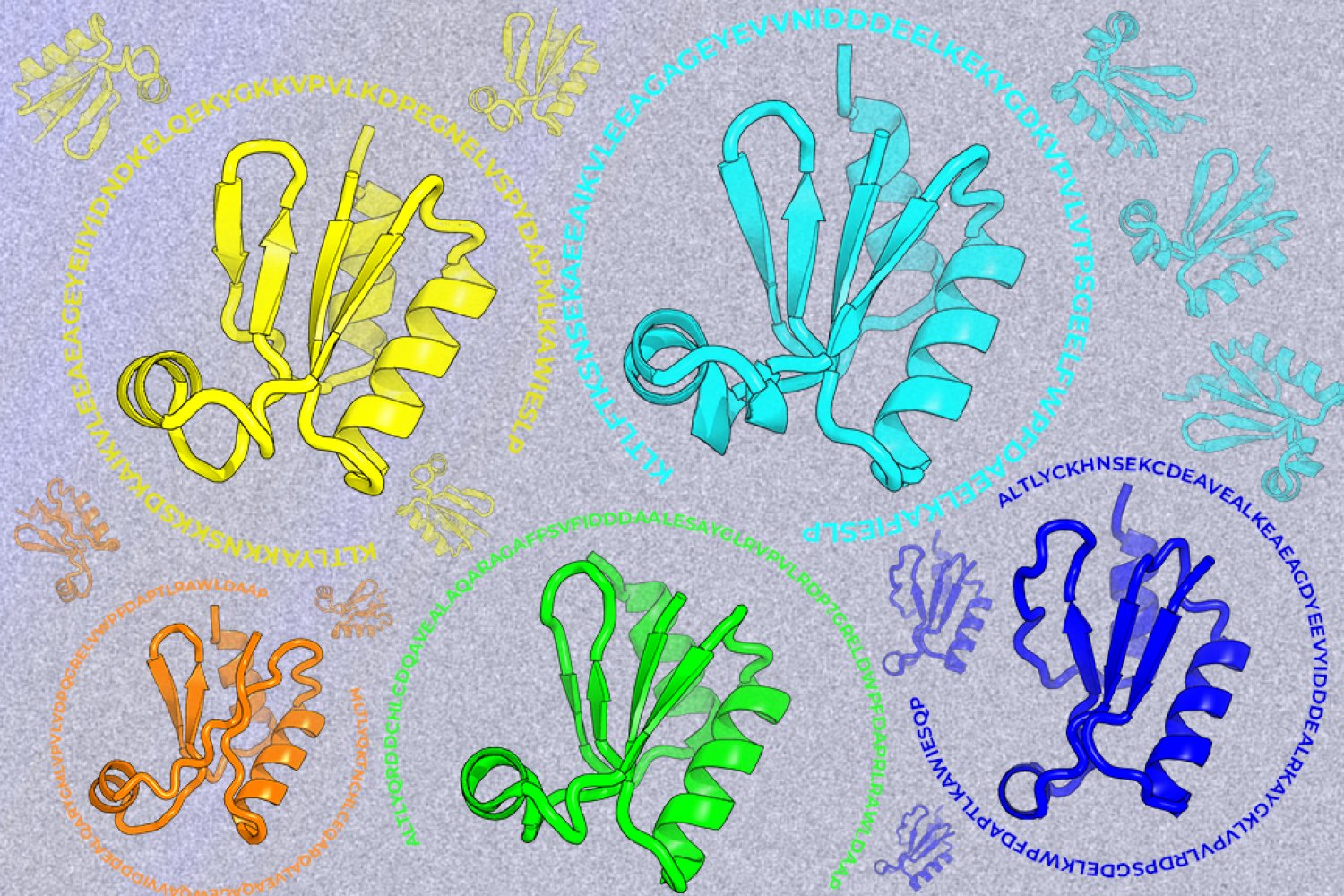
A new machine-learning framework aims to improve the success rate of computational protein design while moving away from results that reproduce sequences found in nature.