The data demonstrate that MRO is poised to play a role in the coordination of periovulatory events through the EGF and progesterone signaling pathways through the EGF and progesterone pathways.
Abstract
Maestro (MRO) is a transcription factor that has a role in regulating gene expression. The MRO expression pattern was examined in a unique set of human granulosa cells (GCs) and follicles collected across the ovulatory period of a natural menstrual cycle. MRO mRNA was elevated (70-fold) in women during the early ovulatory phase (12h to ≤18h post hCG administration; LH analog) and remained elevated (35-fold) in the late ovulatory phase (>18h to ≤ 34h) when compared to the preovulatory state (before the LH surge). Immunohistochemistry of whole follicles from women demonstrated positive MRO signal in GCs during the early and late ovulatory phases. Employing a cultured human granulosa luteal cell (hGLCs) model, we further examined MRO regulation in human granulosa cells from IVF patients. Treating hGLCs in vitro with hCG elevated MRO expression by 22-fold at 6h, 48-fold at 12h, and then expression slightly decreased to 13-fold at 24h. Similarly, the strongest MRO protein expression was detected at 12h. Next, LH/hCG signaling pathways regulating MRO expression were investigated using inhibitors specific to each signaling pathway. Our data revealed that hCG regulated MRO expression through LH-dependent classical signaling pathways such as PKA, PKC, and PI3K, with MAPK partially regulating its expression. Moreover, the EGF and progesterone pathways, important in the periovulatory period, were found to be involved in MRO regulation. These data, taken together, demonstrate that MRO is poised to play a role in the coordination of periovulatory events through the EGF and progesterone signaling pathways.

The endometrium undergoes extensive cyclical remodeling essential for reproductive success; however, the molecular mechanisms governing these processes in donkeys (Equus asinus) remain poorly characterized. To address this gap, we performed high-throughput RNA sequencing on endometrial tissues collected from Dezhou donkeys (n = 16) at four post-ovulation stages: Day 0 (ovulation), Day 3 (early luteal), Day 7 (mid-luteal), and Day 18 (late luteal/pre-luteolysis). Differential gene expression analysis, Gene Ontology enrichment, and KEGG pathway mapping were conducted to characterize temporal transcriptomic dynamics. We identified 2,474, 6,548, and 1,288 differentially expressed genes in Day 0 versus Day 3, Day 0 versus Day 7, and Day 0 versus Day 18 comparisons, respectively. A biphasic transcriptional pattern emerged: transient suppression of immune and cytokine signaling pathways at Day 3 was followed by robust activation of TNF, NF-κB, PI3K-Akt, and extracellular matrix–receptor interaction pathways by Day 7, consistent with progesterone-driven stromal proliferation and tissue remodeling. By Day 18, enrichment of cytochrome P450, steroid hormone biosynthesis, and amino acid metabolism pathways indicated metabolic reprogramming associated with luteal regression. This study provides the first comprehensive temporal transcriptomic atlas of the donkey endometrium, revealing conserved endocrine–immune–metabolic regulatory networks comparable to those in mares and cattle. These findings establish a molecular foundation for developing precision strategies to improve uterine health, fertility management, and assisted reproductive technologies in donkeys.
Adropin, a peptide involved in energy homeostasis, acts via G protein-coupled receptor 19 (GPR19). This study examined the expression of adropin/GPR19 in porcine ovarian follicles and assessed the effects of adropin on granulosa cells (Gc) function and oocyte maturation in vitro. Levels of adropin/GPR19 were analyzed in porcine ovarian follicles and follicular fluid during the estrous cycle. Then, Gc isolated from medium-sized follicles were cultured with gonadotropins, steroids, or adropin (0.1-100 nM) to evaluate adropin/GPR19 expression, Gc function, and signaling pathways using pharmacological inhibitors. Additionally, the effect of adropin on oocyte maturation was assessed after in vitro maturation of cumulus-oocyte complexes from prepubertal pigs. We noted that adropin expression increased in the whole porcine ovarian follicle, while GPR19 decreased during the estrous cycle. Adropin protein expression and secretion to culture medium and GPR19 protein increased with gonadotropin and steroid treatment. Both proteins are localized to Gc and theca cells. Functionally, adropin reduced Gc viability via AKT signaling, inhibited proliferation and cell cycle progression via ERK1/2, suppressed estradiol secretion and CYP19A1 expression via PKA, increased progesterone secretion, cleaved caspase-3 expression and its activity, and inhibited autophagy-related markers. Adropinsimultaneously enhancing oocyte maturation, progesterone secretion, and lipid utilization in cumulus-oocyte complexes. These findings indicate that adropin may regulate porcine follicular development through its actions on Gc and oocytes.
Patrycja Kurowska, Alicja Łapa, Jakub Chatys et al.· Biology of Reproduction· 0 citations
Roe deer (Capreolus capreolus) are seasonal animals with fertilisation taking place in summer (July/August). Thereafter, the embryo enters a 4-5-month period of embryonic diapause. This reproductive strategy, displaying a reduced embryonic developmental velocity at the blastocyst stage, leads to reactivation and implantation in late December-January and parturition in spring (May/June). The endocrine mechanisms governing reactivation, implantation and placentation remain poorly understood. Here, we applied ultra-high-performance liquid chromatography coupled to high-resolution mass spectrometry (UHPLC-HRMS) to profile circulating progestogens from reactivation through late gestation (December-April) and in placental and luteal tissue. Notably, the neurosteroid pregnanolone (3α,5β-THP) appeared exclusively in pregnant does from late December/early January onwards, coinciding with the period of implantation. Pregnanolone was detected in placental but not luteal tissue, suggesting the placenta as a potential source of origin. Our results indicate a previously unrecognised shift in progestogens from reactivation/early placentation onwards, suggesting that non-classical progestogens may contribute to the endocrine regulation of implantation and pregnancy maintenance. Further investigation into the origin and functional roles of pregnanolone are needed to elucidate its contribution to pregnancy and reproductive success in roe deer.
Sara Elsafadi, Haolin Chen, R. Giacometti et al.· Reproduction· 0 citations
Oocyte development requires coordinated metabolic and signaling support from granulosa and theca cells. By performing integrated single-cell RNA sequencing and spatial transcriptomic analyses of murine and human ovaries, we discovered a functionally specialized stromal subtype essential for folliculogenesis. These stromal cells (SCs) with glutamyl aminopeptidase (ENPEP) function, designated perifollicular SCs based on their circumferential follicle localization, exhibit two hallmark features: (1) dynamic proliferation synchronized with follicular maturation from primary to secondary to antral stages, and (2) secretion of midkine (MDK), which activates nucleolin (NCL) receptor signaling to drive granulosa cell (GC) expansion. Furthermore, analyses of ovarian aging revealed the concurrent depletion of perifollicular SCs and the attenuation of MDK–NCL signaling between perifollicular SCs and GCs. The unique spatial confinement and regulatory capacity of perifollicular SCs endow them with the potential to become important components of the follicular functional unit, providing new theoretical support for understanding the molecular regulatory mechanisms of ovarian aging from the perspective of the follicular microenvironment.
Zhe Zhang, Na Kong, J. Mei et al.· Cell Discovery· 0 citations
The ovarian follicle is an enclosed microenvironment that ensures oocyte growth and maturation, making it essential for female fertility. Normal folliculogenesis development and oocyte maturation strictly rely on orchestrated intercellular interactions among the mural granulosa cells (MGCs), cumulus cells (CCs), and the oocyte within antral follicles. Despite the importance, how these cell populations communicate remains largely unknown. Due to this knowledge gap, current oocyte in vitro maturation (IVM) systems fail to fully replicate the physiological follicular microenvironment due to the lack of MGC regulation, leading to poor oocyte quality and lower success rates of assisted reproductive technologies. RNA-seq was performed on MGCs, CCs, and oocytes isolated from single bovine antral follicles at different developmental stages (3–5 mm, 6–8 mm and 9–12 mm). Using a ligand-receptor interaction scoring strategy, we constructed a dynamic intrafollicular interaction map. We revealed that MGCs are the most active cell type, acting as either secretors or receivers, based on the number of ligands and receptors it expresses, as well as the number of interaction pairs it establishes with other cell types. Intriguingly, intrafollicular crosstalk exhibits spatiotemporal commonality, characterized by shared ligand-receptor usage and potential functional redundancy across cell types and stages. Notably, the intrafollicular communication map enables the prediction of MGC-secreted factors that can improve the oocyte quality after IVM. Based on the predicted candidate factors, we have confirmed that supplementation with pleiotrophin (PTN) significantly improved in vitro matured oocyte quality and subsequent embryonic development. In addition, we also revealed significant heterogeneity at single-follicle resolution, unhealthy follicles showed aberrant activation or loss of partial core interaction signaling, supporting the hypothesis that these interactions play a critical role in determining follicular fate. By reconstructing a map of intrafollicular interactions, our study provides novel insights and important clues for understanding cellular and molecular mechanisms that fine-tune antral folliculogenesis. We also offer a roadmap for predicting candidate factors that can be used for optimizing mammalian in vitro embryo production systems.
Zhaochen Wang, Zhenni Zhang, Yawen Tang et al.· Journal of Animal Science an...· 0 citations
Related blog posts
MIT News · Artificial Intelligence· news.mit.eduAug 27, 2026
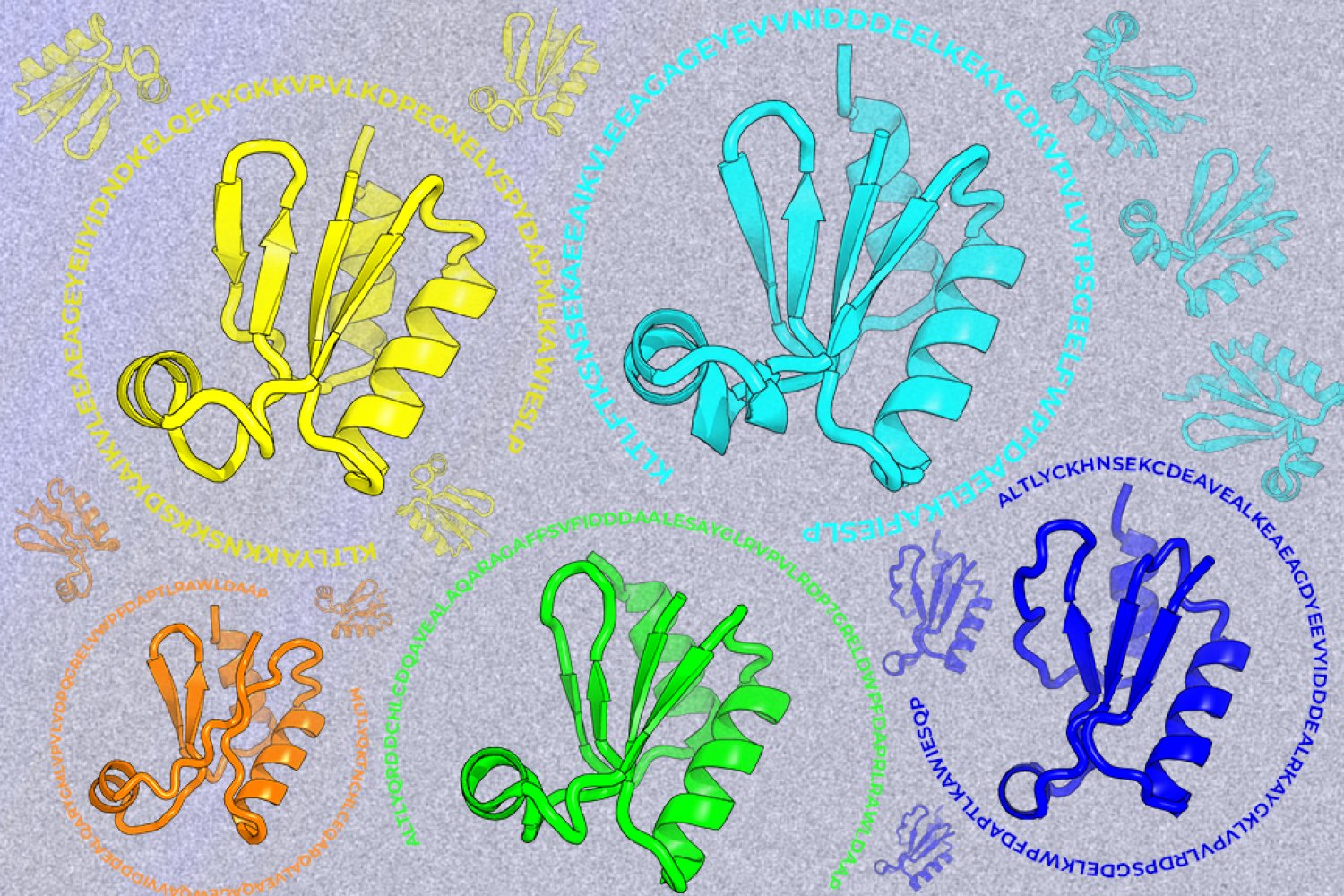
A new machine-learning framework aims to improve the success rate of computational protein design while moving away from results that reproduce sequences found in nature.