Aug 2026· Frontiers in Immunology· 0 citations· 113 references
TL;DR
A testable positive-feedback perspective in which thyrocyte ERS injury and immune effector amplification may mutually reinforce one another is proposed, in which thyrocyte ERS injury and immune effector amplification may mutually reinforce one another.
Abstract
Hashimoto’s thyroiditis (HT) is the most prevalent autoimmune thyroid disease, characterized by lymphocytic infiltration and destruction of thyroid follicular architecture. Prior research has predominantly focused on aberrant adaptive immune activation, whereas the contribution of the thyroid follicular cell itself to this process remains incompletely elucidated. This narrative review synthesizes evidence implicating endoplasmic reticulum stress (ERS) in HT pathogenesis, stratifying the evidence by its proximity to HT pathology into three tiers: direct evidence, thyroid-cell evidence, and extrapolated evidence. Thyroid follicular cells continuously produce large quantities of structurally complex thyroglobulin, placing the ER under near-saturated folding load even under physiological conditions, thereby conferring an organ-specific vulnerability. Multiple HT-associated factors can activate the unfolded protein response (UPR), mediating thyrocyte apoptosis, suppression of functional genes, and loss of epithelial phenotype in thyroid cell models; individual UPR branches may also regulate the differentiation and function of infiltrating immune cells. Integrating the above evidence, this review proposes a testable positive-feedback perspective in which thyrocyte ERS injury and immune effector amplification may mutually reinforce one another. This perspective comprises six steps, and for each step, the strength of supporting evidence is assessed. Among these, only thyrocyte ERS activation and the macrophage IRE1α pathway have received preliminary direct evidence in HT or experimental autoimmune thyroiditis (EAT); support for the remaining steps derives primarily from thyroid cell lines or non-thyroid experimental systems.

Background Hashimoto’s Thyroiditis (HT) is the leading cause of primary hypothyroidism, characterized by progressive thyroid follicular cell (TFC) loss and diffuse lymphocytic infiltration. While apoptosis dominates TFC death in HT, the role of pro-inflammatory necroptosis in TFC destruction, especially its cellular heterogeneity, spatial distribution, and inflammatory microenvironmental regulation, remains incompletely elucidated. Methods We integrated spatial transcriptomics and multilevel functional validation to map necroptosis-associated cellular and molecular programs in HT. Thyroid tissues from a local clinical cohort were analyzed using transmission electron microscopy (TEM), immunohistochemistry, and immunoblotting to validate necroptosis-associated signatures. In vitro, Nthy-ori 3-1 cells were stimulated with TNF-α, with or without IFN-γ, to characterize necroptosis-associated signaling in thyrocytes. Results We identified a distinct TFC subpopulation (Cluster 2) with high enrichment of the TNF signaling pathway and TNFRSF1A expression, which exhibited a necroptosis-susceptible phenotype and served as the core receiver of inflammatory signals from the immune microenvironment. Pseudotime trajectory analysis showed synchronous upregulation of transcripts of core necroptotic molecules (RIPK3, MLKL) at a critical threshold during TFC dedifferentiation. The TEM revealed necroptosis-compatible ultrastructural features in HT thyrocytes. Notably, HT tissues showed an RIPK3-MLKL-predominant necroptosis-associated pattern, with no significant changes in total or phosphorylated RIPK1. Clinically, the expression of necroptosis-related markers (ZBP1, RIPK3, MLKL) in thyroid tissues and circulating pro-inflammatory cytokines (IL-6, IL-1β, IL-1α) in serum were significantly correlated with thyroid autoantibody (TPOAb, TgAb) titers and TFC dedifferentiation. In vitro, pharmacological inhibition of RIPK3 or MLKL effectively preserved thyrocyte membrane integrity, reduced cell death, and suppressed the secretion of pro-inflammatory cytokines. Conclusions Our study provides a multimodal characterization of necroptosis in HT, showing that the inflammatory immune microenvironment is associated with TFC loss and activation of an RIPK3-MLKL-predominant necroptosis-related program, without detectable upregulation of total or phosphorylated RIPK1. Targeting the RIPK3-MLKL axis may represent an experimental therapeutic hypothesis that requires further validation in primary thyrocytes, organoids, and in vivo HT models.
Dong-Yu Yang, Cihang Lu, Weiping Teng et al.· Frontiers in Immunology· 0 citations
Introduction Hashimoto's thyroiditis (HT) is a prevalent autoimmune thyroid disorder, typically triggers localized thyroid inflammation and systemic dyslipidemia, and progression to hypothyroidism. While growth differentiation factor 15 (GDF15) is recognized for its role in lipid metabolism and inflammatory diseases, its specific involvement in HT remains elusive. Methods We conducted plasma metabolomic profiling in HT patients and matched healthy controls to identify altered metabolic pathways. Correlation analysis was performed between serum GDF15 and clinical indicators. In vitro thyroid follicular cell models and NaI-induced in vivo thyroid inflammatory models were applied with GDF15 overexpression, knockdown, recombinant protein and siRNA treatment to explore the functional role of GDF15. Results Plasma metabolomic profiling in HT patients revealed that differentially expressed metabolites are predominantly enriched in lipid metabolism pathways. GDF15 expression was increased by 1.98-fold in HT serum compared to controls (p < 0.001), and serum GDF15 levels were negatively correlated with thyroid-stimulating hormone (TSH, R = −0.4943, p = 0.0040), aspartate aminotransferase (AST, R = −0.4506, p = 0.0238) and ultrasound attenuation parameter (UAP, R = −0.4894, p = 0.0071) in HT patients. Functional assays demonstrated that GDF15 overexpression tends to attenuate NaI-induced thyroid and systemic inflammation, relatively improving lipid profiles and reduces hepatic lipid deposition; however, GDF15 knockdown appeared to exacerbate these pathologies. Furthermore, recombinant GDF15 protein mitigates NaI-induced inflammatory responses in thyroid follicular cells, whereas GDF15 siRNA intensifies the inflammation. Discussion Given the limitations of the NaI-induced model and the lack of thyroid-specific genetic manipulation, these findings suggest a significant association between GDF15 and HT, though further research is required to establish definitive causality.
Rui-li Yin, Rongxin Sun, Boshen Gong et al.· Frontiers in Medicine· 0 citations
Hashimoto’s thyroiditis (HT) and diabetes mellitus are highly prevalent chronic immune-mediated disorders that frequently co-occur and share genetic susceptibility, T-helper (Th) 1/Th17 skewing, and regulatory T-cell (Treg) dysfunction. Among individuals with type 1 diabetes mellitus (T1DM), autoimmune thyroiditis is the most common comorbid autoimmune disease. Extracellular vesicles (EVs) have emerged as important mediators linking autoimmune and metabolic inflammation. This review compares how EVs remodel the immune microenvironment in HT, type 2 diabetes mellitus (T2DM), and related disease contexts, with attention to donor cells, cargo, recipient pathways, biomarkers, and therapeutic implications. In HT and T1DM, EVs can deliver organ-specific autoantigens, whereas in classical T2DM current evidence more strongly supports EVs as carriers of stress signals, chemokines, and immunoregulatory miRNAs that shape islet inflammation and insulin resistance rather than autoantigen presentation; latent autoimmune diabetes in adults is considered separately. Across these diseases, recurrent EV-miRNA programs and DAMP/NLRP3 signaling converge on Treg/Th17 imbalance and M1/M2 macrophage polarization. We also emphasize the marked asymmetry of evidence maturity, with substantially stronger
in-vivo
and clinical support on the T2DM side than on the HT side. This asymmetry is treated as an explicit interpretive boundary throughout the review. We assess circulating and urinary EV cargoes as liquid-biopsy candidates and discuss EV-based drug delivery, engineered immunomodulatory EVs, and modulation of EV biogenesis. Translational claims remain limited by heterogeneity, manufacturing, and safety challenges, particularly in organ-specific autoimmune disease. In this review, the term “immune–metabolic crossroads” refers to shared mechanisms, shared biomarker opportunities, and partially overlapping therapeutic entry points.
Yao Ma, Wei-na Jiang, Tong Zhou et al.· Frontiers in Immunology· 0 citations
Hashimoto’s thyroiditis (HT) and human papillomavirus (HPV)-induced cervical cancer (CC) are distinct clinical entities; however, their etiologies share several pathogenetic mechanisms related to immune dysregulation, endocrine disturbances, and chronic inflammation. HT is an autoimmune disease characterized by lymphocytic infiltration of the thyroid gland, autoantibody production, and progressive tissue damage resulting from a persistent inflammatory response. In contrast, the development of HPV-induced CC depends on the virus’s ability to evade host immune surveillance, thereby enabling long-term persistence of the infection. Increasing evidence suggests a potential role of other viral infections, particularly Epstein-Barr virus and hepatitis C virus, in the development of autoimmune thyroid diseases. The underlying mechanisms include chronic inflammation, molecular mimicry, and impaired immune tolerance. Furthermore, thyroid hormones and the sex hormones estrogen and progesterone play a significant role in modulating innate and adaptive immune responses and may influence the persistence of viral infections. Although there is an overlap in the immunological and endocrine mechanisms involved in these conditions, current evidence remains insufficient to confirm a direct association between HT and an increased risk of developing CC. Further experimental and epidemiological studies are required to elucidate the potential relationship between HT and HPV-induced CC.
Summary Hashimoto’s thyroiditis is associated with reduced lymph node metastasis in papillary thyroid carcinoma, suggesting that the autoimmune microenvironment may influence tumor progression. We utilized single-cell RNA sequencing and intratumoral 16S ribosomal RNA gene sequencing to investigate malignant epithelial cell states and microbial features in PTC with and without Hashimoto’s thyroiditis. Tumors with Hashimoto’s thyroiditis exhibited malignant epithelial populations enriched for innate immune signaling programs and showed increased intratumoral microbial diversity with reduced abundance of several Gram-negative bacteria, particularly Pseudomonas. Within the Hashimoto’s thyroiditis subgroup, lymph node metastasis was associated with increased Gram-negative bacterial abundance. Functional experiments further showed that Pseudomonas-derived lipopolysaccharide enhanced thyroid cancer cell migration in vitro and in vivo. These findings suggest that Hashimoto’s thyroiditis reshapes both epithelial transcriptional states and the intratumoral microbial environment, potentially contributing to a less aggressive tumor phenotype.
Yu Che, W. Kou, Lianghui Xu et al.· iScience· 0 citations
Related blog posts
MIT News · Artificial Intelligence· news.mit.eduAug 27, 2026
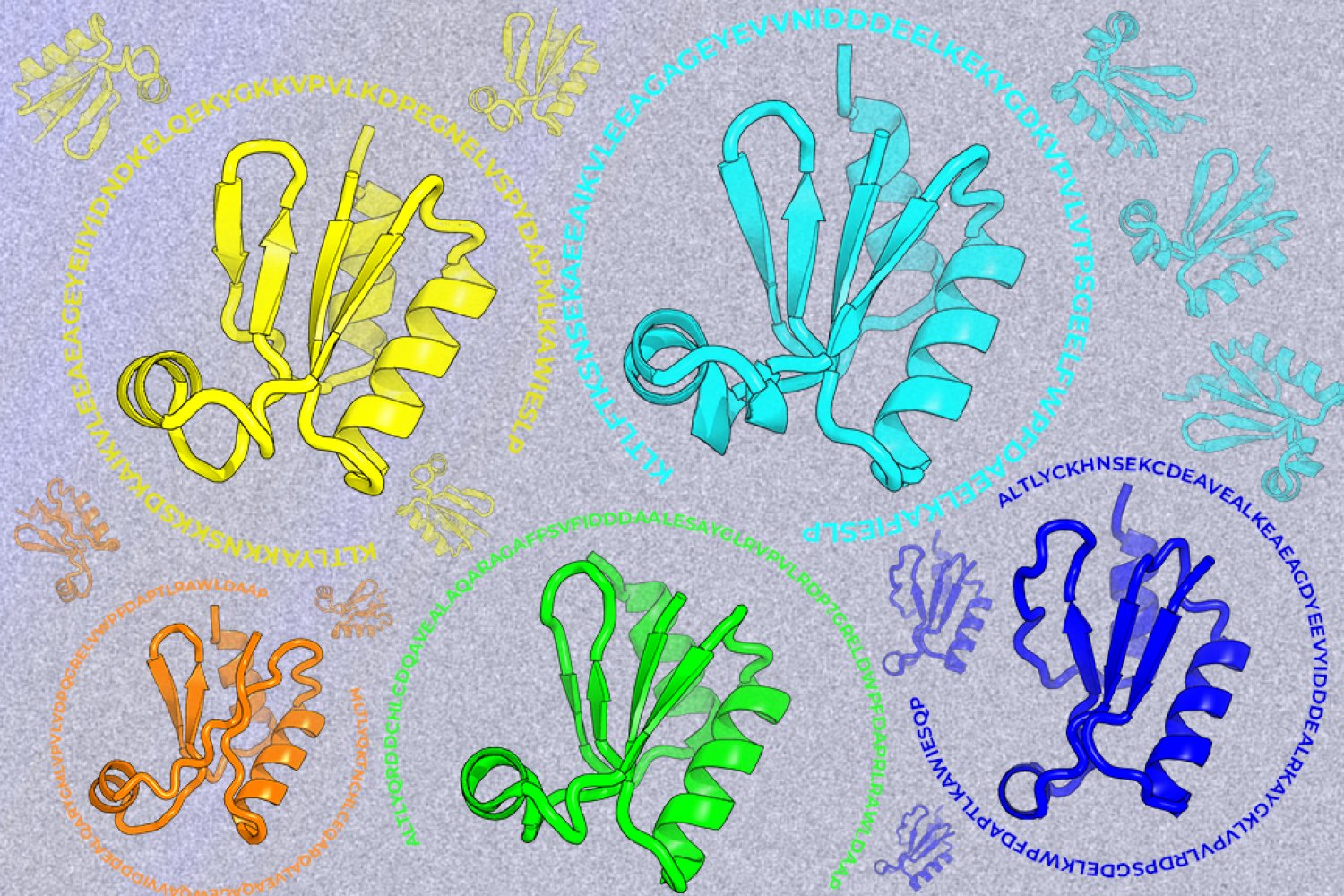
A new machine-learning framework aims to improve the success rate of computational protein design while moving away from results that reproduce sequences found in nature.