Massively parallel quantification and prediction of monomeric protein yield in Escherichia coli
TL;DR
This approach enables standardized, large-scale measurement of monomeric yield across diverse proteins, and establishes monomeric yield as a sequence-encoded property that can be learned, predicted and ultimately designed.
Abstract
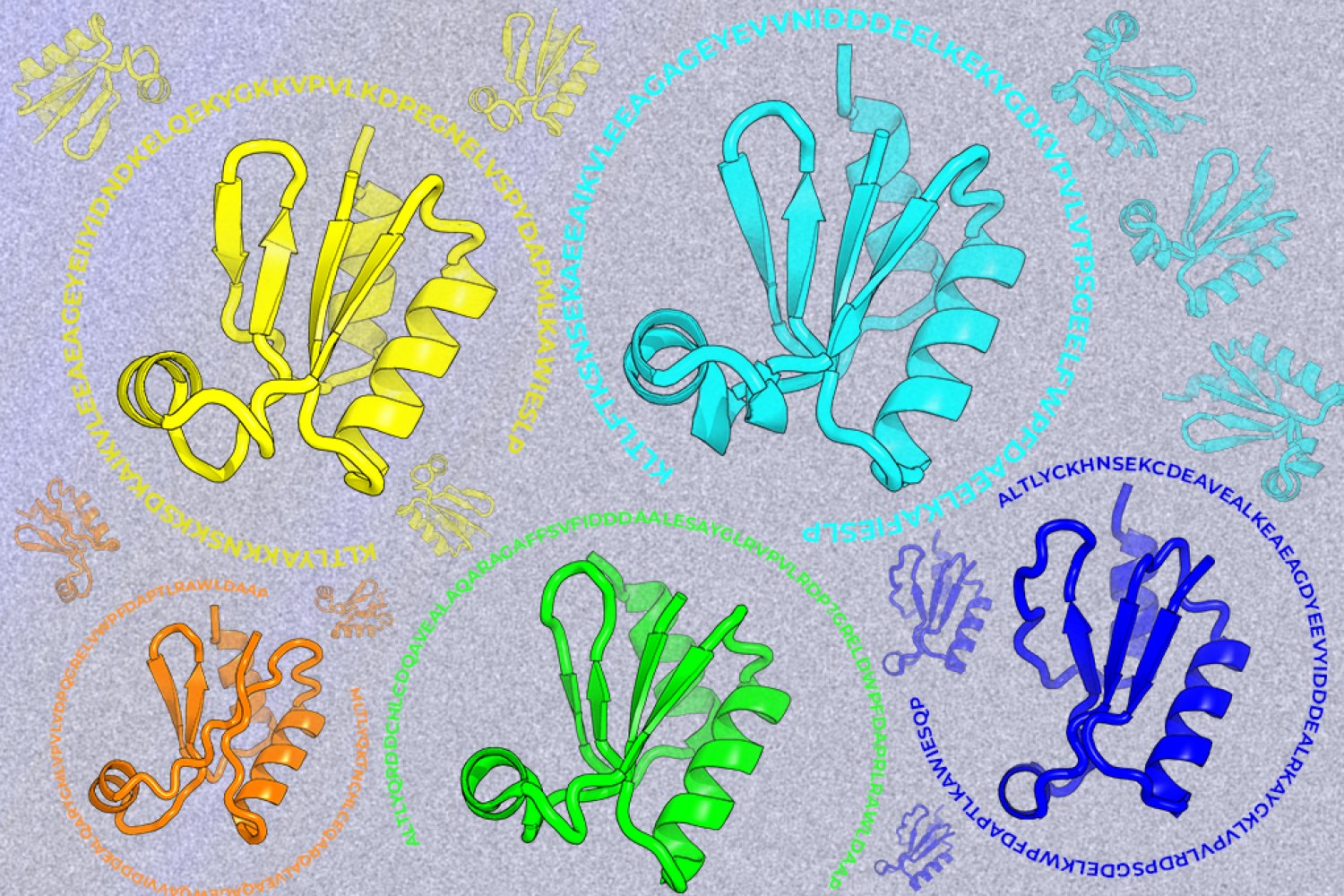
Obtaining sufficient quantities of purified proteins in their intended molecular states is essential for biological research and protein engineering1–4. Advances in computational protein design have expanded the functional capabilities of de novo proteins and accelerated candidate generation5–10. However, reliable methods for ranking expected monomeric yield of candidate de novo designs, including molecular binders11–15, fluorescent proteins16–19 and enzymes20–22, have yet to be established23. Standardized measurements of monomeric yield across diverse sequences remain scarce, limiting our understanding of its determinants and the development of accurate predictors for candidate selection. Here we developed a scalable pooled assay combining peptide barcodes24,25, size-exclusion chromatography and mass spectrometry to quantify monomeric yield for over 39,000 natural protein domain variants, de novo proteins and nanobodies under uniform and standardized Escherichia coli production conditions. We used this dataset to (1) quantify the relationship between folding stability and monomeric yield, (2) benchmark inverse-folding methods5,7,9,26–30, (3) evaluate the utility of structure-prediction confidence metrics31–33 in selecting high-yield design candidates, and (4) identify sequence and structural patterns in nanobodies associated with monomeric yield and monomer-to-dimer yield ratios. We further developed ESMC-MonoYield, a protein language model33 fine-tuned to predict monomeric yield from amino acid sequence alone, and prospectively demonstrated enrichment of high-yield candidates among BindCraft-designed binders8. Our approach enables standardized, large-scale measurement of monomeric yield across diverse proteins, and establishes monomeric yield as a sequence-encoded property that can be learned, predicted and ultimately designed.