Aug 2026· FEMS Microbiology Reviews· Vol 50· 0 citations
Medicine
TL;DR
It is suggested that bacterial START domains participate in a remarkably broad range of biological processes-including small-molecule binding, metabolic regulation, enzymatic catalysis, and stress adaptation-rather than traditional lipid transport.
Abstract
StAR-related lipid transfer (START) domain proteins comprise a conserved superfamily defined by a characteristic helix-grip fold that enables the binding of hydrophobic ligands. In mammals, START domain proteins have been extensively characterized as key mediators of non-vesicular lipid transport and lipid-dependent signalling pathways. In contrast, the prevalence, structural diversity, and functional roles of START domain proteins in bacteria remain underexplored and for those that are characterized, experimental findings are occasionally conflicting. While bacterial START domains preserve the core helix-grip fold for lipid binding, they are typically smaller and exhibit more limited conformational flexibility than their eukaryotic counterparts. Despite these apparent constraints, available experimental data suggest that bacterial START domains participate in a remarkably broad range of biological processes-including small-molecule binding, metabolic regulation, enzymatic catalysis, and stress adaptation-rather than traditional lipid transport. Bacteria within the phylum Actinomycetota, in particular, have evolved a prolific repertoire of START-domain proteins. As an example, we will discuss the START domain proteins of M. tuberculosis in detail, one of which has emerged as a promising drug target. Collectively, this synthesis underscores the functional versatility of the START domain across the domains of life and identifies critical knowledge gaps that warrant further investigation.
Adhesion G protein-coupled receptors (aGPCRs) transduce mechanical stimuli across the cytoplasmic membrane in eukaryotes. These receptors contain extracellular GPCR autoproteolysis-inducing (GAIN) domains that undergo autoproteolysis but maintain stable associations of their cleavage products. A diverse set of adhesion domains appended to the GAIN domain binds surface ligands on neighboring cells or the extracellular matrix. Shear force is thought to disrupt the interaction between the cleavage products, exposing a tethered agonist that triggers GPCR signaling. Here, we report that proteins with structural homology to GAIN domains are broadly conserved among bacteria and archaea. The microbial domains lack strong sequence conservation to their eukaryotic counterparts but are predicted to adopt a similar fold. We demonstrate that these microbial autoproteolysis-inducing (MAIN) domains undergo autoproteolysis both in vitro and in vivo, using conserved catalytic residues. Furthermore, proteolysis occurs in a conserved β turn that allows stable non-covalent interaction between the cleavage products. MAIN domains are tethered to the cell envelope of bacteria and archaea and are fused to diverse sets of adhesion and enzymatic domains. Many of the same adhesion domains are appended to both MAIN and GAIN domains, suggesting these protein families share a common origin and function. We propose that MAIN domains allow microbes to release proteins from their cell surface in response to shear force, enabling broader nutrient scavenging, intoxication of neighboring cells, and dispersal through surface detachment.
Anna P. Brogan, D. Rudner· Current Biology· 0 citations
Intrinsically disordered proteins (IDPs) and regions (IDRs) challenge the classical structure–function paradigm by fulfilling essential biological roles in the absence of a stable three-dimensional fold. Rather than occupying fixed conformations, IDPs exist as dynamic ensembles that enable high-specificity, low-affinity interactions, multivalent regulatory functions, and context-dependent binding across diverse cellular environments. This conformational plasticity underlies their central roles in signaling, transcriptional regulation, chromatin organization, and the assembly of membrane-less organelles through liquid–liquid phase separation (LLPS). The present review offers several conceptual contributions. First, we develop a cross-kingdom synthesis of disorder-based chromatin regulation, demonstrating that bacterial nucleoid-associated proteins, plant transcription factors, and mammalian chromatin regulators share a conserved charge-regulatory logic, mediated by PTM-dependent mechanisms that dynamically couple environmental signals with genome organization. Second, we integrate mechanistically related but frequently siloed disease pathways, including mitophagy dysfunction, oxidative stress signaling, neuroinflammation, and aberrant phase separation, into a unified framework linking IDP conformational dysregulation to neurodegeneration and cancer. Third, we highlight underexplored regulatory dimensions of IDP biology, including proline isomerization and ubiquitylation-driven condensate formation, that influence conformational ensembles and signaling outputs in ways not captured by conventional structural approaches. Finally, we critically evaluate recent advances in AI-assisted disorder prediction and hybrid experimental-computational ensemble characterization, emphasizing both their transformative potential and current limitations. Dysregulation of IDPs underlies a broad spectrum of human pathologies, and we discuss the emerging opportunities and persistent challenges in targeting these conformationally dynamic proteins therapeutically, including through PROTAC-based degraders, condensate modulators, and ensemble-based drug screening strategies.
Sami N.Al Harake, Said Btadini, Abrar H. Qadri et al.· Biochemistry and Biophysics...· 0 citations
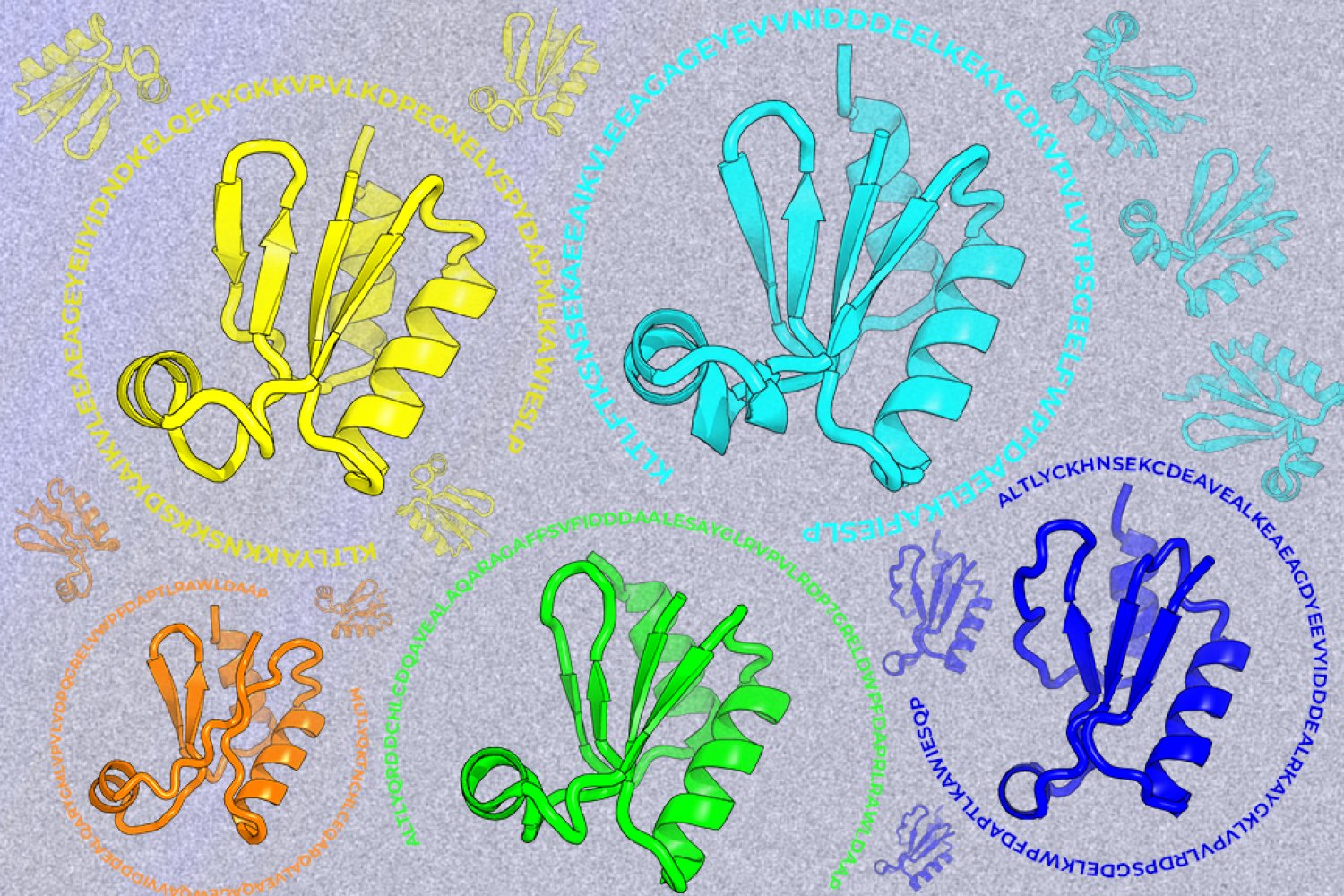
A new machine-learning framework aims to improve the success rate of computational protein design while moving away from results that reproduce sequences found in nature.