Skip to content

Privacy Leakage in Federated Learning: Gradient-Based Client Identity Inference and Defenses for Inertial Sensing in Vehicular Edge Networks

Sep 2026 · 0 citations · 26 references
Computer Science

Abstract

As vehicular networks move toward 5G/6G edge intelligence, federated learning (FL) is widely promoted as a privacy-preserving way for vehicles and infrastructure to train shared models without exposing raw sensor data. Yet the updates clients transmit still leak enough information to identify who sent them, which threatens the anonymity that safety-critical V2X applications assume and adds to existing concerns over adversarial ML, model poisoning, and backdoor attacks. We study server-side client identity inference from transmitted weight deltas using inertial (IMU) measurements, evaluated on the UCI Human Activity Recognition (HAR) benchmark as an accessible proxy for the IMU streams produced onboard connected vehicles. Across five attack classifiers and five non-IID partitions, an honest-but-curious server recovers client identity with near-perfect accuracy (approximately 1.000) from undefended updates, confirming a concrete identifiability risk. We then quantify the privacy-utility trade-off of a lightweight clip-then-noise defense by sweeping Gaussian noise (sigma in {0.00, 0.05, 0.10, 0.20, 0.50, 1.00}) at fixed clipping (C=1.0), and report formal (epsilon, delta)-DP budgets through Renyi accounting. A practical region (sigma in [0.1, 0.2]) drives attack accuracy to near-random while costing under 5% relative FL accuracy. Ensemble FL supplies complementary structural privacy with a 1/K anonymity-set bound and no noise penalty. Results are supported by cryptographic (SHA-256) train/evaluation gradient disjointness, three seeds, and a count-normalized attacker-advantage metric. We position HAR explicitly as a proxy and discuss what validation on true vehicular telemetry would require.


View source

Similar papers

#federated learning Preprint Oct 2026

Receiver-Domain Behavioral Probing for Backdoor-Resilient Federated GPS Spoofing Detection in UAV Networks

Federated learning (FL) allows unmanned aerial vehicle (UAV) fleets to train a shared GPS spoofing detector without exchanging raw receiver observations. Some UAV-FL schemes use client-reported performance to determine aggregation weights, which allows compromised clients to manipulate their influence on the global mod...

W. Jędrzejczak, Cole Walther, D. Gill et al. · 0 citations

On the Limits of Privacy in Federated Learning: Personalization and Adversarial Analysis

This thesis demonstrates that federated learning should not be considered inherently private merely because data remain decentralized, and introduces a personalized privacy-preserving federated learning framework that allows individual clients to select their preferred privacy mechanism and protection level.

Author · 0 citations
#graph neural networks Open access Oct 2026

Trust-Aware Federated Learning for Privacy-Preserving IoT Intrusion Detection

FLZT-IDS (Federated Learning with Zero-Trust for Intrusion Detection in IoT) employs gradient-deviation monitoring to mitigate the effects of heterogeneous client updates, while Graph Neural Networks and an Attention-based BiLSTM capture relational and temporal attack patterns.

Santosh Kumar Banbhrani, Chengyongxiao Wei, Muhammad Asad · 0 citations
#artificial intelligence Preprint Sep 2026

Privacy, Robustness, and Fairness Trade-offs in Federated Intrusion Detection: Geometric Indistinguishability at the Aggregation Interface

This paper introduces geometric indistinguishability as a conceptual lens for a regime in which privacy-induced dispersion in client updates can make minority-class signals harder for robust aggregation to preserve and suggests that aggregation-aware modeling and sample-aware evaluation are promising directions for tru...

Adrita Rahman Tory, Abm Shawkat Ali, M. Layek et al. · 0 citations
#federated learning Open access Oct 2026

Janus: Dual-Sided Communication and Privacy Optimization for Federated Learning in Autonomous Vehicles

To the authors' knowledge, this is the first vehicular-FL evaluation combining joint uplink-downlink compression with genuine HE-based privacy, validated through real cryptography, real privacy attacks, statistical testing, cross-dataset and cross-modality generalisation, and a convergence guarantee.

Himani Tyagi, Abhilasha Singh, Ganesh Gupta · 0 citations
Review Open access 2026

Privacy and Security in Knowledge Distillation for Federated Learning: A Survey

This survey examines KD-based FL through a privacy and security lens, and provides a precise framework for evaluating what KD-FL methods actually guarantee and what they only make harder for an adversary.

Hamza Reguieg, Essaid Sabir, M. El Kamili · 0 citations

Related blog posts

Microsoft Research Blog Nov 3, 2026

Learn the rules: The hacker mindset

Research Manager Mike Walker reflects on a career spanning hacker culture, cybersecurity, and AI, sharing lessons about trust, teamwork, leadership, and why solving difficult problems requires curiosity, judgment, agility—and an understanding of the rules. The post Learn the rules: The hacker mindset appeared first on Microsoft Research.

MIT News · Artificial Intelligence Nov 17, 2026

Learning the language of machine learning

By studying the computational foundations of language learning, Associate Professor Jacob Andreas builds intelligent systems that can communicate effectively with humans.

Microsoft Research Blog Nov 16, 2026

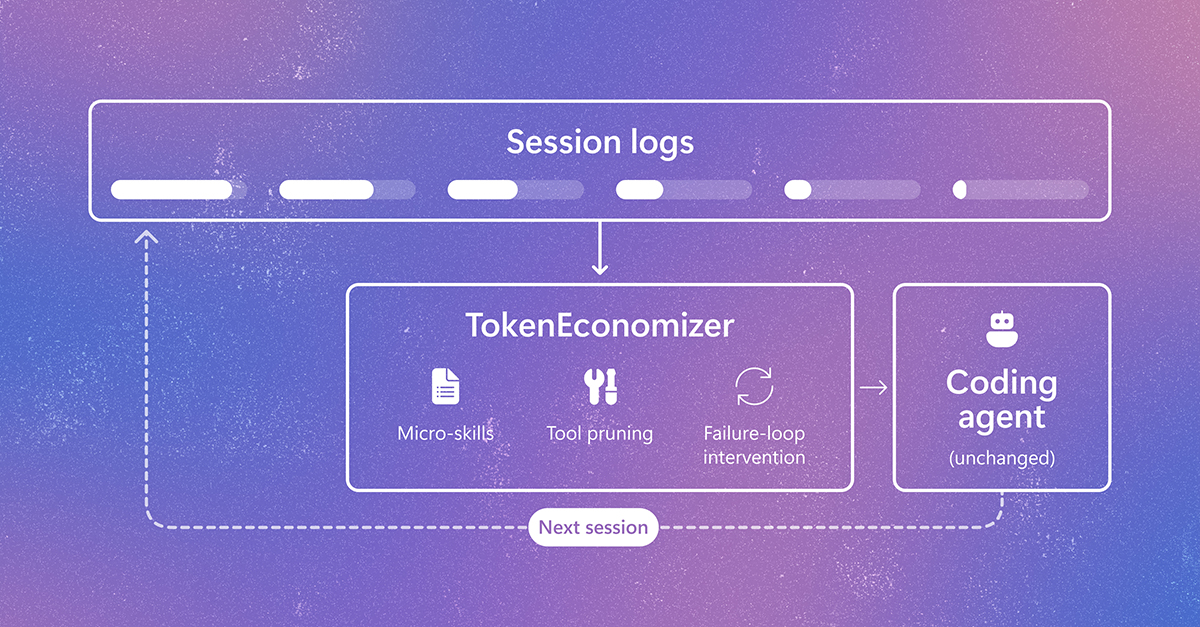
TokenEconomizer: Learning from Experience to Make AI Coding Agents More Efficient

AI coding agents are increasingly help developers fix bugs and build features largely on their own, but every interaction with their models consumes tokens. In each session, an agent sends instructions, tool descriptions, and session history to its model. Most efforts to reduce this cost focus on individual tasks. Yet developers return to the same […] The post TokenEconomizer: Learning from Experience to Make AI Coding Agents More Efficient appeared first on Microsoft Research.

We use cookies to run the site and, with your consent, for analytics and to show ads. See our Cookie Policy.