Sep 2026· IEEE Transactions on Computer-Aided Design of Integrated Circuits and Systems· Vol 45, pp. 4408-4421· 0 citations· 76 references
Abstract
This article introduces KirchhoffNet, a novel class of neural network models inspired by the principles of analog electronic circuitry, specifically Kirchhoff’s laws. KirchhoffNet operates as an analog circuit, where the network input is represented by initial node voltages, and the output corresponds to the node voltages at a specific time. The dynamics of the node voltages are governed by learnable parameters on the edges, and the evolution of these voltages follows a system of ordinary differential equations (ODEs). Despite the absence of traditional neural network components such as convolutional layers, KirchhoffNet achieves outstanding performance across a wide range of machine-learning tasks. We further demonstrate that KirchhoffNet is capable of computing diffusion models, making it a promising candidate for accelerating modern generative AI applications. Most notably, KirchhoffNet can be implemented as a high-speed & low-power analog integrated circuit, which introduces a compelling advantage: irrespective of the number of parameters in the network, its on-chip forward calculation can always be completed within a short time. This property makes KirchhoffNet a highly attractive and scalable paradigm for implementing large-scale neural networks, opening new avenues in the realm of analog neural networks for artificial intelligence (AI).
This paper investigates a dynamic heterogeneous mobile edge computing network (HMECN), where mobile devices (MDs) could offload their full tasks to a small base station (SBS) directly or the macro base station (MBS) in direct or relay mode. As age of information (AoI) is a comprehensive and accurate metric to capture the freshness of computation results, we formulate a long-term weighted sum AoI (LWSA) minimization problem in the HMECN by jointly optimizing the offloading decisions of MDs as well as the bandwidth and computation resource allocation of all base stations, subject to energy, delay and peak AoI constraints. To address the formulated non-convex mixed integer nonlinear programming problem, we decompose it into the offloading decision optimization (ODO) top-problem and the resource allocation optimization (RAO) sub-problem. Based on the decomposition, we propose a federated learning (FL)-assisted hybrid DRL and convex approach that is comprised of a safe multi-agent DRL algorithm, convex optimization and FL. The ODO top-problem is solved by the safe multi-agent DRL algorithm, which strictly ensures that the actions of each agent do not exceed its energy constraint and then paves the way for using convex optimization to solve the RAO sub-problem. FL is used to alleviate the training instability problem aggravated by multi-agent settings via breaking the limitation of partial knowledge for each individual agent. Simulation results demonstrate the superiority of the proposed approach in terms of the LWSA, convergence, scalability and robustness in dynamic environments.
Xiaoying Liu, Junhao Zheng, Kechen Zheng et al.· IEEE Transactions on Mobile...· 8 citations
High-altitude airships (HAS) and uncrewed aerial vehicles (UAVs) equipped with Multiaccess Edge Computing (MEC) servers have emerged as promising aerial MEC nodes for providing task offloading (TO) services to intelligent mobile devices (IMDs) in post-disaster scenarios. HAS offers robust computing and energy resources, while UAVs provide flexible, low-altitude coverage for rapid deployment. However, direct task offloading from IMDs to HAS often leads to task failures due to high transmission delays. UAVs with limited onboard resources require to minimize resource waste. Additionally, IMDs in sparse areas face insufficient TO services due to unfair UAV coverage. This paper defines these challenges as a joint optimization problem involving TO, RA, and UAV coverage fairness. It proposes a cooperative aerial Multiaccess Edge Computing (AMEC) framework integrating HAS and UAVs to address the issue. Within this framework, a hybrid TO scheme is first developed to mitigate the high transmission delay between IMDs and HAS. Second, a Distance, Resource, Urgency-based Decision Mechanism (DRUDM) is designed to enhance the accuracy of UAVs in selecting target IMDs for TO services. Third, a Coverage Fairness Guarantee (CFG) strategy is proposed to optimize UAV flight trajectories, ensuring IMDs in sparse areas receive fair TO services. Finally, the joint optimization problem is modeled as a Multi-Agent Partially Observable Markov Decision Process (MA-POMDP), and a DRUDM–CFG algorithm is presented to efficiently solve this complex non-convex optimization problem. Experimental results demonstrate that the proposed algorithm outperforms other compared algorithms in task completion rate and average delay, benefiting from the DRUDM mechanism. Meanwhile, the CFG strategy effectively improves TO service fairness for IMDs in sparse areas.
Xiting Peng, Chuanqi Qin, Xiaoyu Zhang et al.· IEEE Transactions on Mobile...· 4 citations
The adoption of generative artificial intelligence among communication practitioners and researchers surged after the launch of ChatGPT in November 2022, urging practitioners to critically engage in exploring pathways for fostering socially responsible and environmentally sustainable AI practices.
Future 6G networks are envisaged to tightly integrate communication, sensing, and computing, demanding real-time, intent-driven intelligence at the edge. While large language models (LLMs) excel in intent recognition and semantic reasoning, their application to real-time network lifecycle management at the edge is limited by heterogeneous application intents (APPIs), dynamic network conditions, and severe resource constraints. This paper proposes a novel lightweight LLM architecture, KGLlama-KD, that synergizes knowledge graphs (KGs) with knowledge distillation (KD) to enable intent-driven networking and enhance 6G edge intelligence. Specifically, a KG is constructed to formally describe the relationships among application scenarios, functional primitives, performance requirements within APPIs, and the correspondences between APPIs and network service requests (NSRs), thereby producing a structured intent training dataset. Building upon the Llama 3 foundation model, a two-phase optimization framework is designed to support lightweight edge deployment while preserving translation fidelity. The LLM is first fine-tuned with KG guidance and compressed via KD in the cloud, and then deployed on resource-constrained edge nodes to perform real-time, accurate, and efficient APPIs interpretation. Experiments validate that KGLlama-KD achieves 95% accuracy for APPI understanding, surpassing DeepSeek and Qwen by an average of 8%. The distilled model reduces inference latency by 60% compared to full-scale LLMs, fulfilling the sub-100 ms requirement for 6G latency-sensitive services.
Bing Wu, Sai Zou, Minghui Liwang et al.· IEEE Transactions on Mobile...· 3 citations
An engineering whitepaper documenting the construction of Baiyuan GEO Platform (2024–2026), a SaaS system for Generative Engine Optimization. The system helps brands be cited accurately and consistently across ChatGPT, Claude, Gemini, Perplexity, DeepSeek, and 15+ AI platforms. Coverage: seven-dimension AI citation-rate scoring algorithm, AI-Bot-friendly shadow document delivery (AXP) on customer-owned domains, Schema.org three-layer entity knowledge graph, closed-loop hallucination detection & auto-remediation, F12 three-layer structural optimizer (V1 rule-based + V3.1 dual-engine AutoGEO + E-GEO), rag-backend-v2 LLM hallucination hardening (six defense layers), and platform SSOT chain (brand_faq / page_type / alerts unification). v1.1.2 (this version): substantially expanded chapters 14, 15, 16 in both Traditional Chinese (zh-TW) and English (en) editions — added new sections covering early hand-tuning failure modes, bidirectional rollback design, placeholder guard trigger story, patch order causal chain analysis, cross-tenant cache privacy boundary, breadcrumb 404 ghost incident review (42 days, ~3000 ghost URLs), cross-microservice SSOT boundaries, and 5 engineering lessons (takeaways) per chapter — totaling ~13,000 additional words across 6 chapter files. Also adds LinkedIn launch announcement drafts (4 versions: zh-TW/en/ja personal + zh-TW company). v1.2.0 (this version): adds Part VI — three new chapters (Ch 17 cross-border China GEO with a Hong Kong edge node, UA routing, ICP-free central compliance and bidirectional AI visibility; Ch 18 AXP HTML Mirror-First semantic-HTML shadow documents; Ch 19 a five-layer cache-invalidation architecture for zero-touch propagation) in Traditional Chinese and English; backfills the Japanese edition to full parity (ja chapters 14–19 added); and expands Ch 13 (multimodal GEO) across all three languages with VideoObject GSC parity + origin backfill, a same-origin copyright filter, and sitemap image/video extensions. Languages: Traditional Chinese, English, and Japanese — all complete through chapter 19. License: Creative Commons Attribution-NonCommercial 4.0 International (CC BY-NC 4.0).
Vincent Lin· Zenodo (CERN European Organi...· 3 citations
Related blog posts
MIT News · Artificial Intelligence· news.mit.eduJul 14, 2026
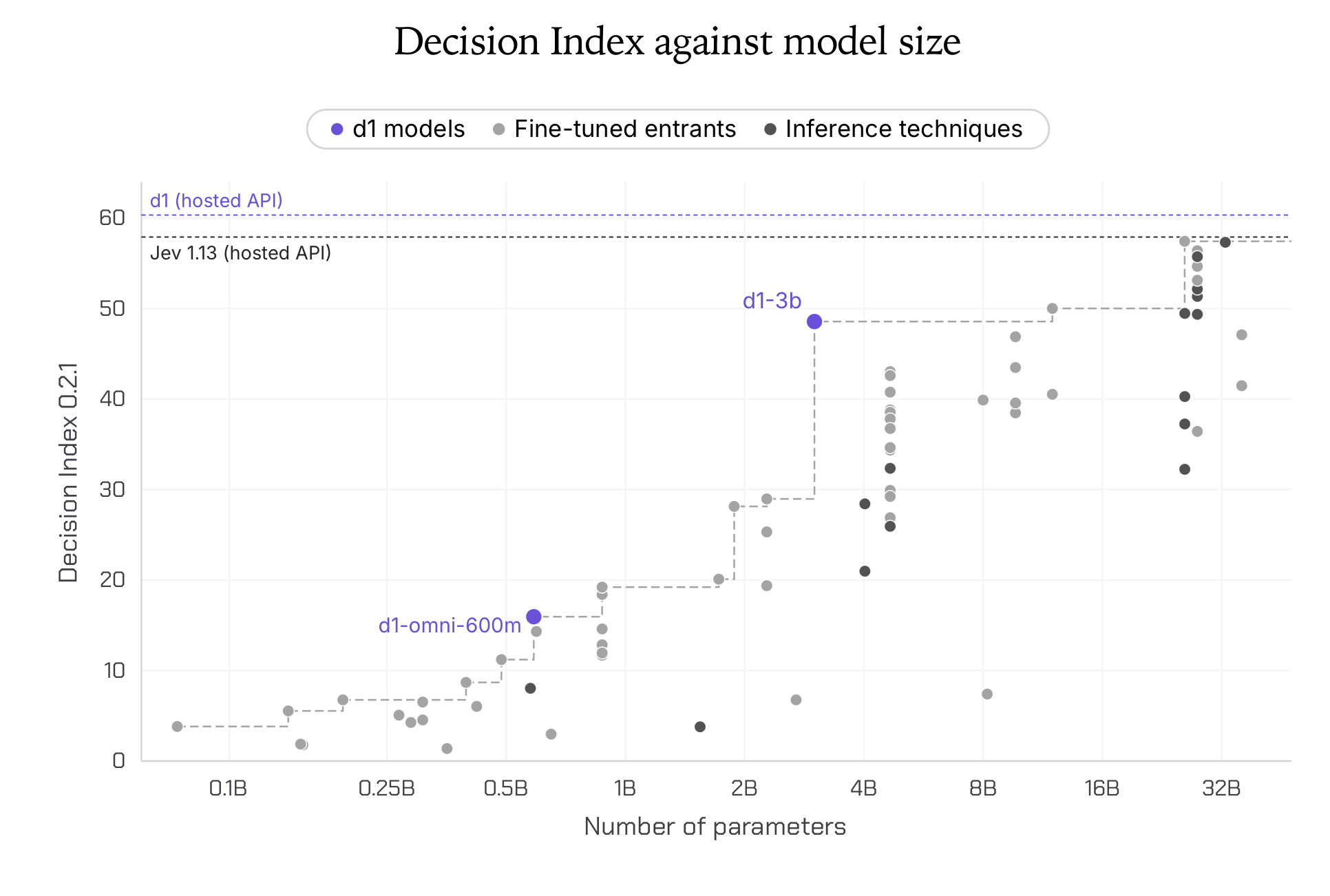
Through research and entrepreneurship, Professor Devavrat Shah is helping to design methods that can handle constant decision-making using limited computational resources.
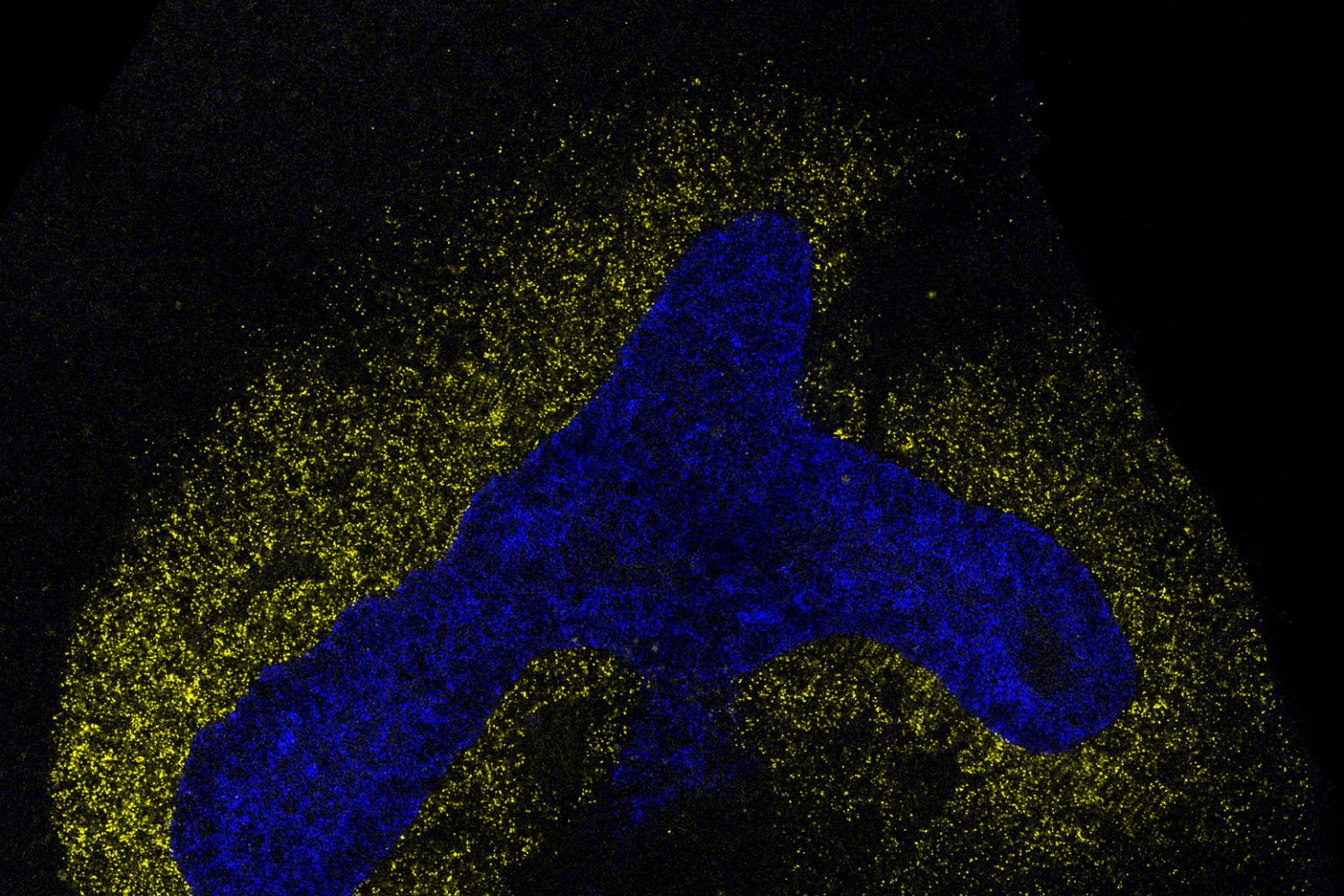
What if pathology foundation models could do more with less? GigaPath-Flash and GigaTIME-Flash cut computational demands while maintaining strong performance, opening the door to larger studies and broader exploration. The post GigaPath-Flash and GigaTIME-Flash: Toward population-scale discovery with efficient pathology foundation models appeared first on Microsoft Research.