Aug 2026· Stem Cell Research· Vol 95, pp. 104086 - 104086· 0 citations· 13 references
Medicine
TL;DR
Two isogenic induced pluripotent stem cell lines carrying homozygous LMNA variants are generated by prime editing of a healthy donor iPSC line, providing a valuable platform for functional characterization and potential clinical reclassification of LMNA VUS.
Abstract
Variants of uncertain significance (VUS) in the LMNA gene represent a major challenge in clinical genetics, as insufficient functional evidence limits their interpretation and clinical decision-making in laminopathies, including dilated cardiomyopathy (DCM). Here, we generated two isogenic induced pluripotent stem cell (iPSC) lines carrying homozygous LMNA variants, c.293A > G (p.Glu98Gly) and c.439G > A (p.Ala147Thr) by prime editing of a healthy donor iPSC line. Both variants are located within Coil 1B domain of lamin A. The edited iPSC lines retain normal morphology, pluripotency, genomic integrity, and trilineage differentiation capacity, providing a valuable platform for functional characterization and potential clinical reclassification of LMNA VUS.
This work describes the successful reprogramming of two human induced pluripotent stem cell (iPSC) lines originating from two independent ALS patients, both of whom carry a C9orf72 HRE mutation.
Di-De Wu, A. Kojic, Jay P. Ross et al.· Stem Cell Research· 0 citations
Patient-derived induced pluripotent stem cells (hiPSC) are a valuable approach to model cardiovascular diseases and nucleofected non-integrating episomal vectors in skin fibroblasts of four family members are a reliable source to study the effect of the identified mutation in a physiologically relevant environment.
E. Selga, R. Martínez-Moreno, Albert Rigat Pujolàs et al.· Stem Cell Research· 0 citations
Two human induced pluripotent stem cell lines from a female FD patient carrying a heterozygous c.644A > G missense mutation provide a valuable resource for studying FD mechanisms and developing therapeutic strategies.
Nick Heise, Carla Borisch, Christopher Jahn et al.· Stem Cell Research· 0 citations
Induced pluripotent stem cell lines derived from two Marfan syndrome patients with mutations in the FBN1 gene exhibited typical iPSC morphology, normal karyotype, undifferentiated states, and trilineage differentiation capacity.
Byron W H Mui, M. Chorsi, Christopher D. Yan et al.· Stem Cell Research· 1 citation
These results implicate perturbed gene expression and pathways that may contribute to the severe phenotypes in LMNA-R541C and suggest several drug classes including multiple cardiac glycosides as potential targeted therapeutic candidates to be explored.
Thomas E. Keller, Ci Koehring, Brett W. Higgins et al.· bioRxiv· 0 citations
A patient-derived inducible pluripotent stem cell (iPSC) model is created, which can be used as a model to study a clinically severe case of YARS2 disease and demonstrates the stemness of iPSC lines, as determined using qPCR, immunostaining, and trilineage differentiation.
Chen-Bo Zeng, Andrew Gray, R. Ganetzky et al.· International Journal of Ste...· 0 citations
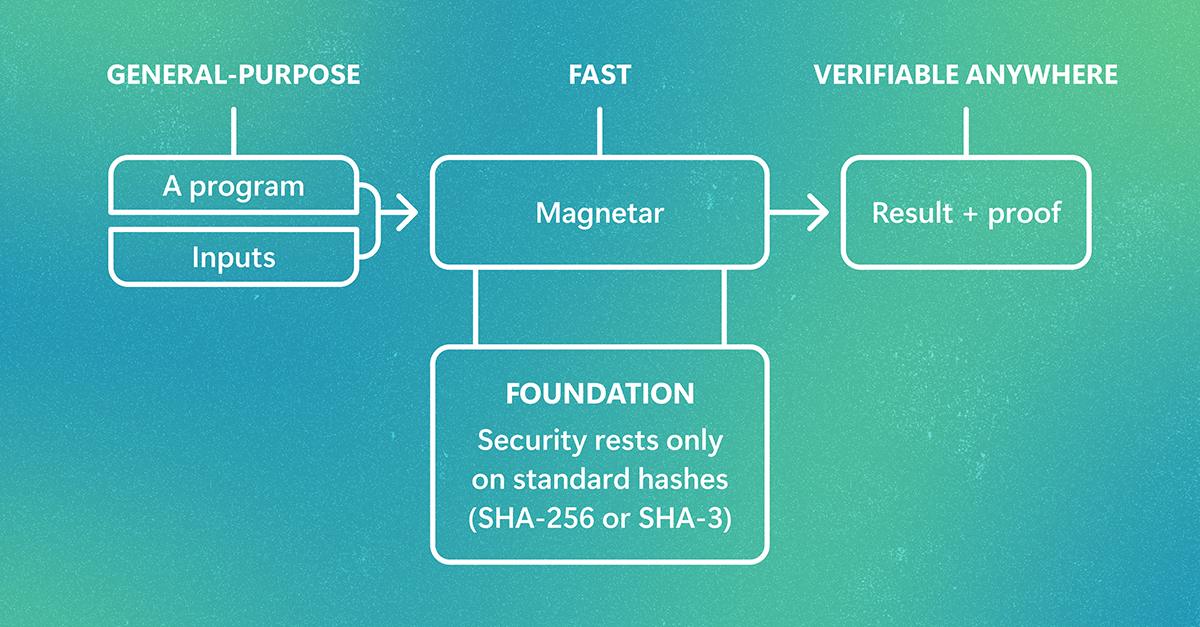
Zero-knowledge proofs can verify computing results without rerunning workloads or exposing sensitive data. Magnetar helps bring them into the mainstream with support for standard programming languages, major speed gains, and quantum-resistant security. The post Proof-based general-purpose computing with Magnetar appeared first on Microsoft Research.