Mean Cumulative Drift (MCD), an embedding-based measure of content retention across three representation spaces, and Multi-Generation GenEval (MGG), extending GenEval's object-level compliance scoring across generations are proposed, to quantify drift.
Maltese has substantial text corpora and pretrained language models, but paragraph-scale OCR training data remains scarce; NOMOCRAT provides 57 verified annotated pages. LV-ROVER-MLT combines synthetic fine-tuning of Tesseract~5 with five complementary recognition streams and lexicon-gated word-level arbitration adapte...
This work studies ViT attention heads and finds they differentiate into object- and background-specialist roles, a pattern most pronounced under full attention, and proposes SHS-Index to quantify this specialization, showing that it distinguishes full-attention from chunk-window ViTs, and finds that it strongly tracks...
Chenyu He, Lei Li, Shi-Cheng Li et al.· 0 citations
AIM is proposed, a two-stage method that anchors an identity-forgetting target with a universal visual prompt and then matches the vision encoder to that target under a Fisher-based constraint, which achieves competitive identity forgetting while preserving non-deleted identities, prior knowledge, and visual perception...
Wonjun Lee, Jaehyuk Jang, Kangwook Ko et al.· 1 citation
Reach audiences
Advertise in front of researchers, engineers, and readers.
Evaluation results demonstrate that the synthetic dataset constructed is the most effective approach for improving LVLM performance on reading vertically written Japanese text.
A Mixture of Multicenter Experts (MoME) framework to address AI bias in the medical domain without requiring data sharing across institutions is proposed and validated using a multimodal target volume delineation model for prostate cancer radiotherapy.
Yujin Oh, Sangjoon Park, Xiang Li et al.· 0 citations
Results show that architecture is a major source of task-relevant structure in TPC embeddings and should be treated explicitly when assessing representation learning and developing reusable detector models.
T. Wheeler, M. Kuchera, R. Ramanujan et al.· 0 citations
Experiments show that RegCL achieves strong retention and adaptation under domain-incremental learning, outperforming competitive non-replay continual learning and merging baselines, suggesting that RegCL can serve as a compact visual adaptation component for evolving multi-sensorial media pipelines.
Yuan-Chen Shu, Zhiwei Lin, Xiaoyu Zhou et al.· 2 citations
Amortized sampling of the posterior over data is studied, and the asymptotic correctness of a data-free learning objective, relative trajectory balance, is proved for training a diffusion model that samples from this posterior, a problem that existing methods solve only approximately or in restricted cases.
S. Venkatraman, Moksh Jain, Luca Scimeca et al.· Neural Information Processin...· 75 citations· ⚡5
The possibility of inferring high-dimensional data inference in a model that consists of a prior and an auxiliary differentiable constraint given some additional information is considered, thereby allowing a range of potential applications in adapting models to new domains and tasks.
Alexandros Graikos, Esmeralda S. Whitammer, N. Jojic et al.· Neural Information Processin...· 316 citations· ⚡15
This work proposes the first video-language-model post-training technique for mistake detection, which uses a tailored reward function to encourage the model to identify discrepancies between an instruction and the corresponding video, and generalizes especially well to unseen procedures.
Federico Spurio, Olga Zatsarynna, Lars Doorenbos et al.· 1 citation
Investigating an explainable DR classification framework using vision foundation models and multiple transfer learning strategies demonstrates that foundation models, particularly DINOv2, can provide strong predictive performance, while LoRA offers a parameter-efficient alternative to full fine-tuning.
Abhishek Verma, A. Krishna, Abhishek Gajanan Bankar et al.· 0 citations
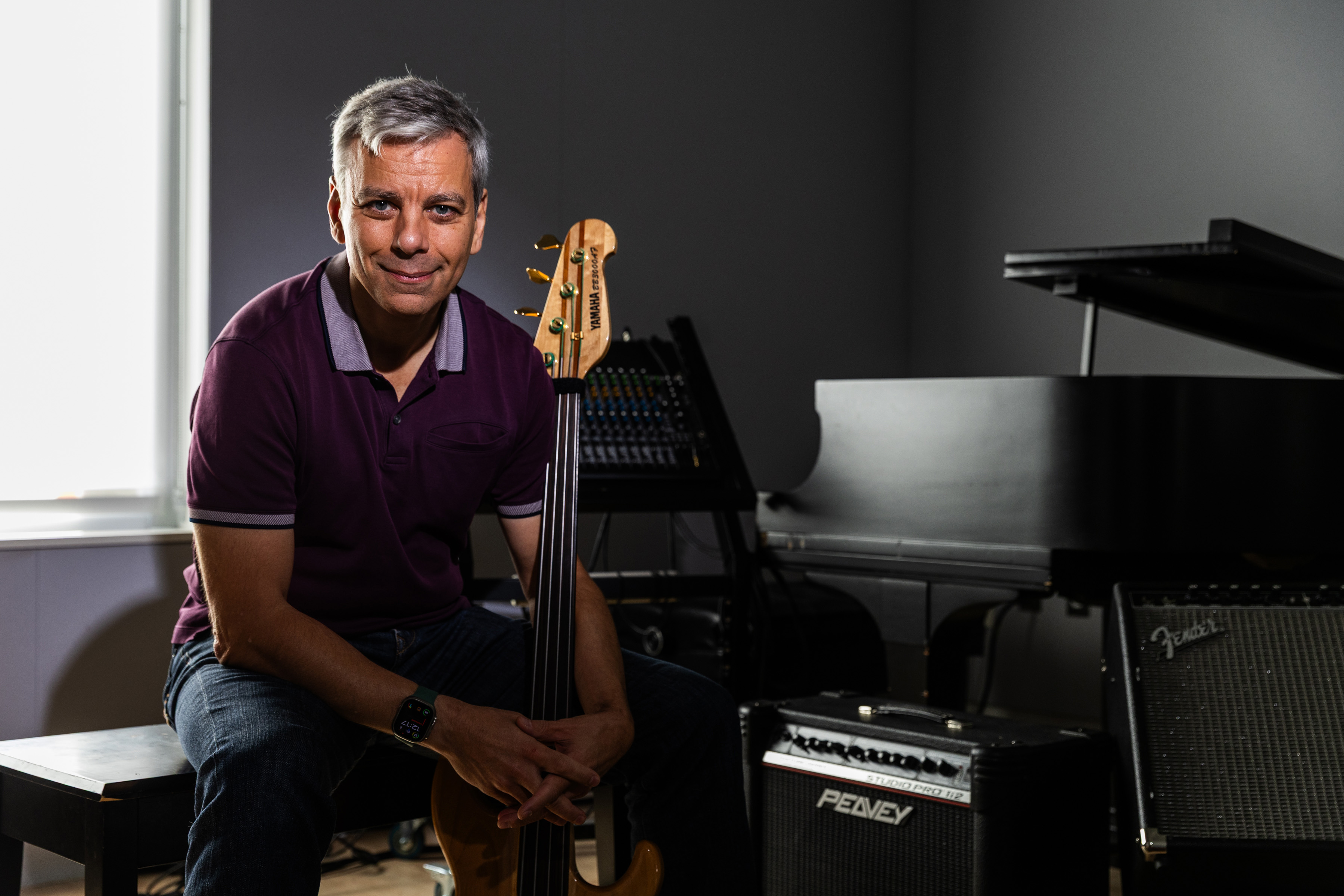
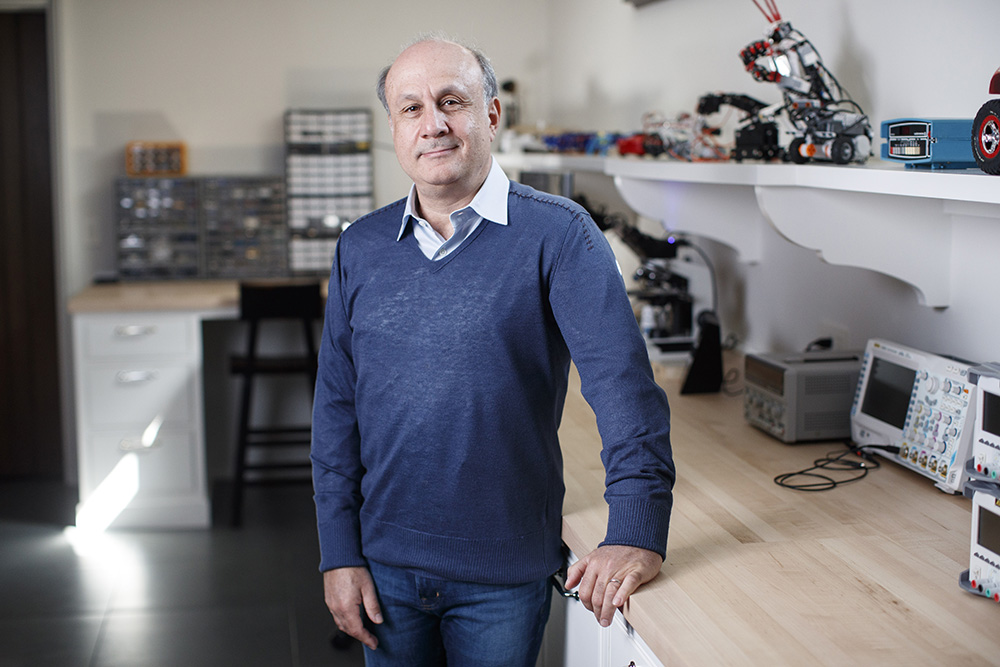
Professor Paris Smaragdis develops computers with superhuman hearing for applications like speech recognition, music understanding, and environmental monitoring.
Exploring how generative AI could make machine vision more accessible to businesses. The post GenEye in a Box: Making Machine Vision Something You Can Just Ask For appeared first on GPT-Lab.
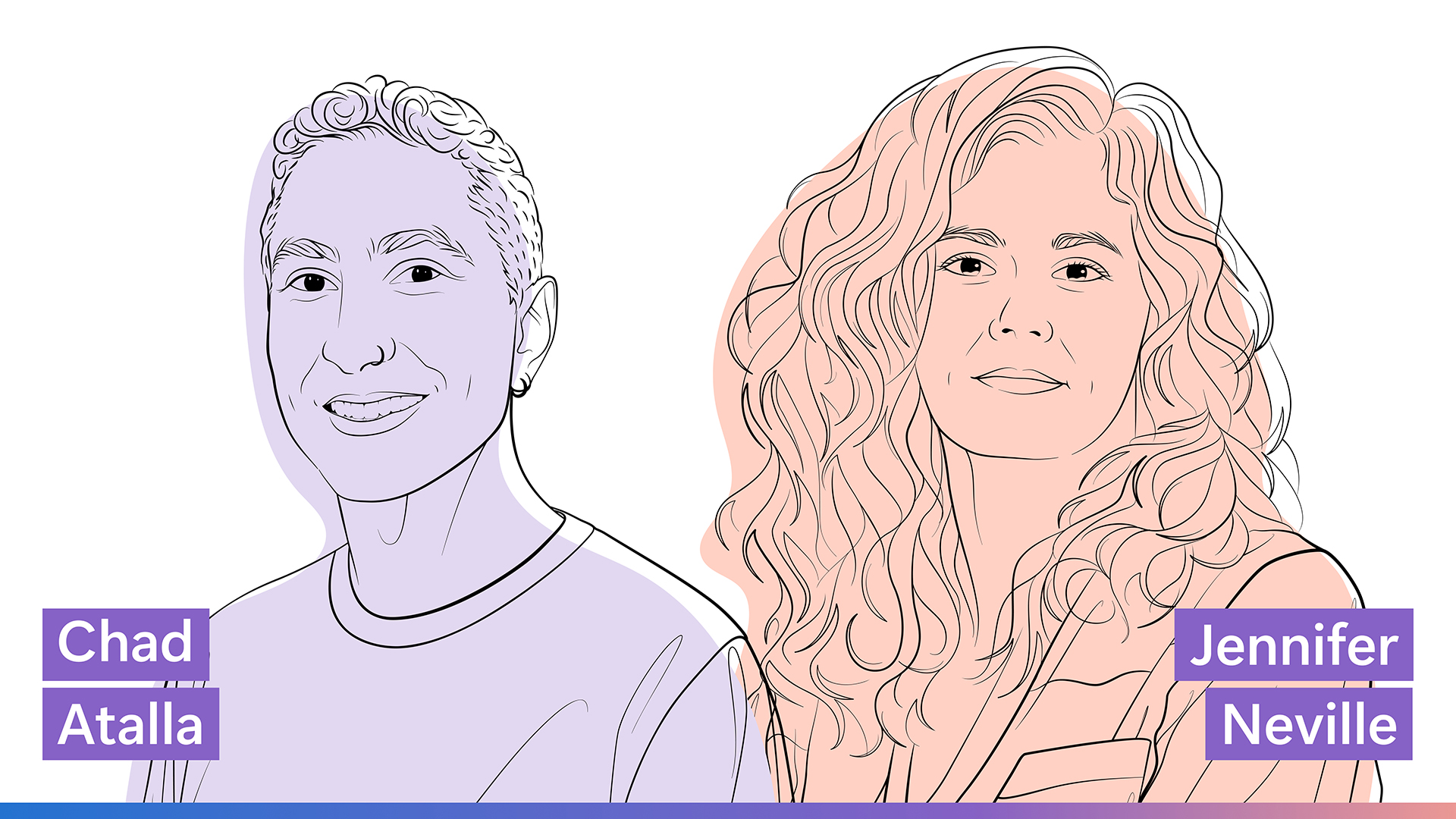
Jennifer Neville did not want to go into computer science—but that’s exactly where she landed. Neville discusses the starts and stops that led to her professional sweet spot and her work identifying “surprising failures” making it hard for AI to handle complexity. The post What AI gets wrong and what failure teaches us appeared first on Microsoft Research.
Computer scientist, entrepreneur, and philanthropist will collaborate with the MIT Schwarzman College of Computing to advance AI and scientific discovery.
We use cookies to run the site and, with your consent, for analytics and to show ads.
See our Cookie Policy.