Quercetin exerts anti-fibrotic effects on vocal folds by multi-target inhibition of PI3K/AKT and MAPK signaling pathways, thereby modulating fibroblast behavior, preserving extracellular matrix integrity, and restoring key matrix components such as hyaluronic acid and elastic fibers.
Yujie Feng, Qiurong Yang, Yuanjia Hu et al.· Journal of Voice· 0 citations
ABSTRACT The emergence of the SARS-CoV-2 Omicron BA.2.86 subvariant, a lineage derived from the BA.2 strain, led to the 2024–2025 COVID-19 vaccine update to include KP.2 or related JN.1-lineage spike antigens. We evaluated the magnitude, breadth, and durability of humoral immune responses following a single KP.2 vaccine dose in a longitudinal cohort of 21 individuals up to 6 months. KP.2 vaccination increased spike-specific binding and neutralizing antibodies against the ancestral WA.1 strain, as well as against the BA.5, XBB.1.5, and KP.2 variants. Power-law modeling estimated half-lives for WA.1- and KP.2-specific IgG responses at 770 and 248 days, respectively. Additionally, the KP.2 dose increased IgG1 and IgG4 subclasses more than IgG2 and IgG3 responses to both spike proteins. Serum-depletion experiments using WA.1 or KP.2 proteins demonstrated that most vaccine-elicited antibodies were cross-reactive. Consequently, KP.2 vaccine-induced antibodies retained broad neutralizing activity against recently circulating Omicron subvariants (BA.2.86, KP.3.1.1, XEC, LP.8.1, LF.7, XFG.3.12, PQ.1, BA.3.2.1, and RE.2). Using a live virus neutralization assay, XFG.3.12 showed the greatest reduction in neutralizing titers relative to KP.2 (4.2-fold). In a small subset, an LP.8.1 vaccine dose increased neutralizing activity against the matched variant while maintaining WA.1 and KP.2 cross-reactivity, but only modestly increased antibodies to divergent variants BA.3.2.1 and RE.2. Ultimately, these data indicate the KP.2 mRNA vaccine generates durable, cross-reactive responses against current Omicron subvariants. However, ongoing spike evolution impacts the neutralization of emerging lineages, highlighting the need for continued viral monitoring and timely vaccine updates. IMPORTANCE SARS-CoV-2 continues to evolve, raising ongoing concerns about how well updated vaccines protect against emerging variants. This study evaluates antibody responses after a KP.2 spike mRNA vaccine dose. It shows that a single dose induces durable and broadly cross-reactive immunity against both earlier strains and recently circulating Omicron subvariants. Despite this breadth, reduced neutralizing activity against certain emerging variants indicates that ongoing antigenic changes can impact vaccine-induced antibody effectiveness. These findings provide insight into how current vaccines perform over time and highlight the need to track viral evolution and update vaccine antigens to maintain broad protection against severe disease, hospitalization, and death. SARS-CoV-2 continues to evolve, raising ongoing concerns about how well updated vaccines protect against emerging variants. This study evaluates antibody responses after a KP.2 spike mRNA vaccine dose. It shows that a single dose induces durable and broadly cross-reactive immunity against both earlier strains and recently circulating Omicron subvariants. Despite this breadth, reduced neutralizing activity against certain emerging variants indicates that ongoing antigenic changes can impact vaccine-induced antibody effectiveness. These findings provide insight into how current vaccines perform over time and highlight the need to track viral evolution and update vaccine antigens to maintain broad protection against severe disease, hospitalization, and death.
Sanjeev Kumar, Lilin Lai, M. Ellis et al.· Journal of Virology· 0 citations
Thiol-based redox switches utilize the unique nucleophilicity of cysteine and selenocysteine to dynamically link real-time cellular redox fluctuations to metabolic regulation and signaling pathways. Capturing the precise atomic-level thermodynamic and kinetic mechanisms driving these oxidative modifications has long been limited by the chemical instability of transient intermediates and the immense computational costs of classical molecular dynamics simulations. However, recent advancements in chemoselective small-molecule probes now allow for the high-purity trapping and enrichment of specific sulfenic and sulfinic acid states. In parallel, a paradigm shift toward machine learning, graph neural networks, and protein language models has bypassed traditional computational bottlenecks, enabling high-throughput, proteome-wide predictions of redox switches in seconds. Furthermore, emerging data reveal that these redox modifications do not merely alter well-structured proteins, but actively dictate conditional folding transitions and structural transformations within intrinsically disordered proteins and biomolecular condensates. Here, we provide a comparative overview of these dual experimental and computational advancements and highlight how the integration of generative diffusion models could facilitate the real-time simulation of conditional, multi-state structural ensembles across the redox proteome.
T. Rass, Dana Reichmann, Gábor Erdős· FEBS Letters· 0 citations
Peptides and antibodies occupy complementary therapeutic niches. Peptides offer compact size and high-affinity recognition of difficult targets, whereas antibodies provide exquisite specificity, long serum half-life, and effector functions. Here we review strategies that merge these modalities by engineering peptides into immunoglobulins and antibody fragments. We discuss peptide grafting into hypervariable and framework loops, terminal fusion to antibody chains, Fc-peptide fusion proteins, and bioconjugation approaches. Across these formats, we examine examples that illustrate the importance of insertion site, peptide topology, and linker design for folding, activity, and developability. We highlight how antibody fusion and conjugation with natural and engineered peptides can confer novel target binding, conditional activation, altered biodistribution, improved pharmacokinetics, or intracellular delivery, and we discuss how disulfide-rich and macrocyclic peptides have enriched the design space. Finally, we also point out key translational challenges, including manufacturability, stability, heterogeneity, and immunogenicity, and propose that advances in protein design and chemical bioconjugation will enable next-generation therapeutics at the interface of antibodies and peptides.
Jinlan Wang, R. Romaniuk, Hristo L. Svilenov· FEBS Letters· 0 citations
Reach audiences
Advertise in front of researchers, engineers, and readers.
Optimization of UM171, a molecular glue initiating the degradation of neosubstrate HDAC1/2–CoREST–LSD1 through a multiprotein complex formed with KBTBD4, was carried out using the cryo‐EM structure of its KBTBD4‐HDAC2 complex. Structural modifications resulted in a 20‐fold improvement in glue activity, demonstrated by the stability of its ternary complex with KBTBD4‐HDAC2. These improvements were also accompanied by a robust degradation of LSD1 and the CoREST1 protein. Our results, although promising, also highlight the complexity of structure‐guided glue design. The effect of the developed glues on the viability of HepG2 cells revealed a varying level of toxicity, which was disconnected from the glue activity. These observations highlight the potential impact of off‐target effects on the biological activity of these glues.
The human neuropeptide S (NPS) receptor (NPSR) is a Class A peptide G protein‐coupled receptor expressed in the central nervous system and endogenously activated by NPS, a 20‐mer peptide. NPSR activation promotes cellular excitability via Gq and Gs signalling. Studies suggest that receptor antagonists may reduce drug‐seeking behaviours, whilst agonists represent innovative non‐sedating anxiolytics with memory‐enhancing effects. Despite its therapeutic potential, NPSR remains poorly characterised, with neither experimental receptor structures nor drug‐like clinical candidates available. To fill this gap, we applied a previously validated AlphaFold2 Multimer‐based protocol to model the hNPS–hNPSR complex. The model showing higher stability in molecular dynamics simulations and consistency with known structure–activity relationships served as template to design novel hNPS analogues. However, experimental validation through synthesis and in vitro pharmacological evaluation of 20 novel truncated cyclic peptides revealed the model's inability to capture hNPS bioactive conformation, as most analogues were inactive as agonists. By exploiting the stereochemical switch in hNPS hinge region, we identified four novel cyclic antagonists (17–20, pA2 in the 6.10–6.20 range). Our findings highlight strengths and limitations of current peptide‐GPCR modelling strategies and underscore the need for integrating AI predictions with experimental refinement to advance ligand discovery for challenging targets like NPSR.
Valentina Albanese, M. Argentieri, Federica Agosta et al.· ChemMedChem· 0 citations
Owing to the collateral trans-cleavage activity of Cas12a and the high peroxidase-like nanozyme activity of G4/Hemin, this method achieves the highly sensitive SERS detection of genetically modified samples without target gene preamplification.
Lin Liu, Chengxin Bao, Huimin Wang et al.· ACS Measurement Science Au· 0 citations
Improvements enabling quantification of site-specific modifications, including post-translational modifications and covalent compound-protein interactions spanning diverse pathways are described.
Steven R. Shuken, Geordon A. Frere, Charlotte R. Beard et al.· Nature Communications· 0 citations
Amyloid fibrils are implicated in a myriad of human diseases. A striking observation is that fibrils extracted from diseased tissues are characterized by a restricted set of folds unique to the specific pathology. In contrast, fibrils grown in vitro exhibit extensive structural diversity, suggesting that specific environmental and biochemical mechanisms in vivo enforce structural selectivity. Here, we combine two-dimensional infrared (2D IR) spectroscopy and cryo-electron microscopy (cryo-EM) to investigate the mechanisms governing polymorph formation in the human Islet Amyloid Polypeptide (hIAPP). We demonstrate that 2D IR can resolve populations of distinct polymorphs identified by cryo-EM, enabling rapid label-free screening of conditions prior to labor-intensive microscopy screening. We find that conditions favoring secondary nucleation, such as high protein concentration, increase polymorphic diversity. Crucially, cryo-EM reveals that formed by secondary nucleation do not structurally replicate the parent template. Finally, by selectively inhibiting secondary nucleation using the C-terminal domain of the DNAJB6 chaperone, we steer aggregation toward a monomorphic state. These findings highlight the critical role of molecular chaperones in fibril polymorph selection.
Mikołaj I Kuska, Łucja Kozicka, S. Prodhan et al.· bioRxiv· 0 citations
Findings identify pose ranking, rather than pose generation, as the major limitation of current cyclic peptide–protein complex prediction and demonstrate that complementary structural features can improve confidence-based pose selection.
Zhe Li, Ye Yuan, Kaiqiang Hu et al.· bioRxiv· 0 citations
This work introduces BEAM, a multiscale framework that learns slow collective variables from coarse-grained simulations to guide all-atom enhanced sampling to explain how vectorial secretion accelerates pertactin folding by excluding an off-pathway kinetic trap.
Lan Yang, Qing Luan, Michael C. Baxa et al.· bioRxiv· 0 citations
This work identified the key molecular determinant in the hHv1 channel that mediates cholesterol inhibition and also provided a mechanism linking the conversion between demosterol and cholesterol by DHCR24 to pH homeostasis in many cells, such as phagocytes, cardiomyocytes, neurons and microglial cells.
Shuo Han, R. Duan, Sarah Applewhite et al.· bioRxiv· 0 citations
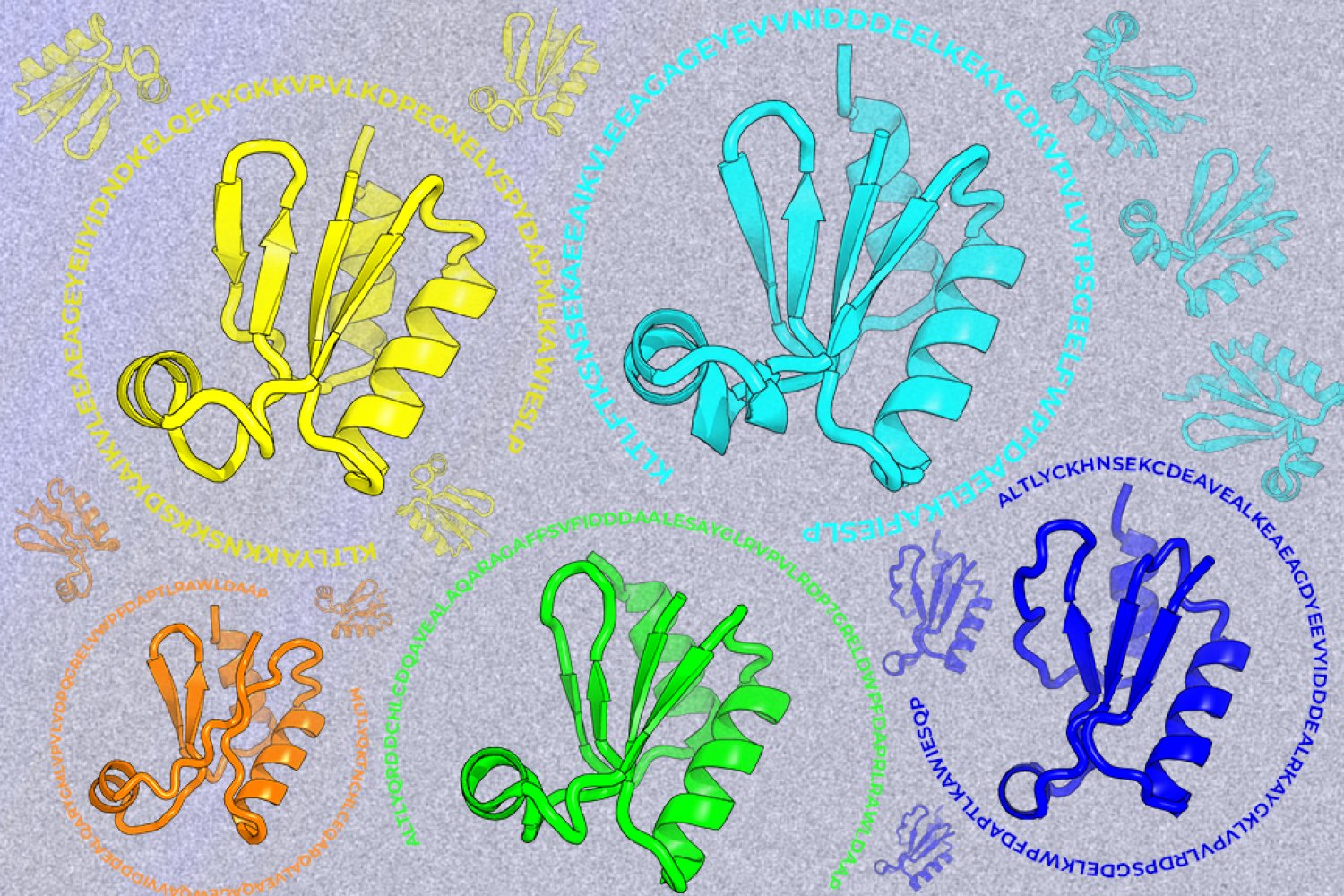
A new machine-learning framework aims to improve the success rate of computational protein design while moving away from results that reproduce sequences found in nature.