Skip to content

Category

protein folding

257 papers

#protein folding Open access Aug 2026

Reconciliation of titer differences between SARS-CoV-2 neutralizing antibody assays

ABSTRACT SARS-CoV-2 antibody neutralization is a correlate of protection for COVID-19 and has been used to guide public health decisions. However, there is no standard neutralization assay, and absolute titers differ between assays. To investigate mechanisms causing these absolute titer differences, we compared 28 samples with three assays: a live virus cytopathic effect (CPE)-based microneutralization assay, a live virus focus reduction (immunospot, IS) assay, and a pseudotyped virus luciferase expression reduction (pseudovirus, PV) assay. We found significant correlations between all assays (ρ > 0.95 and P < 0.0001 for all pairwise comparisons), but also significant differences in absolute titers by assay (paired t-tests P < 0.001). IS and PV assays that assess neutralization as the titer required to reduce foci/luminescence by 50% had the smallest difference, with 1.2-fold higher IS assay titers (95% confidence interval, CI: 1.2–1.2). CPE assay titers were 5.5-fold lower (95% CI: 5.4–5.5) than in the IS assay. We show that these differences can be explained (i) by accounting for the size of inoculum being neutralized (half the infectious virions in the IS and PV assays, “per virion,” and the entire inoculum half the time in the CPE assay, “per well”) and (ii) by removing serum during the 5-day culture in the CPE assay (so serum can only neutralize the inoculum, rather than acting on the inoculum and slowing viral growth during culture). These findings highlight areas for more precise and harmonized terminology and particular assay elements that must be considered in efforts to harmonize neutralization assays. IMPORTANCE Protection against COVID-19 is related to how well serum antibodies neutralize SARS-CoV-2. This neutralization can be assessed using different assays, which often provide significantly different estimates. To better understand why assay results vary, we compared three commonly used types of neutralization assay. We found both strong correlations and significant differences in measured neutralization between the different assays. Differences in the type of virus (live SARS-CoV-2 virus compared to a pseudotyped virus with SARS-CoV-2 spike protein), how long cells, virus, and antibody were allowed to interact, and whether neutralization of a batch of virions (“per well” neutralization) or individual infectious virions (“per virion”) was measured, all impacted virus neutralization. Understanding which factors have the largest impact on the differences between neutralization assays is an important first step toward harmonization of neutralization assays across the field. Protection against COVID-19 is related to how well serum antibodies neutralize SARS-CoV-2. This neutralization can be assessed using different assays, which often provide significantly different estimates. To better understand why assay results vary, we compared three commonly used types of neutralization assay. We found both strong correlations and significant differences in measured neutralization between the different assays. Differences in the type of virus (live SARS-CoV-2 virus compared to a pseudotyped virus with SARS-CoV-2 spike protein), how long cells, virus, and antibody were allowed to interact, and whether neutralization of a batch of virions (“per well” neutralization) or individual infectious virions (“per virion”) was measured, all impacted virus neutralization. Understanding which factors have the largest impact on the differences between neutralization assays is an important first step toward harmonization of neutralization assays across the field.

E. Stadler, F. Mordant, Matthew J. Gartner et al. · 0 citations
#protein folding Open access Aug 2026

The molecular basis of mitochondrial crista formation by the MIC10 complex

Mitochondrial cristae are essential for respiration, yet the molecular basis of how the high curvature of these membrane folds is maintained remains unclear. Using structure prediction tools and multiscale simulations, we examined the role of the MIC10 subcomplex of the mitochondrial contact site and cristae organizing system (MICOS). We found that the MIC10 proteins Mic10, Mic26, and Mic27 strongly recruit cardiolipin at conserved positive loop motifs, driving oligomerization of these subunits and resulting in the stabilization of curvature in model membranes. Reconstruction of the full MIC10 complex in a realistic crista junction setup shows its capability to maintain membrane bending, while intrinsically disordered regions may form a permeability barrier between cristae and the intermembrane space. These findings provide a mechanistic model for cristae curvature formation and suggest how MICOS components cooperate with cardiolipins to maintain mitochondrial architecture.

Chelsea M. Brown, T. Wassenaar, Z. Freyberg et al. · 0 citations
#protein folding Preprint Aug 2026

AgentFold: Closed-Loop Agentic Search for Protein Folding Model Design

AgentFold is presented, a multi-agent framework that formulates folding-model development as a closed-loop search over executable code variants and improves the best lDDT by 7.5% over independent Codex proposals and outperforms a random-search control.

Ming-Quan Liu, Jiangyue Chen, Hanqun Cao et al. · 0 citations
#protein folding Open access Aug 2026

Preventing relapse in ulcerative colitis remission maintenance: machine learning prediction and reinforcement-learning herbal prescription optimization with external validation

Combining interpretable relapse prediction with reinforcement learning offers a personalized decision-support framework for optimizing herbal treatment intensity during UC remission maintenance.

Yan Li, Jie Liu, Jian Kang · 0 citations
#protein folding Review Open access Aug 2026

Large language models in bioinformatics: a comprehensive survey

This survey reviews the basic principles of LLMs and summarizes representative applications in gene and genome sequence analysis, protein structure and function prediction, and drug design, including virtual screening and personalized medicine.

Zhigang Meng, Zhi-Kai Yang, Mingming Zhu et al. · 0 citations
#protein folding Open access Aug 2026

Human iPSC-cardiomyocyte-aggregate cell therapy in non-human primates and correlation of heart recovery with contractile and electrophysiological cardiomyocyte properties

This study demonstrates the successful production and injection of human induced pluripotent stem cell cardiomyocyte aggregates into infarcted cynomolgus monkey hearts, resulting in substantial, structured human grafts three months after cell transplantation. Transient graft-induced arrhythmias decreased over time. Both the arrhythmogenicity and the substantial heart function recovery in vivo notably seemed to correlate with induced pluripotent stem cell clone-dependent contractile and electrophysiological cardiomyocyte properties in vitro. Overexpression of a red fluorescent reporter protein led to a dysregulated conduction and contraction machinery in yet engraftment competent cardiomyocytes, providing an important tool to mechanistically understand and improve induced pluripotent stem cell-based heart repair in preclinical models. We demonstrate the logistically important, temporal uncoupling of cardiomyocyte production from transplantation. Cardiomyocyte aggregate transplantation yielded results comparable to the reported transplantation of 10-20-fold higher numbers of dissociated human embryonic stem cell- cardiomyocytes and suggests a higher degree of cell/ tissue maturation in cardiac grafts. Our study promotes reduced cell production costs, highlights the need for an in vitro potency assay, and shows a pragmatic new avenue for the clinical translation of human induced pluripotent stem cell-based heart repair. The study shows successful therapy with hiPSC-cardiomyocyte aggregates in infarcted non-human primates, including uncoupling of cell production from transplantation and correlation of heart recovery in vivo with cardiomyocyte properties in vitro.

I. Gruh, Andreas Martens, S. Cebotari et al. · 0 citations
#protein folding Open access Aug 2026

Diesel particulate matter induces dose-dependent cytotoxicity, multi-faceted inflammation, MAPK activation, and oxidative stress in RAW 264.7 macrophages: an integrated transcriptomic and protein–protein interaction network analysis

Beyond classical inflammation, these integrated findings reveal coordinated network-level perturbations consistent with ferroptosis vulnerability, genome instability, paradoxical immune dysregulation, and potential macrophage identity loss consistent with ferroptosis vulnerability, genome instability, paradoxical immune dysregulation, and potential macrophage identity loss.

Hye Jin Kim, Ji Won Park, S. Lee et al. · 0 citations
#protein folding Open access Aug 2026

Scarless SARS-CoV-2 Genome Engineering and Variant Analysis

In addition to causing cold and flu-like symptoms, Severe Acute Respiratory Syndrome Coronavirus 2 (SARS-CoV-2) can also cause chronic longer-term diseases. Antiviral drugs, especially used combinatorially, have the potential to reduce the severity of individual infections and prevent the development of chronic disease. One of the safest and most versatile reverse genetics systems for SARS-CoV-2 studies is a bacterial artificial chromosome (BAC)-based system harboring the WA1 strain full-length genome and attenuating deletions in the accessory open reading frame 3a and 7b proteins (ORF3a and ORF7b, respectively). Here, a scarless genome engineering technique called En Passant mutagenesis was used to change one amino acid in the viral main protease (Mpro P132) into the residue present in contemporary Omicron strains (H132), in order to more accurately study protease inhibitors and resistance mechanisms. This recombinant, attenuated viral system yields antiviral EC50 values for the active component of approved drugs including nirmatrelvir (Paxlovid) and ensitrelvir (Xocova) and, importantly, also enables a parallel assessment of drug efflux. For instance, the antiviral potency of nirmatrelvir improves 50-fold by inhibiting the P-Glycoprotein (P-Gp) transporter with ritonavir or tariquidar, whereas the potency of ensitrelvir is unaffected. This system also enables the safe isolation and characterization of viral variants with reduced sensitivity to drugs, as evidenced by Mpro M49L compromising the efficacy of ensitrelvir. Together, these systems combine to provide safe, reliable, and quantitative approaches for Mpro variant analysis and drug testing without the biosafety concerns of conducting these experiments using wildtype isolates. IMPORTANCE Safe genetic systems for studying coronavirus biology and developing next generation antivirals are important. One of the most versatile systems leverages a bacterial artificial chromosome to efficiently propagate and engineer a full-length SARS-CoV-2 genome. This system is also safe because it has crippling deletion mutations that limit virus replication to a small number of cell lines. Here, we use a genome engineering technology to change a single amino acid in the viruses’ main protease enzyme to match that of circulating Omicron isolates. The resulting attenuated virus was also used to demonstrate antiviral efficacy of approved drugs and uncover mutants with reduced drug sensitivity. The emergent mutants match those in a subset of circulating strains further demonstrating broad relevance.

Agnieszka Dabrowska, Ashley Cuell, Rahul Basu et al. · 0 citations
#protein folding Open access Aug 2026

Gene identity, not variant effect, dominates ClinVar benchmarks of missense pathogenicity predictors

Missense pathogenicity predictors are routinely benchmarked against ClinVar, whose labels are strongly structured by gene: genes under diagnostic scrutiny accumulate pathogenic submissions while incidentally sequenced genes accumulate benign ones. We asked how much of a benchmark score this structure alone can produce. On 197,904 ClinVar missense variants validated against UniProt canonical sequences, a null model using no variant-level information, scoring each variant only by the pathogenic fraction of its own gene, reaches an area under the receiver operating characteristic curve (AUROC) of 0.921 under a random 10-fold split. On a common intersection of 169,989 variants, four current predictors exceed it by only 0.036 to 0.044. The inflation is not uniform, so it does not cancel when predictors are compared: under within-gene evaluation the ranking inverts, AlphaMissense rising from third to first and gMVP falling to third (p < 0.0001). The inversion survives removal of ceiling genes and replicates on an independently curated benchmark. Because both rankings derive from the same ClinVar labels, we arbitrated between them using data with no gene-level structure: agreement with 47 human deep mutational scanning assays matches the within-gene ranking and inverts the conventional one (p = 0.027, 0.0023). Across twenty-two dbNSFP predictors scored on one common intersection of 112,248 variants, with each tool’s exposure to clinical labels registered before any score was extracted, predictors never trained on such labels sit 0.051 AUROC behind supervised ones globally but only 0.026 behind within genes (difference +0.025 [+0.023, +0.027], p < 0.0001). Leave-one-out correction, the standard remedy, is worth 0.002 AUROC. Much of ClinVar benchmark performance reflects gene identity rather than variant effect, and the distortion changes which predictor a benchmark ranks first, in a direction experimental data contradicts. We release genenull, a single-file implementation, so reporting this baseline costs one function call. Author summary When a computer program predicts whether a genetic variant causes disease, we judge it by testing it against ClinVar, a public archive of variants clinicians have already interpreted. We found that this test is easier to pass than it looks. Some genes appear in ClinVar because they are suspected of causing disease, so most of their recorded variants are harmful; others are sequenced incidentally, so most of theirs are harmless. A program that knows nothing about a variant except which gene it sits in can exploit that pattern, and scores almost as well as the best tools available. This matters beyond a single number. When we removed the gene pattern and ranked variants inside a single gene, the order changed: the tool that looked best became worst, and the one that looked worst became best. Laboratory experiments that measure the effect of every possible variant in a protein agree with the new order, not the old one. Across twenty-two prediction tools, about half the advantage held by programs trained on clinical data disappears once the gene pattern is removed. We release software so anyone can measure this baseline in one line of code.

Saad Harrizi, I. Nait Irahal, Kabine Mostafa et al. · 0 citations
#protein folding Open access Aug 2026

In Vivo Screening for a Promising Antiparasitic Agent Against Neobenedenia melleni in Epinephelus fuscoguttatus♀ × E. lanceolatus♂ and Identification of Its Potential Target

Monogenean ectoparasites, particularly Neobenedenia species, cause severe economic losses in mariculture. Here, ectoparasites isolated from cultured hybrid groupers (Epinephelus fuscoguttatus♀ × E. lanceolatus♂) were confirmed as Neobenedenia melleni based on ITS1 phylogeny. In vivo screening of six structurally diverse compounds identified compound D (CAS No. 206111-37-7), a 5,6-dihydropyridine derivative, as the most effective antiparasitic agent, achieving 76.54% efficacy at 0.5 mg/L in a 90 min bath treatment. Dose-response assays demonstrated that 0.7 mg/L compound D achieved 95.23% antiparasitic efficacy without causing evident tissue damage or cytotoxicity to GF-1 cells. Ultrastructural observation by scanning electron microscopy revealed marked tegumental alterations, including deep fissures and extensive surface folding, in treated parasites. Molecular docking against ten candidate proteins identified β-tubulin as the most favorable docking target, with a binding energy of −6.53 kcal/mol and three hydrogen-bond interactions, suggesting that β-tubulin may be involved in the antiparasitic activity of compound D. Overall, these findings highlight compound D as a promising lead candidate for short-bath therapy against N. melleni and suggest that cytoskeletal disruption through β-tubulin interaction represents a plausible mechanism of action.

Longkun Gao, Guangshuo Wang, Jun-Tao Xu et al. · 0 citations
#protein folding Aug 2026

Modeling conformational transitions in DNA, RNA, and protein-nucleic acid complexes.

A generalized essential dynamics-refined ENM (edENM) is introduced for both DNA, RNA, and protein-nucleic acid complexes, parametrized against a diverse set of molecular dynamics simulations and validated using experimental ensembles from nuclear magnetic resonance, X-ray crystallography, and cryogenic electron microscopy.

Domenico Scaramozzino, Marco Cannariato, Byung Ho Lee et al. · 0 citations
#protein folding Open access Aug 2026

Multi-species Comparative Analysis Identifies Conserved Enhancers for Improving Casein Expression via Gene Editing.

This research introduces a novel strategy to augment casein expression in ruminants, providing a significant theoretical foundation and technical support for the precision breeding of high-casein dairy cows and goats.

Zhenliang Zhu, Xiaoyu Mi, Wei Yu et al. · 0 citations

From tech blogs

See all →
MIT News · Artificial Intelligence Aug 27, 2026

Looking beyond natural sequences

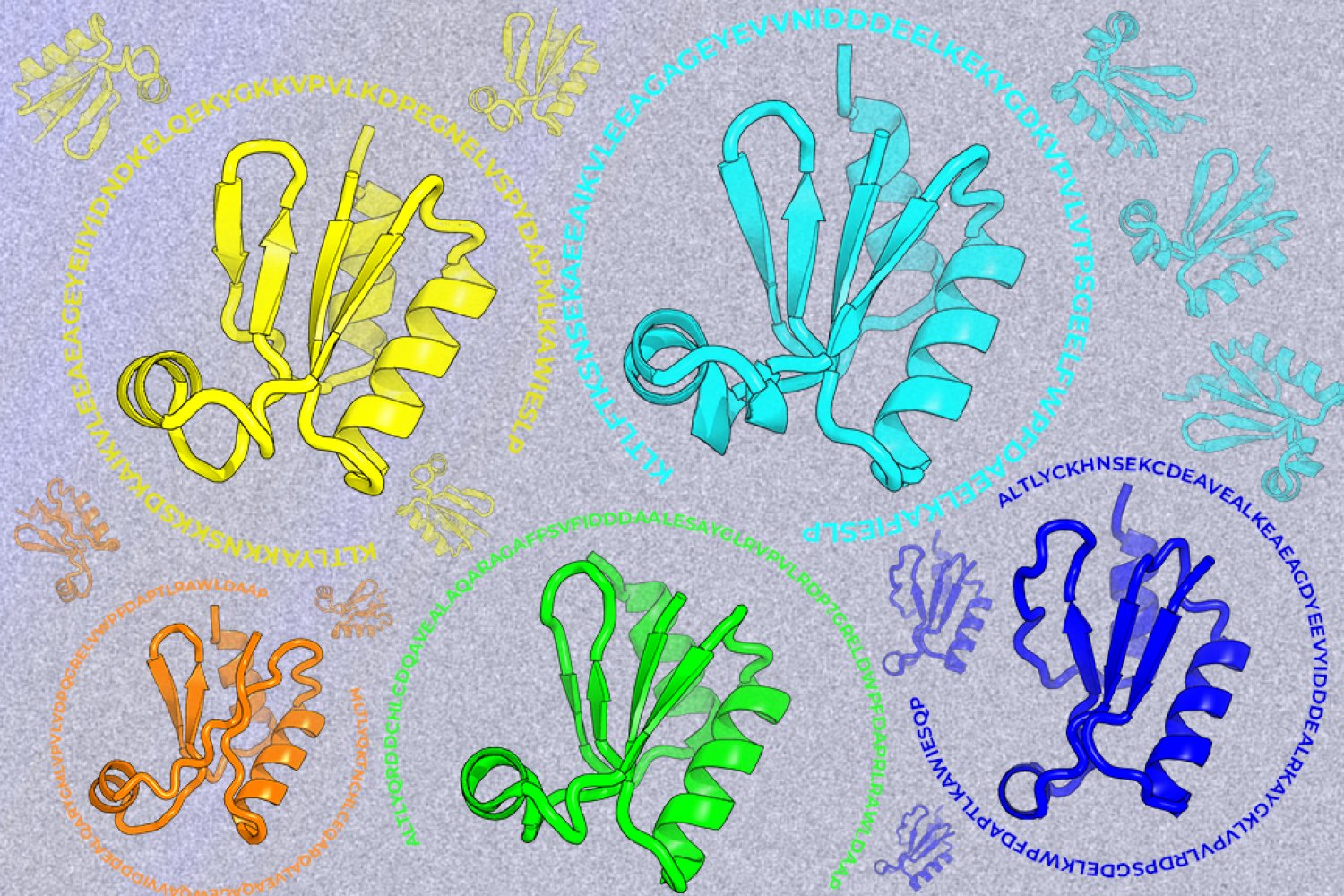
A new machine-learning framework aims to improve the success rate of computational protein design while moving away from results that reproduce sequences found in nature.


Google DeepMind Blog Nov 25, 2025

AlphaFold: Five years of impact

Explore how AlphaFold has accelerated science and fueled a global wave of biological discovery.